![[personal profile]](https://www.dreamwidth.org/img/silk/identity/user.png) ysabetwordsmith
ysabetwordsmithHere are the setting and content notes for "The Eyes of All People."
"The eyes of all people are upon us."
-- John Winthrop
John Winthrop Dreams of a City on a Hill, 1630
John Winthrop delivered the following sermon before he and his fellow settlers reached New England. The sermon is famous largely for its use of the phrase “a city on a hill,” used to describe the expectation that the Massachusetts Bay colony would shine like an example to the world. But Winthrop’s sermon also reveals how he expected Massachusetts to differ from the rest of the world.
[---8<---]
For we must consider that we shall be as a city upon a hill. The eyes of all people are upon us. So that if we shall deal falsely with our God in this work we have undertaken, and so cause Him to withdraw His present help from us, we shall be made a story and a by-word through the world.
Emma and Jesse first established themselves among the Wampanoag, then reached out to neighboring tribes in Massachusetts, the Mochican and Mahegan. Next they extended to the bordering states: Rhode Island, Connecticut, New York, Vermont, and New Hampshire. Future plans eventually reach farther to thwart known points of invasion elsewhere on Turtle Island.
Native American Tribes of Massachusetts
Welcome to our Massachusetts State Facts section, part of an educational project designed to provide information about indigenous people in different U.S. states. Follow the links to the right of our tribal map for more information about the language, culture and history of each Massachusetts tribe, or scroll below the map for Massachusetts Indian activities including a wordsearch, fact sheets, and words from the Native American languages of Massachusetts. Feel free to print any of these materials out for classroom use!
American Indians in Massachusetts
Did you know the name "Massachusetts" is an Algonquian Indian word? It comes from the Wampanoag word Massachuset, which means "by the range of hills." The Wampanoag Indians were not the only native people of this region, however.
The original inhabitants of the area that is now Massachusetts included:
The Wampanoag tribes (including the Nauset, Nantucket,
Pennacook, Pokanoket, and Pocasset)
The Mohegan tribe (including the Nipmuc and Pequot)
The Mohican tribe (including the Pocumtuc)
Native American Tribes of Rhode Island
Welcome to our Rhode Island State Facts section, part of an educational project designed to provide information about indigenous people in different U.S. states. Follow the links to the right of our tribal map for more information about the language, culture and history of each Rhode Island tribe, or scroll below the map for Rhode Island Indian activities including a wordsearch, fact sheets, and words from the Native American languages of Rhode Island. Feel free to print any of these materials out for classroom use!
The Narragansett tribe
The Niantic tribe
The Wampanoag tribe
Native American Tribes of Connecticut
Welcome to our Connecticut State Facts section, part of an educational project designed to provide information about indigenous people in different U.S. states. Follow the links to the right of our tribal map for more information about the language, culture and history of each Connecticut tribe, or scroll below the map for Connecticut Indian activities including a wordsearch, fact sheets, and words from the Native American languages of Connecticut. Feel free to print any of these materials out for classroom use!
There were originally many small American Indian tribes in the Connecticut area, including the Mohegan, Pequot, Niantic, Nipmuc, Mattabesic, Schaghticoke, Paugussett, and others. Though all of them spoke related languages and shared many cultural similarities, each tribe had its own leadership and its own territory. However, European epidemics and warfare devastated the Connecticut Indians, and the survivors had to merge with each other to survive. Soon there were no longer clear distinctions between the groups, and today most Native Americans of Connecticut have heritage from more than one of these original tribes, regardless of which tribe they officially belong to. All of their languages have been lost, but native people continue to preserve their cultural heritage in Connecticut today.
Did you know the name "Connecticut" is an Algonquian Indian word? It means "long river" and refers to the Connecticut River.
The original Algonquian-speaking inhabitants of the area that is now Connecticut included:
The Mahican tribes (including the Pocomtuc)
The Minisink (Munsee) tribe
The Mohegan tribes (including the Niantic)
The Pequot tribe
The Nipmuc tribe
The Quiripi tribes (Mattabesic, Paugusett, and Schaghticoke)
Read about the Dutch invasion of the Americas. This map shows the area settled by the Dutch in 1660.
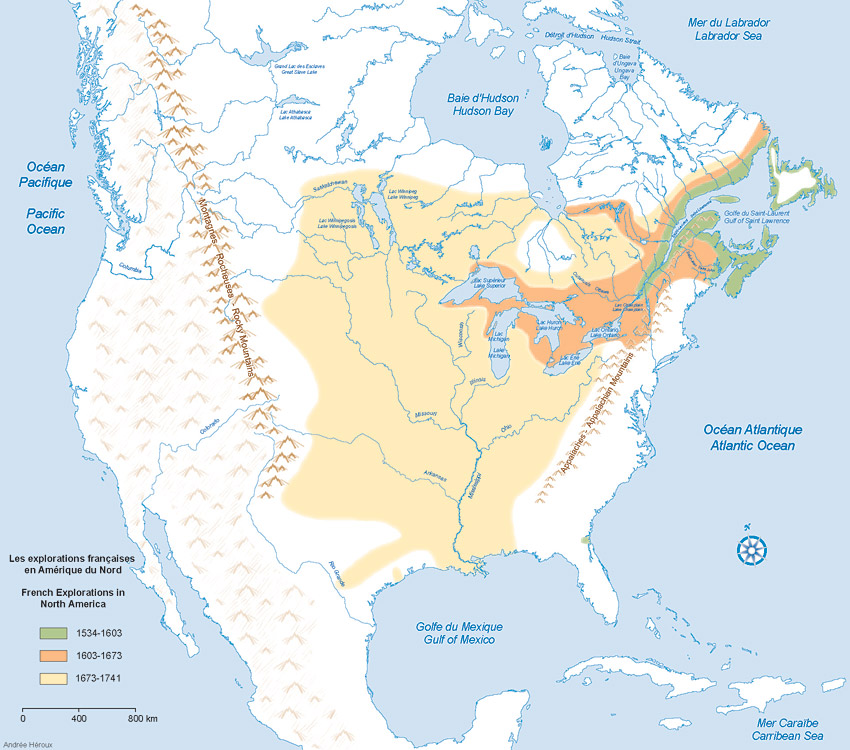
This page covers the French invasion of the Americas. See a map of their expanding area.
While African slaves were not recorded until later, Plymouth started out with a substantial number of indentured servants, and there were African slaves quite early elsewhere in the Americas. So it is plausible to find African slaves in Massachusetts earlier than explicitly documented there. Europe also had a habit of enslaving Irish and sometimes other people, more valued as domestic slaves, some of whom were sent abroad to various locations. People tend to forget that not all of America's slaves were black. The main difference seems to be that white slavery affected only the individual, not the children, while black slavery was passed down making the children slaves also.
Problems in the Plymouth Colony escalated into the Pequot War (1636-38).
"Thirteen Colonies" is a bit of a misnomer. There were a lot of colonies during the early invasion; some failed, some succeeded, some merged or split, and the territory got redrawn a bunch of times. Here's a bit of an overview with some references to timing and what happened to each colony or settlement.
Thirteen Colonies
New England colonies
Main article: New England Colonies
1584 map of the east coast of North America from the Chesapeake Bay to Cape Lookout, drawn by the English colonial governor, explorer, artist, and cartographer John White. Jamestown, the first permanent English settlement, was established here in 1607.
1. Province of Massachusetts Bay, chartered as a royal colony in 1691
• Popham Colony, established in 1607; abandoned in 1608
• Plymouth Colony, established in 1620; merged with Massachusetts Bay Colony in 1691
• Province of Maine, patent issued in 1622 by Council for New England; patent reissued by Charles I in 1639; absorbed by Massachusetts Bay Colony by 1658
• Massachusetts Bay Colony, established in 1629; merged with Plymouth Colony in 1691
2. Province of New Hampshire, established in 1629; merged with Massachusetts Bay Colony in 1641; chartered as royal colony in 1679
3. Connecticut Colony, established in 1636; chartered as royal colony in 1662
• Saybrook Colony, established in 1635; merged with Connecticut Colony in 1644
• New Haven Colony, established in 1638; merged with Connecticut Colony in 1664
4. Colony of Rhode Island chartered as royal colony in 1663
• Providence Plantations established by Roger Williams in 1636
• Portsmouth established in 1638 by John Clarke, William Coddington, and others
• Newport established in 1639 after a disagreement and split among the settlers in Portsmouth
• Warwick established in 1642 by Samuel Gorton
• These four settlements merged into single Royal colony in 1663
Rhode Island Colony period: 1636–1776
The original 1636 deed to Providence, signed by Chief Canonicus
In 1636, Roger Williams settled on land granted to him by the Narragansett tribe at the tip of Narragansett Bay after being banished from the Massachusetts Bay Colony for his religious views. He called the site "Providence Plantations" and declared it a place of religious freedom.
In 1638, Anne Hutchinson, William Coddington, John Clarke, Philip Sherman, and other religious dissidents settled on Rhode Island after conferring with Williams,[3] forming the settlement of Portsmouth which was governed by the Portsmouth Compact. The southern part of the island became the separate settlement of Newport after disagreements among the founders.
New Hampshire
Various Algonquian-speaking Abenaki tribes, largely divided between the Androscoggin and Pennacook nations, inhabited the area before European settlement. Despite the similar language, they had a very different culture and religion from other Algonquian peoples. English and French explorers visited New Hampshire in 1600–1605, and David Thompson settled at Odiorne's Point in present-day Rye in 1623. The first permanent settlement was at Hilton's Point (present-day Dover). By 1631, the Upper Plantation comprised modern-day Dover, Durham and Stratham; in 1679, it became the "Royal Province". Father Rale's War was fought between the colonists and the Wabanaki Confederacy throughout New Hampshire.
Native American Tribes of New Hampshire
Welcome to our New Hampshire State Facts section, part of an educational project designed to provide information about indigenous people in different U.S. states. Follow the links to the right of our tribal map for more information about the language, culture and history of each New Hampshire tribe, or scroll below the map for New Hampshire Indian activities including a wordsearch, fact sheets, and words from the Native American languages of New Hampshire. Feel free to print any of these materials out for classroom use!
The original inhabitants of the area that is now New Hampshire included:
The Abenaki tribe
The Pennacook tribe
Native American Tribes of Vermont
Welcome to our Vermont State Facts section, part of an educational project designed to provide information about indigenous people in different U.S. states. Follow the links to the right of our tribal map for more information about the language, culture and history of each Vermont tribe, or scroll below the map for Vermont Indian activities including a wordsearch, fact sheets, and words from the Native American languages of Vermont. Feel free to print any of these materials out for classroom use!
The original inhabitants of the area that is now Vermont included:
The Abenaki tribe
The Mohican tribe
The Massachusett tribes (Pennacook and Pocomtuc)
Native American Tribes of New York
Welcome to our New York State Facts section, part of an educational project designed to provide information about indigenous people in different U.S. states. Follow the links to the right of our tribal map for more information about the language, culture and history of each New York tribe, or scroll below the map for New York Indian activities including a map of New York reservations, a wordsearch, fact sheets, and words from the Native American languages of New York. Feel free to print any of these materials out for classroom use!
Original inhabitants of the area that is now New York:
The Abenaki tribe
The Cayuga tribe
The Erie tribe
The Laurentian tribes
The Mohawk tribe
The Mohican tribe (including Wappingers)
The Mohegan tribe (including Montauk and Shinnecock)
The Munsee Delaware tribe
The Oneida tribe
The Onondaga tribe
The Poospatuck/Unkechaug tribe
The Seneca tribe
Survival medicines can be made at home. Among the better known examples are Four Thieves Vinegar, aspirin, and penicillin. Herbs and molds have long been used in folk medicines.
Basic mechanics and important machines include pulleys, levers, and triggers.
Arches come in many shapes. They are used for building different types of bridges.
Gunpowder requires saltpeter and charcoal. It is best made with sulfur but there are alternatives.
Low-tech solutions offer many survival options including water purification, wind turbines, and lime kilns. Learn how to make your own.
The Zeer Pot or desert fridge uses evaporation to create a cooling effect. - can be a viable solution to the problem. It is a refrigeration device that keeps food cool, without electricity, thanks to the principle of cooling by evaporation.
There is no metal mining in Massachusetts, but ores of copper, gold, iron, lead, silver, zinc, and other metallic minerals have at times been discovered.
Massachusetts has 160 records of mines listed by the United States Geological Survey (USGS).
Quick Facts
* 160 USGS records of mines in Massachusetts.
* Iron , Lead , Copper , Silver , and Sulfur mines located in Massachusetts.
Davis, Massachusetts is the abandoned location of the Davis Pyrite Mine. located in the town of Rowe, Massachusetts. Once the largest iron pyrite-mine in Massachusetts, Davis grew to be a decent sized mining village at the beginnings of the Second Industrial Revolution (1870–1915). But, in 1911, a non-fatal collapse of the mine due to “poor mining practices” ended the nearly 30-year run. By 1937, the mining camp had faded, and all that remained were a blacksmith shop and about 150 cellar holes.
Rowe is a town in Franklin County, Massachusetts, United States. The population was 393 at the 2010 census. It is part of the Springfield, Massachusetts Metropolitan Statistical Area.
Many goat breeds are suited to homesteading. Those useful in this context include Alpine (dairy), Kiko (meat), and Cashmere (fiber). They will thrive in much of Massachusetts.
Sheep breeds are numerous. Mountain sheep breeds often do well in homesteading. These include Black Welsh Mountain, Cheviot, and Blackface Mountain Sheep. They are intended for the upland tribes.
Horse breeds have a huge size range, of which draft breeds are the largest. The Belgian is among the strongest of the heavy drafts. The Suffolk Punch is a lighter draft. The Gypsy Vanner is the most spectacular of the light drafts with stunning colors, high intelligence, gentle manners, and a good work ethic -- and of course the famous flowing hair. Among the best riding and all-purpose horses for homesteaders are the American Quarter Horse, the Rocky Mountain Horse, and the Mustang. Of these, Mustang contains many contributions from tribal horses and a vast range of colors, particularly the paint and appaloosa patterns. Some tribes assert that their horses predate the European invasion.
"The eyes of all people are upon us."
-- John Winthrop
John Winthrop Dreams of a City on a Hill, 1630
John Winthrop delivered the following sermon before he and his fellow settlers reached New England. The sermon is famous largely for its use of the phrase “a city on a hill,” used to describe the expectation that the Massachusetts Bay colony would shine like an example to the world. But Winthrop’s sermon also reveals how he expected Massachusetts to differ from the rest of the world.
[---8<---]
For we must consider that we shall be as a city upon a hill. The eyes of all people are upon us. So that if we shall deal falsely with our God in this work we have undertaken, and so cause Him to withdraw His present help from us, we shall be made a story and a by-word through the world.
Emma and Jesse first established themselves among the Wampanoag, then reached out to neighboring tribes in Massachusetts, the Mochican and Mahegan. Next they extended to the bordering states: Rhode Island, Connecticut, New York, Vermont, and New Hampshire. Future plans eventually reach farther to thwart known points of invasion elsewhere on Turtle Island.
Native American Tribes of Massachusetts
Welcome to our Massachusetts State Facts section, part of an educational project designed to provide information about indigenous people in different U.S. states. Follow the links to the right of our tribal map for more information about the language, culture and history of each Massachusetts tribe, or scroll below the map for Massachusetts Indian activities including a wordsearch, fact sheets, and words from the Native American languages of Massachusetts. Feel free to print any of these materials out for classroom use!
American Indians in Massachusetts
Did you know the name "Massachusetts" is an Algonquian Indian word? It comes from the Wampanoag word Massachuset, which means "by the range of hills." The Wampanoag Indians were not the only native people of this region, however.
The original inhabitants of the area that is now Massachusetts included:
The Wampanoag tribes (including the Nauset, Nantucket,
Pennacook, Pokanoket, and Pocasset)
The Mohegan tribe (including the Nipmuc and Pequot)
The Mohican tribe (including the Pocumtuc)
Native American Tribes of Rhode Island
Welcome to our Rhode Island State Facts section, part of an educational project designed to provide information about indigenous people in different U.S. states. Follow the links to the right of our tribal map for more information about the language, culture and history of each Rhode Island tribe, or scroll below the map for Rhode Island Indian activities including a wordsearch, fact sheets, and words from the Native American languages of Rhode Island. Feel free to print any of these materials out for classroom use!
The Narragansett tribe
The Niantic tribe
The Wampanoag tribe
Native American Tribes of Connecticut
Welcome to our Connecticut State Facts section, part of an educational project designed to provide information about indigenous people in different U.S. states. Follow the links to the right of our tribal map for more information about the language, culture and history of each Connecticut tribe, or scroll below the map for Connecticut Indian activities including a wordsearch, fact sheets, and words from the Native American languages of Connecticut. Feel free to print any of these materials out for classroom use!
There were originally many small American Indian tribes in the Connecticut area, including the Mohegan, Pequot, Niantic, Nipmuc, Mattabesic, Schaghticoke, Paugussett, and others. Though all of them spoke related languages and shared many cultural similarities, each tribe had its own leadership and its own territory. However, European epidemics and warfare devastated the Connecticut Indians, and the survivors had to merge with each other to survive. Soon there were no longer clear distinctions between the groups, and today most Native Americans of Connecticut have heritage from more than one of these original tribes, regardless of which tribe they officially belong to. All of their languages have been lost, but native people continue to preserve their cultural heritage in Connecticut today.
Did you know the name "Connecticut" is an Algonquian Indian word? It means "long river" and refers to the Connecticut River.
The original Algonquian-speaking inhabitants of the area that is now Connecticut included:
The Mahican tribes (including the Pocomtuc)
The Minisink (Munsee) tribe
The Mohegan tribes (including the Niantic)
The Pequot tribe
The Nipmuc tribe
The Quiripi tribes (Mattabesic, Paugusett, and Schaghticoke)
Read about the Dutch invasion of the Americas. This map shows the area settled by the Dutch in 1660.
This page covers the French invasion of the Americas. See a map of their expanding area.
While African slaves were not recorded until later, Plymouth started out with a substantial number of indentured servants, and there were African slaves quite early elsewhere in the Americas. So it is plausible to find African slaves in Massachusetts earlier than explicitly documented there. Europe also had a habit of enslaving Irish and sometimes other people, more valued as domestic slaves, some of whom were sent abroad to various locations. People tend to forget that not all of America's slaves were black. The main difference seems to be that white slavery affected only the individual, not the children, while black slavery was passed down making the children slaves also.
Problems in the Plymouth Colony escalated into the Pequot War (1636-38).
"Thirteen Colonies" is a bit of a misnomer. There were a lot of colonies during the early invasion; some failed, some succeeded, some merged or split, and the territory got redrawn a bunch of times. Here's a bit of an overview with some references to timing and what happened to each colony or settlement.
Thirteen Colonies
New England colonies
Main article: New England Colonies
1584 map of the east coast of North America from the Chesapeake Bay to Cape Lookout, drawn by the English colonial governor, explorer, artist, and cartographer John White. Jamestown, the first permanent English settlement, was established here in 1607.
1. Province of Massachusetts Bay, chartered as a royal colony in 1691
• Popham Colony, established in 1607; abandoned in 1608
• Plymouth Colony, established in 1620; merged with Massachusetts Bay Colony in 1691
• Province of Maine, patent issued in 1622 by Council for New England; patent reissued by Charles I in 1639; absorbed by Massachusetts Bay Colony by 1658
• Massachusetts Bay Colony, established in 1629; merged with Plymouth Colony in 1691
2. Province of New Hampshire, established in 1629; merged with Massachusetts Bay Colony in 1641; chartered as royal colony in 1679
3. Connecticut Colony, established in 1636; chartered as royal colony in 1662
• Saybrook Colony, established in 1635; merged with Connecticut Colony in 1644
• New Haven Colony, established in 1638; merged with Connecticut Colony in 1664
4. Colony of Rhode Island chartered as royal colony in 1663
• Providence Plantations established by Roger Williams in 1636
• Portsmouth established in 1638 by John Clarke, William Coddington, and others
• Newport established in 1639 after a disagreement and split among the settlers in Portsmouth
• Warwick established in 1642 by Samuel Gorton
• These four settlements merged into single Royal colony in 1663
Rhode Island Colony period: 1636–1776
The original 1636 deed to Providence, signed by Chief Canonicus
In 1636, Roger Williams settled on land granted to him by the Narragansett tribe at the tip of Narragansett Bay after being banished from the Massachusetts Bay Colony for his religious views. He called the site "Providence Plantations" and declared it a place of religious freedom.
In 1638, Anne Hutchinson, William Coddington, John Clarke, Philip Sherman, and other religious dissidents settled on Rhode Island after conferring with Williams,[3] forming the settlement of Portsmouth which was governed by the Portsmouth Compact. The southern part of the island became the separate settlement of Newport after disagreements among the founders.
New Hampshire
Various Algonquian-speaking Abenaki tribes, largely divided between the Androscoggin and Pennacook nations, inhabited the area before European settlement. Despite the similar language, they had a very different culture and religion from other Algonquian peoples. English and French explorers visited New Hampshire in 1600–1605, and David Thompson settled at Odiorne's Point in present-day Rye in 1623. The first permanent settlement was at Hilton's Point (present-day Dover). By 1631, the Upper Plantation comprised modern-day Dover, Durham and Stratham; in 1679, it became the "Royal Province". Father Rale's War was fought between the colonists and the Wabanaki Confederacy throughout New Hampshire.
Native American Tribes of New Hampshire
Welcome to our New Hampshire State Facts section, part of an educational project designed to provide information about indigenous people in different U.S. states. Follow the links to the right of our tribal map for more information about the language, culture and history of each New Hampshire tribe, or scroll below the map for New Hampshire Indian activities including a wordsearch, fact sheets, and words from the Native American languages of New Hampshire. Feel free to print any of these materials out for classroom use!
The original inhabitants of the area that is now New Hampshire included:
The Abenaki tribe
The Pennacook tribe
Native American Tribes of Vermont
Welcome to our Vermont State Facts section, part of an educational project designed to provide information about indigenous people in different U.S. states. Follow the links to the right of our tribal map for more information about the language, culture and history of each Vermont tribe, or scroll below the map for Vermont Indian activities including a wordsearch, fact sheets, and words from the Native American languages of Vermont. Feel free to print any of these materials out for classroom use!
The original inhabitants of the area that is now Vermont included:
The Abenaki tribe
The Mohican tribe
The Massachusett tribes (Pennacook and Pocomtuc)
Native American Tribes of New York
Welcome to our New York State Facts section, part of an educational project designed to provide information about indigenous people in different U.S. states. Follow the links to the right of our tribal map for more information about the language, culture and history of each New York tribe, or scroll below the map for New York Indian activities including a map of New York reservations, a wordsearch, fact sheets, and words from the Native American languages of New York. Feel free to print any of these materials out for classroom use!
Original inhabitants of the area that is now New York:
The Abenaki tribe
The Cayuga tribe
The Erie tribe
The Laurentian tribes
The Mohawk tribe
The Mohican tribe (including Wappingers)
The Mohegan tribe (including Montauk and Shinnecock)
The Munsee Delaware tribe
The Oneida tribe
The Onondaga tribe
The Poospatuck/Unkechaug tribe
The Seneca tribe
Survival medicines can be made at home. Among the better known examples are Four Thieves Vinegar, aspirin, and penicillin. Herbs and molds have long been used in folk medicines.
Basic mechanics and important machines include pulleys, levers, and triggers.
Arches come in many shapes. They are used for building different types of bridges.
Gunpowder requires saltpeter and charcoal. It is best made with sulfur but there are alternatives.
Low-tech solutions offer many survival options including water purification, wind turbines, and lime kilns. Learn how to make your own.
The Zeer Pot or desert fridge uses evaporation to create a cooling effect. - can be a viable solution to the problem. It is a refrigeration device that keeps food cool, without electricity, thanks to the principle of cooling by evaporation.
There is no metal mining in Massachusetts, but ores of copper, gold, iron, lead, silver, zinc, and other metallic minerals have at times been discovered.
Massachusetts has 160 records of mines listed by the United States Geological Survey (USGS).
Quick Facts
* 160 USGS records of mines in Massachusetts.
* Iron , Lead , Copper , Silver , and Sulfur mines located in Massachusetts.
Davis, Massachusetts is the abandoned location of the Davis Pyrite Mine. located in the town of Rowe, Massachusetts. Once the largest iron pyrite-mine in Massachusetts, Davis grew to be a decent sized mining village at the beginnings of the Second Industrial Revolution (1870–1915). But, in 1911, a non-fatal collapse of the mine due to “poor mining practices” ended the nearly 30-year run. By 1937, the mining camp had faded, and all that remained were a blacksmith shop and about 150 cellar holes.
Rowe is a town in Franklin County, Massachusetts, United States. The population was 393 at the 2010 census. It is part of the Springfield, Massachusetts Metropolitan Statistical Area.
Many goat breeds are suited to homesteading. Those useful in this context include Alpine (dairy), Kiko (meat), and Cashmere (fiber). They will thrive in much of Massachusetts.
Sheep breeds are numerous. Mountain sheep breeds often do well in homesteading. These include Black Welsh Mountain, Cheviot, and Blackface Mountain Sheep. They are intended for the upland tribes.
Horse breeds have a huge size range, of which draft breeds are the largest. The Belgian is among the strongest of the heavy drafts. The Suffolk Punch is a lighter draft. The Gypsy Vanner is the most spectacular of the light drafts with stunning colors, high intelligence, gentle manners, and a good work ethic -- and of course the famous flowing hair. Among the best riding and all-purpose horses for homesteaders are the American Quarter Horse, the Rocky Mountain Horse, and the Mustang. Of these, Mustang contains many contributions from tribal horses and a vast range of colors, particularly the paint and appaloosa patterns. Some tribes assert that their horses predate the European invasion.