![[personal profile]](https://www.dreamwidth.org/img/silk/identity/user.png) ysabetwordsmith
ysabetwordsmithThese are the character notes for "If You Go by Someone Else's Pace."
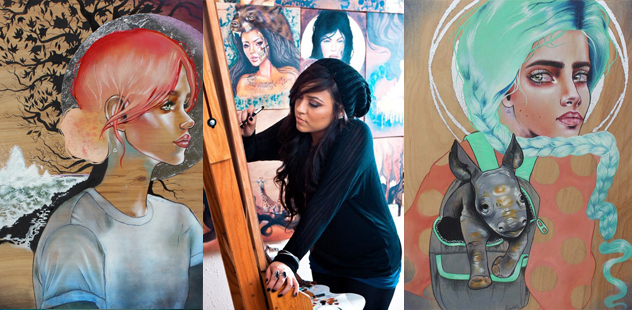
Amélia Pinto -- She has tinted skin, brown eyes, and long wavy brown hair. She is tall and slim with shallow curves. Her heritage is Brazilian-American. She speaks English and Portuguese. After high school, Amélia spent a study abroad year through the Painting with Pride program at Fundacao Armando Alvares Penteado in Sao Paulo, Brazil where she explored Brazilian culture and painting. Then she enrolled in the Massachusetts College of Art and Design in Boston with an Illustration major. She also takes Art New England summer intensive classes on painting, primarily figure, still life, and plein air work. She wants to use painting and illustration to showcase queer people of color, their environments, and objects of cultural importance to them. Amélia is a lesbian who belongs to the Queer Artists Collective, where she fell in love with furniture designer Fran Charpentier. Amélia likes to wear artist styles in black or deep colors like permanent green, ultramarine, Winsor violet, or Alizarin crimson.
ILLUSTRATION BFA
at the Massachusetts College of Art and Design in Boston
As students grow in their capacity to draw from observation—a key tenet of the program—they learn to render images in a range of media and to develop a variety of visual concepts. Students also use electronic media to explore compositional elements of time and movement and learn how to integrate them into visual storytelling.
The illustration faculty are all active freelance illustrators or owners of their own illustration firms—and as such, offer significant insight into the demands of the professional landscape for illustration.
LEARNING OUTCOMES
• Understand and use of a range of drawing/ painting materials & methods
• Expertise in using tools to advance craft
• Understand use of image-making technology
• Understand observational drawing/ painting
• Understand relationship between word and image
• Understand implied & sequential narrative
• Understand linear & atmospheric perspective
• Understand conceptual thinking in the making process
• Value and use experimentation, investigation, & risk taking
• Embrace innovation in long term explorations
• Develop strong personal voice
• Understand importance of active studio practice
• Understand and appreciate richness of cross-cultural influences
• Understand and value practice of effective creative collaboration
• Understand and value self-evaluation and critique
• Understand and value strong visual, written & verbal presentation skills (portfolio, artist statements
• Understand and value professional ethics and practices
• Understand the role of artist/ illustrators (historic & contemporary)
UNIQUE TO MASSART
The program’s coursework culminates in a thesis project, consisting of a body of images that will reveal the student’s emerging style and personal point of view. Students exhibit this work and present their portfolio to invited professionals from publishing, editorial, advertising, institutional, and corporate markets.
Illustration
Foundation Year
Major Requirements
• SFDN181 Studio for Drawing 3 cr. Fall
• SFDN182 Visual Language 3 cr. Fall
• SFDN185 Drawing Projects 3 cr. Spring
• SFDN191 Time 3 cr. Spring
• SFDN183 Form Study 3 cr. Fall/Spring
• Studio Elective 3 cr. Fall/Spring
Liberal Arts and Art History Requirements
• FRSM100 First-Year Seminar 3 cr. Fall/Spring
• HART100 Introduction to Western Art 3 cr. Fall
• HART - History of Art Elective 3 cr. Spring
• LALW100 Thinking, Making, Writing: Using Words with Clarity and Flair 3 cr. Fall/Spring
Total Credits: 30
Sophomore Year
Major Requirements
• CDIL205 Media Techniques 3 cr. Fall & Spring
• CDIL215 Sophomore Illustration 3 cr. Spring
• CDIL211 Human Figure in Illustration 3 cr. Fall/Spring
• CDIL208 Digital Illustration 3 cr. Fall/Spring
• CDIL216 Color for Illustrators 3 cr. Fall/Spring
• CDIL214 Drawing: Observation to Concept 3 cr. Fall/Spring
Total Credits: 30
Junior Year
Major Requirements
• CDIL304 Advanced Drawing Projects for Illustrators 3 cr. Fall & Spring
• CDIL305 Word and Image 3 cr. Fall & Spring
• CDIL326 Junior Illustration 3 cr. Fall & Spring
• CDIL327 Technical Illustration 3 cr. Fall/Spring
• Studio Electives 12 cr. Fall/Spring
Total Credits: 30
Senior Year
Major Requirements
• CDIL403 Thesis Project I: Research 3 cr. Fall
• CDIL404 Thesis Project II: Imagery 3 cr. Fall
• CDIL419 Senior Illustration 3 cr. Spring
• CDIL420 Illustration Portfolio 3 cr. Spring
• Studio Electives 6 cr. Fall/Spring
Total Credits: 30
Liberal Arts and History of Art: Soph-Senior Year
• LALW200 Literary Traditions 3 cr. Fall/Spring
• HART-History of Art electives-6 cr.
• LASS-Social Science elective-3 cr.
• LALW-Literature and Writing elective-3 cr.
• LAMS-Math or Science elective-3 cr.
• LA-Liberal Arts elective-6 cr.
• LAHART-Liberal Arts or History of Art elective-3 cr.
• Summative Elective-Take one 400 level course from LALW, LASS, or LAMS-3 cr.
Summary
Studio Foundation 18 cr
Illustration 42 cr
History of Art 12-18 cr
Liberal Arts 24-30 cr
Studio Electives 18 cr
Total Credits 120 cr
Art New England Summer Intensives
The 100 Drawings Challenge with Dean Nimmer
This class is structured to strengthen students’ drawing skills and broaden opportunities for experimentation and visual thinking through a rigorous concentration on drawing. Students explore and use a variety of media and methods including collage, paint, monotypes and other mixed media. Participants work from both observation and imagination at a pace of 20 drawings per day. Like running a visual marathon, 100 Drawings inspires creative spirit, bolsters confidence and opens new avenues to enthusiastically make art in the future.
Translating Nature: Open Air Painting with Nancy Friese
Observing and experiencing nature for painting is often exhilarating and sometimes frustrating at the same time. By balancing work on a longer, large painting with daily series studies, we will use a variety of approaches to create meaningful color and light relationships in painting. Studies may be done from backlit scenes, looking into the sun, even midday light, raking late afternoon light, morning light or twilight. Moving from tonal and complementary progressions to atonal color surprises, different light qualities can be created. First with muted gray grounds and then with saturated and brightly colored grounds, color invention may occur. Single trees, vast greenswards, hill lines, or clouds are examples of a thematic thread the artist may choose for the weeks work. The larger, longer painting will move from broad color and light relationships to more subtle color changes and nuance in detail. During the week, we will have developed good strategies for color and light effects in future studio work. Steps and stages will be discussed in a peer critique, a small group critique, two large discussions and on site one-on-one situations. Two slide talks and a color-mixing demonstration will start the week off. Either or both water paints or oil paints can be used. Beginners, intermediate and advanced levels are welcome.
The Plein Air Challenge with Elizabeth O'Reilly
Starting with small quick studies and limited color palettes students will build up to longer one-day paintings. Students will be helped in setting up to paint, and specific projects related to composition, color and other formal issues will be assigned. An important component will be learning how to sketch and note-take on site so as to hone observational skills in order to paint away from the site. Painting at night is encouraged on campus. Daily group critiques are an important component as well as one-on-one instruction and demonstrations. The workshop will be conducted primarily in oil, however students are welcome to work in acrylic or gouache.
Landscape Painting with Christopher Chippendale
This workshop aims to build, sharpen and revisit skills that enable the artist to respond with paint to the changing conditions of light and color found out-of-doors. Participants make direct, one-sitting paintings each morning and afternoon, and have opportunities to develop more sustained works as the week progresses. The wooded and vista-filled environs of the Bennington campus—where physical spaces are by turns intimate and expansive—provide us our subject matter. A look at the traditions of landscape painting, a side trip to North Bennington for painting on the grounds of a beautiful nearby estate, and critiques and analyses fill out our week.
Narrative Drawing with Elise Engler
Narrative Drawing is about making images that tell a story or create a sequence. Drawing is defined broadly; sewing, simple printing, bookmaking as well as drawing with more traditional materials are all possibilities. Experimentation with varieties of formats is encouraged. We will look at a range of narrative art from across cultures and throughout time. The class is open to all, from beginners to advanced students.
Still Life: Structure and Variation with Catherine Kehoe
Still life will be the starting point for exploration of pictorial structure, space and invention. We will create images in the simplest terms: a series of shapes and colors made of paint (not a beach ball or a flower). We will generate permutations of the chosen motif through reduction and analysis. As we walk the line between accuracy and abstraction, we will see through and around the meaning of things to grasp relationships between objects and space. Mediums will include graphite, charcoal, ink, acrylic or oil paint, and collage. The personal voice of each painter will come through in the diverse results. Looking at historical and contemporary still life paintings will place the practice in a larger context.
Color in Still Life with David Campbell
Learn to see color through painting still life. By working with a variety of still-life setups, we will discern color relationships and translate them into paintings. For beginning students, the workshop will be a pathway to painting from observation. For advanced students, the workshop will answer questions such as “why can’t I mix that color?” Participants will learn to relate color and value, and to discover why color looks different depending on surrounding colors. The class will demand a lot both intellectually and visually, but we will have fun all the while.
Still Life: Structure and Variation with Catherine Kehoe
Still life will be the starting point for exploration of pictorial structure, space and invention. We will create images in the simplest terms: a series of shapes and colors made of paint (not a beach ball or a flower). We will generate permutations of the chosen motif through reduction and analysis. As we walk the line between accuracy and abstraction, we will see through and around the meaning of things to grasp relationships between objects and space. Mediums will include graphite, charcoal, ink, acrylic or oil paint, and collage. The personal voice of each painter will come through in the diverse results. Looking at historical and contemporary still life paintings will place the practice in a larger context.
Painting the Figure in Context with Susan Lichtman
Working on small panels in the luminous medium of gouache paint, students create figurative compositions based on direct observation and invention. Landscape and interior spaces, still lifes and photographs will be used as sources to construct particular meaningful and narrative contexts for each day’s pose. Like directors of a film, students will manipulate the setting for their figures by adjusting light, point of view and still life elements. Drawing experience required, beginning painters welcome.
Go Figure! with David Campbell
This workshop will involve painting the nude figure in the interior. The aim will be to examine the relationship of the figure to the surrounding space, and how one builds a picture from those occurrences. Students will get the opportunity to work on smaller/faster paintings in conjunction with a longer/more sustained piece. More specific ideas to be explored will include the following: embracing and building the physicality of the surface, seeing color and value structures abstractly, de-conceptualizing the figure, and prioritizing pictorial space over the idea of illusion and realism.
Figure Drawing Marathon – Five full days of continuous drawing with Gwen Strahle
The goals of this workshop are to stimulate and maintain a continuous flow of drawing energy and examination. Students will work from the model using various approaches, and for varying durations. The model will be drawn both singularly and within a context. The aim of this class is to promote deep contact with the drawing experience through this sustained exposure, and to provide multiple opportunities for invention and change. There will be an ongoing emphasis on consolidating drawing, concentration, stamina, and persistence. A variety of exercises will be woven into the structure, including working from memory, drawing from other members of the studio, and gesture drawing.
Queer Artists Collective
Purpose
MassArt's Queer Artists Collective (QAC) will benefit the MassArt community by being a safe place for queer people to gather and discuss changes that need to be made to make MassArt more intersectional and inclusive.
Mission Statement
The Queer Artists Collective is a group where all students who consider themselves a part of the LGBTQ+ community can come together to discuss things such as positive action happening on campus, resources that are available, and what needs to be done to make MassArt a safe environment where there is no discrimination, harassment or intolerance. We will plan events and fundraisers that will raise awareness and bring the community together, but above all we will work to support each other on and off campus.
Amélia has a travel sketch kit. that contains sketch paper, pencils, pens, watercolors, and a few other tools. Using a ring binder is ingenious because then you can easily take out, add, or reorganize pages as needed. Any art paper can be converted to this use with a paper cutter and a hole punch, or you can look for art paper inserts to buy. The point to a travel sketch kit is to make it so light that you can carry it everywhere, not to pack half your studio into a suitcase or backpack. This list includes basic items, pencils, pen and ink, and watercolors in separate sets.
Fran Charpentier -- She has fair skin, brown eyes, and wavy brown hair cut at chin length. She wears glasses. She is short and stocky, with small breasts and broad hips. Her heritage includes American, Canadian, and French. She speaks English and French. She is demiromantic lesbian.
Fran grew up in Maine, then moved to Boston, Massachusetts for college. Presently she is studying toward a Bachelor of Fine Arts in Industrial Design with a Furniture Design Certificate at Massachusetts College of Art and Design in Boston. She wants to design furniture and other products for less common shapes of bodies and families. Among her current projects is designing a modular family bed for polyfamilies that includes cosleeping modules for children. A previous project involved sketches of erotic furniture for lesbian activities. Fran belongs to the Queer Artists Collective, where she met the illustrator Amélia Pinto. Fran tends to wear outdoorsy clothes in deep earth tones like forest green, goldenrod, or burgundy.
INDUSTRIAL DESIGN BFA
at the Massachusetts College of Art and Design in Boston
The Industrial Design undergraduate program empowers students to become creative, holistic problem solvers who impact our society through the development of meaningful and relevant designed products and experiences.
By employing a user-centered design and iterative approach to exploring ideas, students utilize empathic integration of social and functional needs when considering materials and manufacturing options for concept development. Visual and verbal communication skills are a hallmark of the program, allowing our students to understand and pragmatically convey the value of design to business, communities and people.
LEARNING OUTCOMES
• Ability to design products and systems, including but not limited to a foundational understanding of how products and systems are made; what makes them valuable; how they are developed, realized, and distributed; and how they are related to environmental and societal issues and responsible design
• Ability to use technologies and tools associated with multi-dimensional design representation, development, dissemination, and application
• Foundational knowledge of the history of industrial design, including but not limited to the influences of works and ideas on the evolution of design study and practice over time and across cultures
• Fundamental knowledge of user experience, human factors, applied ergonomics, contextual inquiry, user preference studies, and usability assessments
• Ability to research, define, and communicate about problems, variables, and requirements; conceptualize and evaluate alternatives; and test and refine solutions, including the ability to synthesize user needs in terms of value, aesthetics, and safety
• Ability to communicate concepts and specifications in verbal, written, and multiple media at levels ranging from abstraction and sketches, to detailed multi-dimensional, functional, and visual representations
• Functional knowledge of professional design practices and processes, including but not limited to ethical behaviors and intellectual property issues such as patents, trademarks, and copyrights
• Knowledge of basic business practices and their relationship to industrial design as well as the ability to investigate and reconcile the needs related to entrepreneurship, marketing, engineering, manufacturing, servicing, and ecological and social responsibility in the process associated with specific design projects
• Acquisition of collaborative skills and the ability to work effectively in interdisciplinary or multidisciplinary teams
• Opportunities for advanced undergraduate study in areas that intensify skills and concepts, and that deepen and broaden knowledge of the profession of industrial design
• Experience in applying design knowledge and skills beyond the classroom is essential. Opportunities for field research and experience, internships, collaborative programs with professional and industry groups, and international experiences are strongly recommended. Such opportunities to become oriented to the working profession should be supported through strong advising
UNIQUE TO MASSART
All students; sophomores, juniors and seniors, are provided studio spaces which comprises of; a desk with shelving and pin-up space, a stool, a rolling storage unit and power. The space allocation gets slightly larger as students progress in the program.
These spaces allow students to work in studio during class time as well as during the open hours of the building, providing a easy flow between handwork and digital work, both 2D & 3D, and emphasizing the department’s approach of learning through making.
To aid students in safe, creative exploration, the studio manager, shop monitor and course assistants provide additional support for the course’s faculty.
Each year, MassArt hosts an exhibition, “Design Massachusetts,” which features numerous award-winning projects designed by the college’s industrial design alumni.
INDUSTRIAL DESIGN
Foundation Year
Major Requirements
• SFDN181 Studio for Drawing 3 cr. Fall
• SFDN182 Visual Language 3 cr. Fall
• SFDN185 Drawing Projects 3 cr. Spring
• SFDN191 Time 3 cr. Spring
• SFDN183 Form Study 3 cr. Fall/Spring
• Studio Elective 3 cr. Fall/Spring
Liberal Arts and Art History Requirements
• FRSM100 First-Year Seminar 3 cr. Fall/Spring
• HART100 Introduction to Western Art 3 cr. Fall
• HART - History of Art Elective 3 cr. Spring
• LALW100 Thinking, Making, Writing: Using Words with Clarity and Flair 3 cr. Fall/Spring
Total Credits: 30
Sophomore Year
Major Requirements
• EDID215 Industrial Design Principles 3 cr. Fall
• EDID225 Industrial Design Form 3 cr. Fall
• EDID235 Materials & Manufacturing 3 cr. Spring
• EDID245 Human Factors Seminar I - Ergonomics 3 cr. Spring
• Studio Electives 6 cr. Fall/Spring
• EDID205 Drawing for Designers 3 cr. Fall/Spring
Junior Year
Major Requirements
• EDID216 Introduction to CAD/Solid Modeling for ID 3 cr. Fall & Spring
• EDID315 Industrial Design I 3 cr. Fall
• EDID325 Manufacturing Process II 3 cr. Fall
• EDID345 Industrial Design II 3 cr. Spring
• EDID355 Professional Practice:Discovering Your Professional Self 3 cr. Spring
• Studio Elective 3 cr. Fall/Spring
Senior Year
Major Requirements
• EDID415 Industrial Design III 3 cr. Fall
• EDID425 Degree Project I - Research 3 cr. Fall
• EDID435 Degree Project II- Development 3 cr. Spring
• EDID365 Product Development Laboratory 3 cr. Fall/Spring
• Studio Electives 9 cr. Fall/Spring
Liberal Arts and History of Art: Soph-Senior Year
• LALW200 Literary Traditions 3 cr. Fall/Spring
• HART297 Roots/Design History 1650-1920 3cr Spring
• HART-History of Art electives-3 cr.
• LASS-Social Science elective-3 cr.
• LALW-Literature and Writing elective-3 cr.
• LAMS-Math or Science elective-3 cr.
• LA-Liberal Arts elective-6 cr.
• LAHART-Liberal Arts or History of Art elective-3 cr.
• Summative Elective-Take one 400 level course from LALW, LASS, or LAMS-3 cr.
Summary
Studio Foundation 18 cr
Industrial Design 42 cr
History of Art 12-18 cr
Liberal Arts 24-30 cr
Studio Electives 18 cr
Total Credits 120 cr
FURNITURE DESIGN CERTIFICATE
at the Massachusetts College of Art and Design in Boston
MassArt and North Bennet Street School, preeminent institutions respectively in fine art and design and fine craftsmanship, are excited to offer a unique program that capitalizes on the extraordinary and complementary strengths of the two institutions. The program emphasizes design as an iterative process in the creation of studio furniture, focusing on the development of each student as an artist, designer and craftsperson.
Students take two prerequisites at North Bennet Street School: Fundamentals of Fine Woodworking and Fundamentals of Machine Woodworking to ensure competency and safe practices in the facilities of both institutions. The certificate program begins with foundation courses in design process and the history of furniture. The program then progresses to a sequence of studio courses that allow students to develop projects of increasing complexity, rooted in their personal vision and artistic identity. The Furniture Certificate culminates in a major project coupled with a Professional Practice seminar to aid students in understanding design industry standards and practices for a facile transition into the workplace.
LEARNING OUTCOMES
Students who complete the Furniture Design Certificate are expected to be able to demonstrate the following learning outcomes, which are necessary for successful entry into professional design practice.
• Develop skills to support the furniture design process, such as researching different styles and artists’ work, sketching, sourcing material and building models
• Gain fluency in different methodologies of visualizing and communicating furniture designs
• Develop good working habits & self-discipline in the process from design to studio practice
• Have a general awareness of the historical development and social history of furniture in America as a context for creative work
• Develop competencies in woodworking for the creation of studio furniture
• Develop familiarity with related techniques and how they can be incorporated into unique studio pieces
• Build a personal aesthetic in the design of furniture
• Develop strong safety practices relating to tools and machines and health in the production of studio furniture
• Have a basic understanding of professional practices of studio furniture makers
• Have a basic understanding of environmental and sustainability issues related to the production of furniture
• Present final work in a gallery setting. Collaboratively develop and coordinate all aspects of that exhibit
Furniture Design Certificate
Semester 1
• EDID200 Concept to Object:process/Furn 3cr
• EDID317 History&Development/Mod.Furn 3cr
Semester 2
• 3DTD210 Advanced Techniques for Furniture Making 3 cr.
• 3DTD330 The Art of Furniture Design I: Fundamentals of Design and Construction 3 cr.
Semester 3
• 3DTD340 The Art of Furniture Design II: Fundamentals of Design and Construction 3 cr.
Semester 4
• 3DTD440 Intermediate Furniture Design: Pre-Capstone Studio 3 cr.
Semester 5
• EDID230 Professional Practice 3cr
• 3DTD441 Furniture Design Capstone 3 cr.
Electives
• Studio Electives 6cr
Queer Artists Collective
Purpose
MassArt's Queer Artists Collective (QAC) will benefit the MassArt community by being a safe place for queer people to gather and discuss changes that need to be made to make MassArt more intersectional and inclusive.
Mission Statement
The Queer Artists Collective is a group where all students who consider themselves a part of the LGBTQ+ community can come together to discuss things such as positive action happening on campus, resources that are available, and what needs to be done to make MassArt a safe environment where there is no discrimination, harassment or intolerance. We will plan events and fundraisers that will raise awareness and bring the community together, but above all we will work to support each other on and off campus.
Libertee Williams -- She has light brown skin, hazel eyes, and long loosely nappy brown hair. She is slim with a heart-shaped face above big breasts and hips. Her heritage is African-American. She knows English and French. Libertee is studying toward a Bachelor of Fine Arts degree in Film/Video with a Communication Design certificate at the Massachusetts College of Art and Design in Boston. She wants to make films that show black people and their cultures in a positive light, including the importance of hair as an expression of identity and human bonding. She also belongs to the Queer Artists Collective, where she fell in love with De-lisha Leigh. Both of them love film and communal grooming, so they latched onto each other very fast.
FILM/VIDEO
at the Massachusetts College of Art and Design in Boston
Film/Video is a 39 credit major that begins in the sophomore year. Students take 6 credits of major production each semester, and choose their electives in order to build a personal approach to time-based media. Film/Video electives regularly include cinematography and lighting, screenwriting, sound design, hand-made film, performance for camera, video installation, editing, and post-production finishing.
Students majoring in Film/Video are encouraged to experiment widely in order to realize their personal aesthetic goals and vision. Students focus on producing their own work in all three years of the major, working both individually and in collaboration with their peers. They are introduced to all facets of digital and analogue production, and work in experimental, narrative, and nonfiction forms.
Students have the opportunity to explore emerging digital platforms, including live video and performance, video installation, multi-screen projection and 360º camera. Within their major courses, students explore the history and contemporary culture of the moving image through regular viewings and discussions of a wide range of films, video art, and time-based installation work. In-class critiques give students vocabularies to understand and discuss their work, and help to contextualize it within the dialogue of contemporary art.
After graduating, MassArt Film/Video alumni continue their studies in top-ranked MFA programs; become award-winning filmmakers and video artists; work in the film industry as cinematographers, gaffers, editors and production assistants; and direct and program film festivals.
LEARNING OUTCOMES
• To articulate and realize a personal vision with the moving image
• To develop and engage in a personal thesis project.
• To be passionate about their work and have the technical and conceptual skills to reach that vision.
• To gain confidence in their own skills as media makers.
• To be creative risk takers and problem solvers, and to learn from failure.
• To understand the history of the moving image and its various styles and genres and incorporate a critical analysis of the moving image into their work.
• To know how to do research, how to source and build resources for their work.
• To develop openness to listen to the critique of peers and faculty and thoughtfully incorporate relevant feedback to their work.
• To develop awareness of current film, video, installation practices in the global culture.
• To develop a respect and appreciation for diversity across a broad spectrum: racial, social, political, economic, gender, and in a socially sensitive art practice.
Film/Video
Foundation Year
Major Requirements
• SFDN181 Studio for Drawing 3 cr. Fall
• SFDN182 Visual Language 3 cr. Fall
• SFDN185 Drawing Projects 3 cr. Spring
• SFDN191 Time 3 cr. Spring
• SFDN183 Form Study 3 cr. Fall/Spring
• Studio Elective 3 cr. Fall/Spring
Liberal Arts and Art History Requirements
• FRSM100 First-Year Seminar 3 cr. Fall/Spring
• HART100 Introduction to Western Art 3 cr. Fall
• HART - History of Art Elective 3 cr. Spring
• LALW100 Thinking, Making, Writing: Using Words with Clarity and Flair 3 cr. Fall/Spring
Total Credits: 30
Sophomore Year
Major Requirements
• MPFV220 Video I 3 cr. Fall
• MPFV210 Film I 3 cr. Fall
• MPFV245 Sound I 3 cr. Fall
• MPFV221 Video II 3 cr. Spring
• MPFV211 Film II 3 cr. Fall/Spring
• Studio Elective 3 cr. Fall/Spring
Total Credits: 30
Junior Year
Major Requirements
• MPFV322 Junior Major Viewing 1 3 cr. Fall
• MPFV325 Junior Major Viewing II 3 cr. Spring
• MPFV312 Junior Major Production 3 cr. Spring
• Studio Electives 9 cr. Fall/Spring
*Choose 1 of 2
• MPFV323 Experiments in Film Narrative 3 cr.
Total Credits: 30
Senior Year
Major Requirements
• MPFV410 Senior Thesis Studio I 3 cr. Fall
• MPFV402 Contemporary Issues in Film/Video 1 3 cr. Fall
• MPFV411 Senior Thesis Studio II 3 cr. Spring
• MPFV403 Contemporary Issues in Film/Video II 3 cr. Spring
• Studio Electives 9 cr. Fall/Spring
Total Credits: 30
Liberal Arts and History of Art: Soph-Senior Year
• LALW200 Literary Traditions 3 cr. Fall/Spring
• HART-History of Art electives-6 cr.
• LASS-Social Science elective-3 cr.
• LALW-Literature and Writing elective-3 cr.
• LAMS-Math or Science elective-3 cr.
• LA-Liberal Arts elective-6 cr.
• LAHART-Liberal Arts or History of Art elective-3 cr.
• Summative Elective-Take one 400 level course from LALW, LASS, or LAMS-3 cr.
Summary
Studio Foundation 18cr
Film/Video 39cr
History of Art 12-18cr
Liberal Arts 24-30cr
Studio Electives 21cr
Total Credits 120cr
COMMUNICATION DESIGN CERTIFICATE
at the Massachusetts College of Art and Design in Boston
When you look at your cell phone, shop, drive, take a bus, surf the net, or engage in thousands of other daily activities, you are encountering the work of communication design. The brands, websites, apps, brochures, and other visual communications created by designers inform the way we understand the world and ourselves. Whether your goal is to pursue a new career in the design field, to gain skills that will make you more effective in your current position, or to expand your ability to brand and market an entrepreneurial venture, MassArt’s suite of Communication Design certificates offer rigorous programs that reflect MassArt’s focus on individualized learning. Our program is fully remote, yet all of our online courses include synchronous meetings. You will build relationships with faculty who are experienced teachers and leaders in the industry and join a community of MassArt design students.
Our Communication Design curriculum develops students’ skills in branding, print and digital publications, app and website design, packaging, event promotions, information design, and environmental graphics. Graduates of the full program enjoy careers as visual designers, brand strategists and brand designers, graphic designers, UX and UI designers, and product designers in design studios, agencies, companies, non-profits, and in their own freelance design businesses.
The program offers three stackable certificates, and the complete sequence of three can be completed in just over 2 years. Class meetings are generally held weekday evenings, to accommodate the diverse schedules of our students, including those students who work full-time
THREE LEVELS OF CERTIFICATION
LEVEL 1
Level 1 consists of 4 courses, which provide a solid foundation in communication design. You’ll gain insight into how to design impactful visual communications for any medium (print or screen-based)and gain a solid foundation of basic design skills that can be applied in your work and life. Level 1 courses can be taken as a stand-alone certificate or as a foundation for proceeding to Level 2.
LEVEL 2
Level 2 is a sequence of 3 courses and one non-credit workshop, which build on the basic skills learned in Level 1. In these courses students advance their skills in typography and in brand design, enter the world of UX Design, gain skills in interactive design for web and mobile interfaces, and build their own professional design portfolio. Completion of Level 2 gives graduates the skills to obtain a paid internship or junior designer position at a design firm, agency, or in-house design department at a company or non-profit.
LEVEL 3
Level 3 is a sequence of 4 courses and one non-credit workshop, which challenge students to conceive of and design complex and comprehensive design systems at a more creative and sophisticated design level. Completion means you have achieved the portfolio and skills to launch your career as a professional designer.
Both Level 2 and Level 3 include portfolio reviews, in which students present their work to panels of professional designers. This is a great way to get feedback on your work and to build your network in the field of communication design.
LEARNING OUTCOMES
Students who complete all three tiers of the Communication Design Certificate are expected to demonstrate the following learning outcomes which are essential skills and knowledge for entry into professional design practice. Note: Completion of Level 1 or Levels 1 and 2 represent significant progress toward the following outcomes.
• Design complex visual communications systems including consumer brands, print and digital publications, promotional and information campaigns, websites, apps, packaging and signage.
• Develop and apply original, engaging design concepts that effectively communicate an intended idea and/or message to a defined audience
• Apply visual design skills (including composition, color, and type/image integration), information design skills, professional typesetting techniques, and creative typography to a variety of communication design projects
• Apply principles and processes of UX and UI design to the planning and design of interactive experiences for desktop, mobile, and other screen-based media
• Identify a community problem or need and research, develop, and design an effective solution.
• Employ skills in collaboration by effectively providing critical feedback to others and integrating feedback from various sources into one’s own designs.
• Practice professional design process including research, idea generation, design iteration, presentation, incorporation of feedback, technical execution, and craft to a variety of communication design projects.
• Utilize industry-standard design software and art media in creating designs, mock-ups, and prototypes.
• Create an entry-level portfolio suitable for job search in professional Communication Design, UX Design and Graphic Design
Communication Design Certificate
Required Courses
• LEVEL 1
• CDGD203 Foundations of Graphic Design 3cr
• CDGD201 Typography 3cr
• CDGD219 Graphic Design 1 2cr
• CDGD202 Intermediate Typography 3cr
• LEVEL 2
• DSGN346 User Experience (UX) Design 3cr
• CDGD310 Graphic Design II 3cr
• CDGD371 Intermediate Portfolio 4cr
• NC469 Print Production Workshop 0cr
• LEVEL 3
• CDGD311 Graphic Design III 3cr
• CDGD376 Information Design 2cr
• CDGD337 Advanced Interactive Projects 3cr
• NC470 Tools for Web and App Development 0cr
• CDGD471 Final Portfolio 4cr
Queer Artists Collective
Purpose
MassArt's Queer Artists Collective (QAC) will benefit the MassArt community by being a safe place for queer people to gather and discuss changes that need to be made to make MassArt more intersectional and inclusive.
Mission Statement
The Queer Artists Collective is a group where all students who consider themselves a part of the LGBTQ+ community can come together to discuss things such as positive action happening on campus, resources that are available, and what needs to be done to make MassArt a safe environment where there is no discrimination, harassment or intolerance. We will plan events and fundraisers that will raise awareness and bring the community together, but above all we will work to support each other on and off campus.
De-lisha Leigh -- She has light brown skin, black eyes, and nappy black hair worn in microlocks that hang just past her shoulders. Her ears are double-pierced. Her body is slim and boyish. She has mandala tattoos on both forearms. Her heritage is African-American. She knows English and American Sign Language. De-lisha is studying toward a Bachelor of Fine Arts in Fibers at the Massachusetts College of Art and Design in Boston. She also takes Art New England summer intensives on all different kinds of sculpture. She wants to make art objects and props for film, particularly art films and other experimental video work. De-lisha belongs to the Queer Artists Collective, where she fell in love with Libertee Williams. Both of them love film and communal grooming, so they latched onto each other very fast.
For black people, natural hair is tangled in issues of race and politics. Wearing natural hair, instead of perming it to resemble white hair or shaving it off to wear a wig, means lower chances of employment. Caring for natural hair supports human bonding. For people who enjoy the grooming process, this makes a great opportunity to connect with family.
Microlocks are tiny dreadlocks the diameter of a pencil or smaller.
FIBERS BFA
at the Massachusetts College of Art and Design in Boston
The BFA Program offers courses in weaving, surface design, knitting, felt-making, basketry, hand papermaking, interlacing, dyeing, and fabric construction.
In seminars, advanced studios and interdisciplinary courses, students work with the rich possibilities afforded by understanding fibers in relation to other disciplines including sculpture, performance, installation, drawing, and architecture.
Emphasis is placed on making personally meaningful connections between traditional approaches to fiber and contemporary developments in art, artisanry, and design.
LEARNING OUTCOMES
• Develop skill and an understanding of the importance of craftsmanship
• Understand a wide range of approaches and methodologies to problem solving
• Develop good working habits & self discipline
• Develop cross disciplinary awareness
• Develop an understanding of conceptual, symbolic and metaphoric issues
• Develop an awareness of historical, contemporary, cross-cultural issues and artists working in their field
• Encourage their personal vision and imaginations to become a tangible reality
• Develop a working knowledge of design principles
• Develop a sense of being an artist using life and studio experience to support their ideas
• Cooperative classroom experience
• Foster collaboration among peers
• Establish relationships/ work with community
• Safety: tools, equipment, materials, processes
• To assume the responsibility of the development of their own professional career in whatever direction it may take
• Participate in critical dialogue with peers in their field
• Develop professional and vocational resources
• Sustainability
UNIQUE TO MASSART
In Fall 2014, MassArt students participated in the recreation of a Robert Rohm installation at the Institute of Contemporary Art in Boston, MA.
Fibers
One of the world’s oldest art forms, fiber is a rich source of creative inspiration. The fibers program teaches students both traditional and innovative techniques for working with fiber in two and three dimensions. Courses are offered in weaving, surface design, hand papermaking, interlacing, dyeing, constructions, and collage. Students are encouraged to investigate fibrous materials for their potential as sculptural, architectural, and functional objects and for their use in mixed-media installations and site-specific environments. Advanced seminars provide an opportunity to discuss current contemporary art-making issues in fibers. Students research the topics and artists important to their own development, and visiting artists, slide lectures, studio visits, and exhibitions enrich classroom discussions. The program emphasizes creative approaches to design, the use of new media including computer applications, and the accumulation of technical knowledge. Facilities include a room dedicated to papermaking and space for the construction of large-scale fiber projects.
Foundation Year
Major Requirements
• SFDN181 Studio for Drawing 3 cr. Fall
• SFDN182 Visual Language 3 cr. Fall
• SFDN185 Drawing Projects 3 cr. Spring
• SFDN191 Time 3 cr. Spring
• SFDN183 Form Study 3 cr. Fall/Spring
• Studio Elective 3 cr. Fall/Spring
Liberal Arts and Art History Requirements
• FRSM100 First-Year Seminar 3 cr. Fall/Spring
• HART100 Introduction to Western Art 3 cr. Fall
• HART - History of Art Elective 3 cr. Spring
• LALW100 Thinking, Making, Writing: Using Words with Clarity and Flair 3 cr. Fall/Spring
Total Credits: 30
Sophomore Year
Major Requirements
• 3DTD201 Projects in Wood 3 cr. Fall/Spring
• 3DFB - Fibers Electives 3 cr. Fall/Spring
• Studio Electives 6 cr. Fall/Spring
• 200 Level-Fibers Electives 6cr. Fall/Spring
Total Credits: 30
Junior Year
Major Requirements
• 3DFB300 3D Seminar: Fibers 3 cr. Fall
• 3DFB350 Adv. Studio: Fibers 3 cr. Fall
• 3DFB301 3D Seminar: Fibers 3 cr. Spring
• 3DFB351 Adv. Studio: Fibers 3 cr. Spring
• Studio Electives 9 cr. Fall/Spring
Total Credits: 30
Senior Year
Major Requirements
• 3DTD400 Professional Practices 3 cr. Fall
• 3DFB450 Advanced Fibers Studio 3 cr. Fall
• 3DFB401 3D Seminar: Fibers 3 cr. Spring
• 3DFB451 Advanced Fibers Studio 3 cr. Spring
• Studio Electives 9 cr. Fall/Spring
Total Credits: 30
Liberal Arts and History of Art: Soph-Senior Year
• LALW200 Literary Traditions 3 cr. Fall/Spring
• HART-History of Art electives-6 cr.
• LASS-Social Science elective-3 cr.
• LALW-Literature and Writing elective-3 cr.
• LAMS-Math or Science elective-3 cr.
• LA-Liberal Arts elective-6 cr.
• LAHART-Liberal Arts or History of Art elective-3 cr.
• Summative Elective-Take one 400 level course from LALW, LASS, or LAMS-3 cr.
Summary
Studio Foundation 18 cr.
Fibers/3D 36 cr.
History of Art 12-18 cr.
Liberal Arts 24-30 cr.
Studio Electives 24 cr.
Total Credits 120 cr.
Art New England Summer Intensives
Bits and Pieces To Weave the Whole: A Playful Approach to Basket Weaving with Nathalie Miebach
The physical structure of a basket weave is held together through the tension of the materials that build the weave’s matrix. This workshop is about taking a fresh approach to basket weaving—being willing to play, tinker and take risks with materials and outcomes. We will approach the structure of basket weaving from the perspective of multiples to build the larger whole, integrating woven and non-woven materials. We’ll build, destroy, unravel, reweave, glue, drill, hammer, tape and whatever we need to do to problem-solve our way to exploring the matrix of the weave. Basic twining, coiling and plaiting techniques will be taught.
Mosaics: Techniques, Materials and Layout with Yulia Hanansen
This beginner to intermediate level course focuses on understanding technical and aesthetic aspects in fine art mosaic making. During the week students will study both theory and practice of creating mosaics out of stained glass. The course will begin with an image presentation that showcases mosaic artworks from around the world. A demonstration on correct use of tools and materials and then on a variety of layouts (andamento) and design and interpretation principles will follow. Studio practice will encompass reinterpreting an image or a design in a mosaic technique. Students will learn about the variety of layouts and how to effectively convey the image in the mosaic medium. Individual demos will be given throughout the entire course.
The Magic of Multiples: Explorations in Mold Making and Casting with Betsy Alwin
From making multiples to re-creating objects in different materials, casting is a powerfully rewarding studio process. In this workshop we cover mold-making basics that introduce the student to the process of casting in a variety of materials. We begin by developing an object to be cast, known as a pattern, in modeling clay, found objects or a combination of the two. After some practice, students develop a mold for at least two successful castings. Beginning with simple rigid plaster molds and progressing to flexible rubber molds, students will learn the materials and terminology associated with different approaches and techniques. We will discuss how to handle each material safely, how to determine the appropriate mold-making materials for different patterns and explore the different meanings that arise from different casting compounds. Materials to be cast include plaster, rubber, wax (indoor materials) and concrete (potentially for outdoors).
A Mixed Medium Workshop with Emphasis on the Figure in Space with Jim Peters
This workshop explores the Figure in various mediums: painting, digital photography, wax, wood, plaster, etc. Any one or all of these materials can be used by students to “construct” work. The idea of an “interior” or “stage” for the figure(s) will be explored with the intention of integrating figure into an environment. Looking at artists such as Bonnard, Katz, Neel, Hammershoi, Red Grooms/Mimi Gross, Kiefer, Hamilton, Dumas, and Munch, we will analyze how they use various spacial configurations in order to create a narrative and imbue the figure with certain characteristics. In our work the image of the figure may dominate the piece, be subjugated by the interior/room, or have just left the space pregnant with his/her former presence. While painting may be the primary theater of investigation, the combination/intersection of paint with other 2D and 3D elements (i.e. photographs, cardboard, wax, etc.) may be pursued. In the workshop students may work on widely differing projects with different processes. Individual critiques take place daily. All students/artists are welcome, regardless of their level of experience.
Making An Artist’s Book from Start to Finish with Stephanie Stigliano
This course will focus on creating one book over the course of the workshop. The Japanese style, stab-bound book will be fully realized with a narrative sequence, text and moving parts. The students will learn how to make book cloth, Suminagashi marbling, oil marbling and paste paper. They will develop the book from the inside out, beginning with imagining the story line. Next they will focus on writing and designing the text to accompany the imagery. They will construct several moving parts to create an interactive experience for the reader. The book will be bound with book cloth and decorative paper made in the workshop. The course is available to students at any level.
Ceramics: The Anthropomorphic Animal with Russell Wrankle
This workshop focuses on transferring observations of the animal world into expressive interpretations of life in clay. Languid hare, threatened canine, or contemplative goat… all begin with observations of gesture. Finding gesture and tension is revealed as we focus on bone and muscle structures beneath the skin. This workshop is designed to add to your existing tool bag of skills and techniques. Working in multiples of three, we will use one or all of the following techniques: additive and reductive, building solid/ hollowing out, darting and reattaching. The process of finding gesture and tension in clay will be revealed as we focus on bone and muscle structures beneath the skin. Languid hare, threatened canine, and contemplative goat all begin with observations of gesture, which also allows us to let one piece dry while working on the other. The goal is for students to return to their home studio with a deeper understanding of form and new tools to help achieve artistic goals.
Thinking through Handbuilding with Ann Agee
This class is about hand-building objects from simple to more complex forms. More basic functional vessels to more involved, richly painted forms- like stacked Dutch tulip vases will be considered, as well as the work of ceramic sculptors, who, like Peter Voulkos, pushed the industrial and domestic uses for clay into the realm of art. We will look
at the rich history of ceramics and how ceramic objects from many parts of the world are made, using any, and all methods of hand building, including slab, coil, and the potter’s wheel. Students will be encouraged to stretch their abilities, build on innate tendencies, and respond to their own work by taking risks and challenging themselves. This class is open to beginners as well as people with lots of experience.
High Fire Low Fire with Bob Green
From Raku, burnishing and stoneware soda firing in our gas kiln to a saggar firing with wood of burnished pieces, this class gives you the opportunity to make and fire clay pots or sculptures and experience many firing techniques to produce rich and varied surface colors and textures. We will make work for three days, burnish or glaze, and fire for the last two days. This class is for the novice as well as more advanced painter or potter who wants to expand their visual vocabulary and experience new options in clay.
Expressions in Wire, Paper and Paper Clay with Sally B. Moore
Wire is an incredibly versatile material for sculpture; it can be used to create linear works, or wrapped and woven into patterns to create textural objects and vessels. A delicate skin of papier mache over a wire armature creates an elegant abstraction or natural form. Paper clay is much like natural clay, but it can be used over a wire armature and does not have to be fired.
In this workshop participants will be exposed to artists from around the world who are using these materials in a variety of ways. We will begin with wrapping and joining wire to create a 3 dimensional structure that stands, and then explore the possibilities of covering some areas with translucent Thai paper. We will mix paper clay together in class as well as making use of the paper clay that can be purchased which is smoother than the hand mixed variety and can take detail to a higher degree. Students will be encouraged work both figuratively and abstractly to explore the possibilities of mixing line, mass, texture and translucence.
Going Off the Wall: Playful Thinking in 3D with Nathalie Miebach
Reinvigorate and expand your thinking about spatial movement and color through the versatile and ancient practice of weaving. Weaving traditions go back thousands of years, and beyond textiles and baskets is an accessible way to move from flat to round, from the wall space to the table or room space.
Using a variety of papers as our main materials, we’ll explore playful ways of building forms and juxtaposing colors using plaiting, twining and the hexagon weave. Every day, we’ll sketch out 3D ideas and build sculptures to push and prod our own inhibitions. This workshop is about pulling us out of over-thinking decisions, rediscovering new ways of using color to build form and exploring the versatility of woven paper surfaces and objects. Open to all levels.
Queer Artists Collective
Purpose
MassArt's Queer Artists Collective (QAC) will benefit the MassArt community by being a safe place for queer people to gather and discuss changes that need to be made to make MassArt more intersectional and inclusive.
Mission Statement
The Queer Artists Collective is a group where all students who consider themselves a part of the LGBTQ+ community can come together to discuss things such as positive action happening on campus, resources that are available, and what needs to be done to make MassArt a safe environment where there is no discrimination, harassment or intolerance. We will plan events and fundraisers that will raise awareness and bring the community together, but above all we will work to support each other on and off campus.
Amélia Pinto -- She has tinted skin, brown eyes, and long wavy brown hair. She is tall and slim with shallow curves. Her heritage is Brazilian-American. She speaks English and Portuguese. After high school, Amélia spent a study abroad year through the Painting with Pride program at Fundacao Armando Alvares Penteado in Sao Paulo, Brazil where she explored Brazilian culture and painting. Then she enrolled in the Massachusetts College of Art and Design in Boston with an Illustration major. She also takes Art New England summer intensive classes on painting, primarily figure, still life, and plein air work. She wants to use painting and illustration to showcase queer people of color, their environments, and objects of cultural importance to them. Amélia is a lesbian who belongs to the Queer Artists Collective, where she fell in love with furniture designer Fran Charpentier. Amélia likes to wear artist styles in black or deep colors like permanent green, ultramarine, Winsor violet, or Alizarin crimson.
ILLUSTRATION BFA
at the Massachusetts College of Art and Design in Boston
As students grow in their capacity to draw from observation—a key tenet of the program—they learn to render images in a range of media and to develop a variety of visual concepts. Students also use electronic media to explore compositional elements of time and movement and learn how to integrate them into visual storytelling.
The illustration faculty are all active freelance illustrators or owners of their own illustration firms—and as such, offer significant insight into the demands of the professional landscape for illustration.
LEARNING OUTCOMES
• Understand and use of a range of drawing/ painting materials & methods
• Expertise in using tools to advance craft
• Understand use of image-making technology
• Understand observational drawing/ painting
• Understand relationship between word and image
• Understand implied & sequential narrative
• Understand linear & atmospheric perspective
• Understand conceptual thinking in the making process
• Value and use experimentation, investigation, & risk taking
• Embrace innovation in long term explorations
• Develop strong personal voice
• Understand importance of active studio practice
• Understand and appreciate richness of cross-cultural influences
• Understand and value practice of effective creative collaboration
• Understand and value self-evaluation and critique
• Understand and value strong visual, written & verbal presentation skills (portfolio, artist statements
• Understand and value professional ethics and practices
• Understand the role of artist/ illustrators (historic & contemporary)
UNIQUE TO MASSART
The program’s coursework culminates in a thesis project, consisting of a body of images that will reveal the student’s emerging style and personal point of view. Students exhibit this work and present their portfolio to invited professionals from publishing, editorial, advertising, institutional, and corporate markets.
Illustration
Foundation Year
Major Requirements
• SFDN181 Studio for Drawing 3 cr. Fall
• SFDN182 Visual Language 3 cr. Fall
• SFDN185 Drawing Projects 3 cr. Spring
• SFDN191 Time 3 cr. Spring
• SFDN183 Form Study 3 cr. Fall/Spring
• Studio Elective 3 cr. Fall/Spring
Liberal Arts and Art History Requirements
• FRSM100 First-Year Seminar 3 cr. Fall/Spring
• HART100 Introduction to Western Art 3 cr. Fall
• HART - History of Art Elective 3 cr. Spring
• LALW100 Thinking, Making, Writing: Using Words with Clarity and Flair 3 cr. Fall/Spring
Total Credits: 30
Sophomore Year
Major Requirements
• CDIL205 Media Techniques 3 cr. Fall & Spring
• CDIL215 Sophomore Illustration 3 cr. Spring
• CDIL211 Human Figure in Illustration 3 cr. Fall/Spring
• CDIL208 Digital Illustration 3 cr. Fall/Spring
• CDIL216 Color for Illustrators 3 cr. Fall/Spring
• CDIL214 Drawing: Observation to Concept 3 cr. Fall/Spring
Total Credits: 30
Junior Year
Major Requirements
• CDIL304 Advanced Drawing Projects for Illustrators 3 cr. Fall & Spring
• CDIL305 Word and Image 3 cr. Fall & Spring
• CDIL326 Junior Illustration 3 cr. Fall & Spring
• CDIL327 Technical Illustration 3 cr. Fall/Spring
• Studio Electives 12 cr. Fall/Spring
Total Credits: 30
Senior Year
Major Requirements
• CDIL403 Thesis Project I: Research 3 cr. Fall
• CDIL404 Thesis Project II: Imagery 3 cr. Fall
• CDIL419 Senior Illustration 3 cr. Spring
• CDIL420 Illustration Portfolio 3 cr. Spring
• Studio Electives 6 cr. Fall/Spring
Total Credits: 30
Liberal Arts and History of Art: Soph-Senior Year
• LALW200 Literary Traditions 3 cr. Fall/Spring
• HART-History of Art electives-6 cr.
• LASS-Social Science elective-3 cr.
• LALW-Literature and Writing elective-3 cr.
• LAMS-Math or Science elective-3 cr.
• LA-Liberal Arts elective-6 cr.
• LAHART-Liberal Arts or History of Art elective-3 cr.
• Summative Elective-Take one 400 level course from LALW, LASS, or LAMS-3 cr.
Summary
Studio Foundation 18 cr
Illustration 42 cr
History of Art 12-18 cr
Liberal Arts 24-30 cr
Studio Electives 18 cr
Total Credits 120 cr
Art New England Summer Intensives
The 100 Drawings Challenge with Dean Nimmer
This class is structured to strengthen students’ drawing skills and broaden opportunities for experimentation and visual thinking through a rigorous concentration on drawing. Students explore and use a variety of media and methods including collage, paint, monotypes and other mixed media. Participants work from both observation and imagination at a pace of 20 drawings per day. Like running a visual marathon, 100 Drawings inspires creative spirit, bolsters confidence and opens new avenues to enthusiastically make art in the future.
Translating Nature: Open Air Painting with Nancy Friese
Observing and experiencing nature for painting is often exhilarating and sometimes frustrating at the same time. By balancing work on a longer, large painting with daily series studies, we will use a variety of approaches to create meaningful color and light relationships in painting. Studies may be done from backlit scenes, looking into the sun, even midday light, raking late afternoon light, morning light or twilight. Moving from tonal and complementary progressions to atonal color surprises, different light qualities can be created. First with muted gray grounds and then with saturated and brightly colored grounds, color invention may occur. Single trees, vast greenswards, hill lines, or clouds are examples of a thematic thread the artist may choose for the weeks work. The larger, longer painting will move from broad color and light relationships to more subtle color changes and nuance in detail. During the week, we will have developed good strategies for color and light effects in future studio work. Steps and stages will be discussed in a peer critique, a small group critique, two large discussions and on site one-on-one situations. Two slide talks and a color-mixing demonstration will start the week off. Either or both water paints or oil paints can be used. Beginners, intermediate and advanced levels are welcome.
The Plein Air Challenge with Elizabeth O'Reilly
Starting with small quick studies and limited color palettes students will build up to longer one-day paintings. Students will be helped in setting up to paint, and specific projects related to composition, color and other formal issues will be assigned. An important component will be learning how to sketch and note-take on site so as to hone observational skills in order to paint away from the site. Painting at night is encouraged on campus. Daily group critiques are an important component as well as one-on-one instruction and demonstrations. The workshop will be conducted primarily in oil, however students are welcome to work in acrylic or gouache.
Landscape Painting with Christopher Chippendale
This workshop aims to build, sharpen and revisit skills that enable the artist to respond with paint to the changing conditions of light and color found out-of-doors. Participants make direct, one-sitting paintings each morning and afternoon, and have opportunities to develop more sustained works as the week progresses. The wooded and vista-filled environs of the Bennington campus—where physical spaces are by turns intimate and expansive—provide us our subject matter. A look at the traditions of landscape painting, a side trip to North Bennington for painting on the grounds of a beautiful nearby estate, and critiques and analyses fill out our week.
Narrative Drawing with Elise Engler
Narrative Drawing is about making images that tell a story or create a sequence. Drawing is defined broadly; sewing, simple printing, bookmaking as well as drawing with more traditional materials are all possibilities. Experimentation with varieties of formats is encouraged. We will look at a range of narrative art from across cultures and throughout time. The class is open to all, from beginners to advanced students.
Still Life: Structure and Variation with Catherine Kehoe
Still life will be the starting point for exploration of pictorial structure, space and invention. We will create images in the simplest terms: a series of shapes and colors made of paint (not a beach ball or a flower). We will generate permutations of the chosen motif through reduction and analysis. As we walk the line between accuracy and abstraction, we will see through and around the meaning of things to grasp relationships between objects and space. Mediums will include graphite, charcoal, ink, acrylic or oil paint, and collage. The personal voice of each painter will come through in the diverse results. Looking at historical and contemporary still life paintings will place the practice in a larger context.
Color in Still Life with David Campbell
Learn to see color through painting still life. By working with a variety of still-life setups, we will discern color relationships and translate them into paintings. For beginning students, the workshop will be a pathway to painting from observation. For advanced students, the workshop will answer questions such as “why can’t I mix that color?” Participants will learn to relate color and value, and to discover why color looks different depending on surrounding colors. The class will demand a lot both intellectually and visually, but we will have fun all the while.
Still Life: Structure and Variation with Catherine Kehoe
Still life will be the starting point for exploration of pictorial structure, space and invention. We will create images in the simplest terms: a series of shapes and colors made of paint (not a beach ball or a flower). We will generate permutations of the chosen motif through reduction and analysis. As we walk the line between accuracy and abstraction, we will see through and around the meaning of things to grasp relationships between objects and space. Mediums will include graphite, charcoal, ink, acrylic or oil paint, and collage. The personal voice of each painter will come through in the diverse results. Looking at historical and contemporary still life paintings will place the practice in a larger context.
Painting the Figure in Context with Susan Lichtman
Working on small panels in the luminous medium of gouache paint, students create figurative compositions based on direct observation and invention. Landscape and interior spaces, still lifes and photographs will be used as sources to construct particular meaningful and narrative contexts for each day’s pose. Like directors of a film, students will manipulate the setting for their figures by adjusting light, point of view and still life elements. Drawing experience required, beginning painters welcome.
Go Figure! with David Campbell
This workshop will involve painting the nude figure in the interior. The aim will be to examine the relationship of the figure to the surrounding space, and how one builds a picture from those occurrences. Students will get the opportunity to work on smaller/faster paintings in conjunction with a longer/more sustained piece. More specific ideas to be explored will include the following: embracing and building the physicality of the surface, seeing color and value structures abstractly, de-conceptualizing the figure, and prioritizing pictorial space over the idea of illusion and realism.
Figure Drawing Marathon – Five full days of continuous drawing with Gwen Strahle
The goals of this workshop are to stimulate and maintain a continuous flow of drawing energy and examination. Students will work from the model using various approaches, and for varying durations. The model will be drawn both singularly and within a context. The aim of this class is to promote deep contact with the drawing experience through this sustained exposure, and to provide multiple opportunities for invention and change. There will be an ongoing emphasis on consolidating drawing, concentration, stamina, and persistence. A variety of exercises will be woven into the structure, including working from memory, drawing from other members of the studio, and gesture drawing.
Queer Artists Collective
Purpose
MassArt's Queer Artists Collective (QAC) will benefit the MassArt community by being a safe place for queer people to gather and discuss changes that need to be made to make MassArt more intersectional and inclusive.
Mission Statement
The Queer Artists Collective is a group where all students who consider themselves a part of the LGBTQ+ community can come together to discuss things such as positive action happening on campus, resources that are available, and what needs to be done to make MassArt a safe environment where there is no discrimination, harassment or intolerance. We will plan events and fundraisers that will raise awareness and bring the community together, but above all we will work to support each other on and off campus.
Amélia has a travel sketch kit. that contains sketch paper, pencils, pens, watercolors, and a few other tools. Using a ring binder is ingenious because then you can easily take out, add, or reorganize pages as needed. Any art paper can be converted to this use with a paper cutter and a hole punch, or you can look for art paper inserts to buy. The point to a travel sketch kit is to make it so light that you can carry it everywhere, not to pack half your studio into a suitcase or backpack. This list includes basic items, pencils, pen and ink, and watercolors in separate sets.
Fran Charpentier -- She has fair skin, brown eyes, and wavy brown hair cut at chin length. She wears glasses. She is short and stocky, with small breasts and broad hips. Her heritage includes American, Canadian, and French. She speaks English and French. She is demiromantic lesbian.
Fran grew up in Maine, then moved to Boston, Massachusetts for college. Presently she is studying toward a Bachelor of Fine Arts in Industrial Design with a Furniture Design Certificate at Massachusetts College of Art and Design in Boston. She wants to design furniture and other products for less common shapes of bodies and families. Among her current projects is designing a modular family bed for polyfamilies that includes cosleeping modules for children. A previous project involved sketches of erotic furniture for lesbian activities. Fran belongs to the Queer Artists Collective, where she met the illustrator Amélia Pinto. Fran tends to wear outdoorsy clothes in deep earth tones like forest green, goldenrod, or burgundy.
INDUSTRIAL DESIGN BFA
at the Massachusetts College of Art and Design in Boston
The Industrial Design undergraduate program empowers students to become creative, holistic problem solvers who impact our society through the development of meaningful and relevant designed products and experiences.
By employing a user-centered design and iterative approach to exploring ideas, students utilize empathic integration of social and functional needs when considering materials and manufacturing options for concept development. Visual and verbal communication skills are a hallmark of the program, allowing our students to understand and pragmatically convey the value of design to business, communities and people.
LEARNING OUTCOMES
• Ability to design products and systems, including but not limited to a foundational understanding of how products and systems are made; what makes them valuable; how they are developed, realized, and distributed; and how they are related to environmental and societal issues and responsible design
• Ability to use technologies and tools associated with multi-dimensional design representation, development, dissemination, and application
• Foundational knowledge of the history of industrial design, including but not limited to the influences of works and ideas on the evolution of design study and practice over time and across cultures
• Fundamental knowledge of user experience, human factors, applied ergonomics, contextual inquiry, user preference studies, and usability assessments
• Ability to research, define, and communicate about problems, variables, and requirements; conceptualize and evaluate alternatives; and test and refine solutions, including the ability to synthesize user needs in terms of value, aesthetics, and safety
• Ability to communicate concepts and specifications in verbal, written, and multiple media at levels ranging from abstraction and sketches, to detailed multi-dimensional, functional, and visual representations
• Functional knowledge of professional design practices and processes, including but not limited to ethical behaviors and intellectual property issues such as patents, trademarks, and copyrights
• Knowledge of basic business practices and their relationship to industrial design as well as the ability to investigate and reconcile the needs related to entrepreneurship, marketing, engineering, manufacturing, servicing, and ecological and social responsibility in the process associated with specific design projects
• Acquisition of collaborative skills and the ability to work effectively in interdisciplinary or multidisciplinary teams
• Opportunities for advanced undergraduate study in areas that intensify skills and concepts, and that deepen and broaden knowledge of the profession of industrial design
• Experience in applying design knowledge and skills beyond the classroom is essential. Opportunities for field research and experience, internships, collaborative programs with professional and industry groups, and international experiences are strongly recommended. Such opportunities to become oriented to the working profession should be supported through strong advising
UNIQUE TO MASSART
All students; sophomores, juniors and seniors, are provided studio spaces which comprises of; a desk with shelving and pin-up space, a stool, a rolling storage unit and power. The space allocation gets slightly larger as students progress in the program.
These spaces allow students to work in studio during class time as well as during the open hours of the building, providing a easy flow between handwork and digital work, both 2D & 3D, and emphasizing the department’s approach of learning through making.
To aid students in safe, creative exploration, the studio manager, shop monitor and course assistants provide additional support for the course’s faculty.
Each year, MassArt hosts an exhibition, “Design Massachusetts,” which features numerous award-winning projects designed by the college’s industrial design alumni.
INDUSTRIAL DESIGN
Foundation Year
Major Requirements
• SFDN181 Studio for Drawing 3 cr. Fall
• SFDN182 Visual Language 3 cr. Fall
• SFDN185 Drawing Projects 3 cr. Spring
• SFDN191 Time 3 cr. Spring
• SFDN183 Form Study 3 cr. Fall/Spring
• Studio Elective 3 cr. Fall/Spring
Liberal Arts and Art History Requirements
• FRSM100 First-Year Seminar 3 cr. Fall/Spring
• HART100 Introduction to Western Art 3 cr. Fall
• HART - History of Art Elective 3 cr. Spring
• LALW100 Thinking, Making, Writing: Using Words with Clarity and Flair 3 cr. Fall/Spring
Total Credits: 30
Sophomore Year
Major Requirements
• EDID215 Industrial Design Principles 3 cr. Fall
• EDID225 Industrial Design Form 3 cr. Fall
• EDID235 Materials & Manufacturing 3 cr. Spring
• EDID245 Human Factors Seminar I - Ergonomics 3 cr. Spring
• Studio Electives 6 cr. Fall/Spring
• EDID205 Drawing for Designers 3 cr. Fall/Spring
Junior Year
Major Requirements
• EDID216 Introduction to CAD/Solid Modeling for ID 3 cr. Fall & Spring
• EDID315 Industrial Design I 3 cr. Fall
• EDID325 Manufacturing Process II 3 cr. Fall
• EDID345 Industrial Design II 3 cr. Spring
• EDID355 Professional Practice:Discovering Your Professional Self 3 cr. Spring
• Studio Elective 3 cr. Fall/Spring
Senior Year
Major Requirements
• EDID415 Industrial Design III 3 cr. Fall
• EDID425 Degree Project I - Research 3 cr. Fall
• EDID435 Degree Project II- Development 3 cr. Spring
• EDID365 Product Development Laboratory 3 cr. Fall/Spring
• Studio Electives 9 cr. Fall/Spring
Liberal Arts and History of Art: Soph-Senior Year
• LALW200 Literary Traditions 3 cr. Fall/Spring
• HART297 Roots/Design History 1650-1920 3cr Spring
• HART-History of Art electives-3 cr.
• LASS-Social Science elective-3 cr.
• LALW-Literature and Writing elective-3 cr.
• LAMS-Math or Science elective-3 cr.
• LA-Liberal Arts elective-6 cr.
• LAHART-Liberal Arts or History of Art elective-3 cr.
• Summative Elective-Take one 400 level course from LALW, LASS, or LAMS-3 cr.
Summary
Studio Foundation 18 cr
Industrial Design 42 cr
History of Art 12-18 cr
Liberal Arts 24-30 cr
Studio Electives 18 cr
Total Credits 120 cr
FURNITURE DESIGN CERTIFICATE
at the Massachusetts College of Art and Design in Boston
MassArt and North Bennet Street School, preeminent institutions respectively in fine art and design and fine craftsmanship, are excited to offer a unique program that capitalizes on the extraordinary and complementary strengths of the two institutions. The program emphasizes design as an iterative process in the creation of studio furniture, focusing on the development of each student as an artist, designer and craftsperson.
Students take two prerequisites at North Bennet Street School: Fundamentals of Fine Woodworking and Fundamentals of Machine Woodworking to ensure competency and safe practices in the facilities of both institutions. The certificate program begins with foundation courses in design process and the history of furniture. The program then progresses to a sequence of studio courses that allow students to develop projects of increasing complexity, rooted in their personal vision and artistic identity. The Furniture Certificate culminates in a major project coupled with a Professional Practice seminar to aid students in understanding design industry standards and practices for a facile transition into the workplace.
LEARNING OUTCOMES
Students who complete the Furniture Design Certificate are expected to be able to demonstrate the following learning outcomes, which are necessary for successful entry into professional design practice.
• Develop skills to support the furniture design process, such as researching different styles and artists’ work, sketching, sourcing material and building models
• Gain fluency in different methodologies of visualizing and communicating furniture designs
• Develop good working habits & self-discipline in the process from design to studio practice
• Have a general awareness of the historical development and social history of furniture in America as a context for creative work
• Develop competencies in woodworking for the creation of studio furniture
• Develop familiarity with related techniques and how they can be incorporated into unique studio pieces
• Build a personal aesthetic in the design of furniture
• Develop strong safety practices relating to tools and machines and health in the production of studio furniture
• Have a basic understanding of professional practices of studio furniture makers
• Have a basic understanding of environmental and sustainability issues related to the production of furniture
• Present final work in a gallery setting. Collaboratively develop and coordinate all aspects of that exhibit
Furniture Design Certificate
Semester 1
• EDID200 Concept to Object:process/Furn 3cr
• EDID317 History&Development/Mod.Furn 3cr
Semester 2
• 3DTD210 Advanced Techniques for Furniture Making 3 cr.
• 3DTD330 The Art of Furniture Design I: Fundamentals of Design and Construction 3 cr.
Semester 3
• 3DTD340 The Art of Furniture Design II: Fundamentals of Design and Construction 3 cr.
Semester 4
• 3DTD440 Intermediate Furniture Design: Pre-Capstone Studio 3 cr.
Semester 5
• EDID230 Professional Practice 3cr
• 3DTD441 Furniture Design Capstone 3 cr.
Electives
• Studio Electives 6cr
Queer Artists Collective
Purpose
MassArt's Queer Artists Collective (QAC) will benefit the MassArt community by being a safe place for queer people to gather and discuss changes that need to be made to make MassArt more intersectional and inclusive.
Mission Statement
The Queer Artists Collective is a group where all students who consider themselves a part of the LGBTQ+ community can come together to discuss things such as positive action happening on campus, resources that are available, and what needs to be done to make MassArt a safe environment where there is no discrimination, harassment or intolerance. We will plan events and fundraisers that will raise awareness and bring the community together, but above all we will work to support each other on and off campus.
Libertee Williams -- She has light brown skin, hazel eyes, and long loosely nappy brown hair. She is slim with a heart-shaped face above big breasts and hips. Her heritage is African-American. She knows English and French. Libertee is studying toward a Bachelor of Fine Arts degree in Film/Video with a Communication Design certificate at the Massachusetts College of Art and Design in Boston. She wants to make films that show black people and their cultures in a positive light, including the importance of hair as an expression of identity and human bonding. She also belongs to the Queer Artists Collective, where she fell in love with De-lisha Leigh. Both of them love film and communal grooming, so they latched onto each other very fast.
FILM/VIDEO
at the Massachusetts College of Art and Design in Boston
Film/Video is a 39 credit major that begins in the sophomore year. Students take 6 credits of major production each semester, and choose their electives in order to build a personal approach to time-based media. Film/Video electives regularly include cinematography and lighting, screenwriting, sound design, hand-made film, performance for camera, video installation, editing, and post-production finishing.
Students majoring in Film/Video are encouraged to experiment widely in order to realize their personal aesthetic goals and vision. Students focus on producing their own work in all three years of the major, working both individually and in collaboration with their peers. They are introduced to all facets of digital and analogue production, and work in experimental, narrative, and nonfiction forms.
Students have the opportunity to explore emerging digital platforms, including live video and performance, video installation, multi-screen projection and 360º camera. Within their major courses, students explore the history and contemporary culture of the moving image through regular viewings and discussions of a wide range of films, video art, and time-based installation work. In-class critiques give students vocabularies to understand and discuss their work, and help to contextualize it within the dialogue of contemporary art.
After graduating, MassArt Film/Video alumni continue their studies in top-ranked MFA programs; become award-winning filmmakers and video artists; work in the film industry as cinematographers, gaffers, editors and production assistants; and direct and program film festivals.
LEARNING OUTCOMES
• To articulate and realize a personal vision with the moving image
• To develop and engage in a personal thesis project.
• To be passionate about their work and have the technical and conceptual skills to reach that vision.
• To gain confidence in their own skills as media makers.
• To be creative risk takers and problem solvers, and to learn from failure.
• To understand the history of the moving image and its various styles and genres and incorporate a critical analysis of the moving image into their work.
• To know how to do research, how to source and build resources for their work.
• To develop openness to listen to the critique of peers and faculty and thoughtfully incorporate relevant feedback to their work.
• To develop awareness of current film, video, installation practices in the global culture.
• To develop a respect and appreciation for diversity across a broad spectrum: racial, social, political, economic, gender, and in a socially sensitive art practice.
Film/Video
Foundation Year
Major Requirements
• SFDN181 Studio for Drawing 3 cr. Fall
• SFDN182 Visual Language 3 cr. Fall
• SFDN185 Drawing Projects 3 cr. Spring
• SFDN191 Time 3 cr. Spring
• SFDN183 Form Study 3 cr. Fall/Spring
• Studio Elective 3 cr. Fall/Spring
Liberal Arts and Art History Requirements
• FRSM100 First-Year Seminar 3 cr. Fall/Spring
• HART100 Introduction to Western Art 3 cr. Fall
• HART - History of Art Elective 3 cr. Spring
• LALW100 Thinking, Making, Writing: Using Words with Clarity and Flair 3 cr. Fall/Spring
Total Credits: 30
Sophomore Year
Major Requirements
• MPFV220 Video I 3 cr. Fall
• MPFV210 Film I 3 cr. Fall
• MPFV245 Sound I 3 cr. Fall
• MPFV221 Video II 3 cr. Spring
• MPFV211 Film II 3 cr. Fall/Spring
• Studio Elective 3 cr. Fall/Spring
Total Credits: 30
Junior Year
Major Requirements
• MPFV322 Junior Major Viewing 1 3 cr. Fall
• MPFV325 Junior Major Viewing II 3 cr. Spring
• MPFV312 Junior Major Production 3 cr. Spring
• Studio Electives 9 cr. Fall/Spring
*Choose 1 of 2
• MPFV323 Experiments in Film Narrative 3 cr.
Total Credits: 30
Senior Year
Major Requirements
• MPFV410 Senior Thesis Studio I 3 cr. Fall
• MPFV402 Contemporary Issues in Film/Video 1 3 cr. Fall
• MPFV411 Senior Thesis Studio II 3 cr. Spring
• MPFV403 Contemporary Issues in Film/Video II 3 cr. Spring
• Studio Electives 9 cr. Fall/Spring
Total Credits: 30
Liberal Arts and History of Art: Soph-Senior Year
• LALW200 Literary Traditions 3 cr. Fall/Spring
• HART-History of Art electives-6 cr.
• LASS-Social Science elective-3 cr.
• LALW-Literature and Writing elective-3 cr.
• LAMS-Math or Science elective-3 cr.
• LA-Liberal Arts elective-6 cr.
• LAHART-Liberal Arts or History of Art elective-3 cr.
• Summative Elective-Take one 400 level course from LALW, LASS, or LAMS-3 cr.
Summary
Studio Foundation 18cr
Film/Video 39cr
History of Art 12-18cr
Liberal Arts 24-30cr
Studio Electives 21cr
Total Credits 120cr
COMMUNICATION DESIGN CERTIFICATE
at the Massachusetts College of Art and Design in Boston
When you look at your cell phone, shop, drive, take a bus, surf the net, or engage in thousands of other daily activities, you are encountering the work of communication design. The brands, websites, apps, brochures, and other visual communications created by designers inform the way we understand the world and ourselves. Whether your goal is to pursue a new career in the design field, to gain skills that will make you more effective in your current position, or to expand your ability to brand and market an entrepreneurial venture, MassArt’s suite of Communication Design certificates offer rigorous programs that reflect MassArt’s focus on individualized learning. Our program is fully remote, yet all of our online courses include synchronous meetings. You will build relationships with faculty who are experienced teachers and leaders in the industry and join a community of MassArt design students.
Our Communication Design curriculum develops students’ skills in branding, print and digital publications, app and website design, packaging, event promotions, information design, and environmental graphics. Graduates of the full program enjoy careers as visual designers, brand strategists and brand designers, graphic designers, UX and UI designers, and product designers in design studios, agencies, companies, non-profits, and in their own freelance design businesses.
The program offers three stackable certificates, and the complete sequence of three can be completed in just over 2 years. Class meetings are generally held weekday evenings, to accommodate the diverse schedules of our students, including those students who work full-time
THREE LEVELS OF CERTIFICATION
LEVEL 1
Level 1 consists of 4 courses, which provide a solid foundation in communication design. You’ll gain insight into how to design impactful visual communications for any medium (print or screen-based)and gain a solid foundation of basic design skills that can be applied in your work and life. Level 1 courses can be taken as a stand-alone certificate or as a foundation for proceeding to Level 2.
LEVEL 2
Level 2 is a sequence of 3 courses and one non-credit workshop, which build on the basic skills learned in Level 1. In these courses students advance their skills in typography and in brand design, enter the world of UX Design, gain skills in interactive design for web and mobile interfaces, and build their own professional design portfolio. Completion of Level 2 gives graduates the skills to obtain a paid internship or junior designer position at a design firm, agency, or in-house design department at a company or non-profit.
LEVEL 3
Level 3 is a sequence of 4 courses and one non-credit workshop, which challenge students to conceive of and design complex and comprehensive design systems at a more creative and sophisticated design level. Completion means you have achieved the portfolio and skills to launch your career as a professional designer.
Both Level 2 and Level 3 include portfolio reviews, in which students present their work to panels of professional designers. This is a great way to get feedback on your work and to build your network in the field of communication design.
LEARNING OUTCOMES
Students who complete all three tiers of the Communication Design Certificate are expected to demonstrate the following learning outcomes which are essential skills and knowledge for entry into professional design practice. Note: Completion of Level 1 or Levels 1 and 2 represent significant progress toward the following outcomes.
• Design complex visual communications systems including consumer brands, print and digital publications, promotional and information campaigns, websites, apps, packaging and signage.
• Develop and apply original, engaging design concepts that effectively communicate an intended idea and/or message to a defined audience
• Apply visual design skills (including composition, color, and type/image integration), information design skills, professional typesetting techniques, and creative typography to a variety of communication design projects
• Apply principles and processes of UX and UI design to the planning and design of interactive experiences for desktop, mobile, and other screen-based media
• Identify a community problem or need and research, develop, and design an effective solution.
• Employ skills in collaboration by effectively providing critical feedback to others and integrating feedback from various sources into one’s own designs.
• Practice professional design process including research, idea generation, design iteration, presentation, incorporation of feedback, technical execution, and craft to a variety of communication design projects.
• Utilize industry-standard design software and art media in creating designs, mock-ups, and prototypes.
• Create an entry-level portfolio suitable for job search in professional Communication Design, UX Design and Graphic Design
Communication Design Certificate
Required Courses
• LEVEL 1
• CDGD203 Foundations of Graphic Design 3cr
• CDGD201 Typography 3cr
• CDGD219 Graphic Design 1 2cr
• CDGD202 Intermediate Typography 3cr
• LEVEL 2
• DSGN346 User Experience (UX) Design 3cr
• CDGD310 Graphic Design II 3cr
• CDGD371 Intermediate Portfolio 4cr
• NC469 Print Production Workshop 0cr
• LEVEL 3
• CDGD311 Graphic Design III 3cr
• CDGD376 Information Design 2cr
• CDGD337 Advanced Interactive Projects 3cr
• NC470 Tools for Web and App Development 0cr
• CDGD471 Final Portfolio 4cr
Queer Artists Collective
Purpose
MassArt's Queer Artists Collective (QAC) will benefit the MassArt community by being a safe place for queer people to gather and discuss changes that need to be made to make MassArt more intersectional and inclusive.
Mission Statement
The Queer Artists Collective is a group where all students who consider themselves a part of the LGBTQ+ community can come together to discuss things such as positive action happening on campus, resources that are available, and what needs to be done to make MassArt a safe environment where there is no discrimination, harassment or intolerance. We will plan events and fundraisers that will raise awareness and bring the community together, but above all we will work to support each other on and off campus.
De-lisha Leigh -- She has light brown skin, black eyes, and nappy black hair worn in microlocks that hang just past her shoulders. Her ears are double-pierced. Her body is slim and boyish. She has mandala tattoos on both forearms. Her heritage is African-American. She knows English and American Sign Language. De-lisha is studying toward a Bachelor of Fine Arts in Fibers at the Massachusetts College of Art and Design in Boston. She also takes Art New England summer intensives on all different kinds of sculpture. She wants to make art objects and props for film, particularly art films and other experimental video work. De-lisha belongs to the Queer Artists Collective, where she fell in love with Libertee Williams. Both of them love film and communal grooming, so they latched onto each other very fast.
For black people, natural hair is tangled in issues of race and politics. Wearing natural hair, instead of perming it to resemble white hair or shaving it off to wear a wig, means lower chances of employment. Caring for natural hair supports human bonding. For people who enjoy the grooming process, this makes a great opportunity to connect with family.
Microlocks are tiny dreadlocks the diameter of a pencil or smaller.
FIBERS BFA
at the Massachusetts College of Art and Design in Boston
The BFA Program offers courses in weaving, surface design, knitting, felt-making, basketry, hand papermaking, interlacing, dyeing, and fabric construction.
In seminars, advanced studios and interdisciplinary courses, students work with the rich possibilities afforded by understanding fibers in relation to other disciplines including sculpture, performance, installation, drawing, and architecture.
Emphasis is placed on making personally meaningful connections between traditional approaches to fiber and contemporary developments in art, artisanry, and design.
LEARNING OUTCOMES
• Develop skill and an understanding of the importance of craftsmanship
• Understand a wide range of approaches and methodologies to problem solving
• Develop good working habits & self discipline
• Develop cross disciplinary awareness
• Develop an understanding of conceptual, symbolic and metaphoric issues
• Develop an awareness of historical, contemporary, cross-cultural issues and artists working in their field
• Encourage their personal vision and imaginations to become a tangible reality
• Develop a working knowledge of design principles
• Develop a sense of being an artist using life and studio experience to support their ideas
• Cooperative classroom experience
• Foster collaboration among peers
• Establish relationships/ work with community
• Safety: tools, equipment, materials, processes
• To assume the responsibility of the development of their own professional career in whatever direction it may take
• Participate in critical dialogue with peers in their field
• Develop professional and vocational resources
• Sustainability
UNIQUE TO MASSART
In Fall 2014, MassArt students participated in the recreation of a Robert Rohm installation at the Institute of Contemporary Art in Boston, MA.
Fibers
One of the world’s oldest art forms, fiber is a rich source of creative inspiration. The fibers program teaches students both traditional and innovative techniques for working with fiber in two and three dimensions. Courses are offered in weaving, surface design, hand papermaking, interlacing, dyeing, constructions, and collage. Students are encouraged to investigate fibrous materials for their potential as sculptural, architectural, and functional objects and for their use in mixed-media installations and site-specific environments. Advanced seminars provide an opportunity to discuss current contemporary art-making issues in fibers. Students research the topics and artists important to their own development, and visiting artists, slide lectures, studio visits, and exhibitions enrich classroom discussions. The program emphasizes creative approaches to design, the use of new media including computer applications, and the accumulation of technical knowledge. Facilities include a room dedicated to papermaking and space for the construction of large-scale fiber projects.
Foundation Year
Major Requirements
• SFDN181 Studio for Drawing 3 cr. Fall
• SFDN182 Visual Language 3 cr. Fall
• SFDN185 Drawing Projects 3 cr. Spring
• SFDN191 Time 3 cr. Spring
• SFDN183 Form Study 3 cr. Fall/Spring
• Studio Elective 3 cr. Fall/Spring
Liberal Arts and Art History Requirements
• FRSM100 First-Year Seminar 3 cr. Fall/Spring
• HART100 Introduction to Western Art 3 cr. Fall
• HART - History of Art Elective 3 cr. Spring
• LALW100 Thinking, Making, Writing: Using Words with Clarity and Flair 3 cr. Fall/Spring
Total Credits: 30
Sophomore Year
Major Requirements
• 3DTD201 Projects in Wood 3 cr. Fall/Spring
• 3DFB - Fibers Electives 3 cr. Fall/Spring
• Studio Electives 6 cr. Fall/Spring
• 200 Level-Fibers Electives 6cr. Fall/Spring
Total Credits: 30
Junior Year
Major Requirements
• 3DFB300 3D Seminar: Fibers 3 cr. Fall
• 3DFB350 Adv. Studio: Fibers 3 cr. Fall
• 3DFB301 3D Seminar: Fibers 3 cr. Spring
• 3DFB351 Adv. Studio: Fibers 3 cr. Spring
• Studio Electives 9 cr. Fall/Spring
Total Credits: 30
Senior Year
Major Requirements
• 3DTD400 Professional Practices 3 cr. Fall
• 3DFB450 Advanced Fibers Studio 3 cr. Fall
• 3DFB401 3D Seminar: Fibers 3 cr. Spring
• 3DFB451 Advanced Fibers Studio 3 cr. Spring
• Studio Electives 9 cr. Fall/Spring
Total Credits: 30
Liberal Arts and History of Art: Soph-Senior Year
• LALW200 Literary Traditions 3 cr. Fall/Spring
• HART-History of Art electives-6 cr.
• LASS-Social Science elective-3 cr.
• LALW-Literature and Writing elective-3 cr.
• LAMS-Math or Science elective-3 cr.
• LA-Liberal Arts elective-6 cr.
• LAHART-Liberal Arts or History of Art elective-3 cr.
• Summative Elective-Take one 400 level course from LALW, LASS, or LAMS-3 cr.
Summary
Studio Foundation 18 cr.
Fibers/3D 36 cr.
History of Art 12-18 cr.
Liberal Arts 24-30 cr.
Studio Electives 24 cr.
Total Credits 120 cr.
Art New England Summer Intensives
Bits and Pieces To Weave the Whole: A Playful Approach to Basket Weaving with Nathalie Miebach
The physical structure of a basket weave is held together through the tension of the materials that build the weave’s matrix. This workshop is about taking a fresh approach to basket weaving—being willing to play, tinker and take risks with materials and outcomes. We will approach the structure of basket weaving from the perspective of multiples to build the larger whole, integrating woven and non-woven materials. We’ll build, destroy, unravel, reweave, glue, drill, hammer, tape and whatever we need to do to problem-solve our way to exploring the matrix of the weave. Basic twining, coiling and plaiting techniques will be taught.
Mosaics: Techniques, Materials and Layout with Yulia Hanansen
This beginner to intermediate level course focuses on understanding technical and aesthetic aspects in fine art mosaic making. During the week students will study both theory and practice of creating mosaics out of stained glass. The course will begin with an image presentation that showcases mosaic artworks from around the world. A demonstration on correct use of tools and materials and then on a variety of layouts (andamento) and design and interpretation principles will follow. Studio practice will encompass reinterpreting an image or a design in a mosaic technique. Students will learn about the variety of layouts and how to effectively convey the image in the mosaic medium. Individual demos will be given throughout the entire course.
The Magic of Multiples: Explorations in Mold Making and Casting with Betsy Alwin
From making multiples to re-creating objects in different materials, casting is a powerfully rewarding studio process. In this workshop we cover mold-making basics that introduce the student to the process of casting in a variety of materials. We begin by developing an object to be cast, known as a pattern, in modeling clay, found objects or a combination of the two. After some practice, students develop a mold for at least two successful castings. Beginning with simple rigid plaster molds and progressing to flexible rubber molds, students will learn the materials and terminology associated with different approaches and techniques. We will discuss how to handle each material safely, how to determine the appropriate mold-making materials for different patterns and explore the different meanings that arise from different casting compounds. Materials to be cast include plaster, rubber, wax (indoor materials) and concrete (potentially for outdoors).
A Mixed Medium Workshop with Emphasis on the Figure in Space with Jim Peters
This workshop explores the Figure in various mediums: painting, digital photography, wax, wood, plaster, etc. Any one or all of these materials can be used by students to “construct” work. The idea of an “interior” or “stage” for the figure(s) will be explored with the intention of integrating figure into an environment. Looking at artists such as Bonnard, Katz, Neel, Hammershoi, Red Grooms/Mimi Gross, Kiefer, Hamilton, Dumas, and Munch, we will analyze how they use various spacial configurations in order to create a narrative and imbue the figure with certain characteristics. In our work the image of the figure may dominate the piece, be subjugated by the interior/room, or have just left the space pregnant with his/her former presence. While painting may be the primary theater of investigation, the combination/intersection of paint with other 2D and 3D elements (i.e. photographs, cardboard, wax, etc.) may be pursued. In the workshop students may work on widely differing projects with different processes. Individual critiques take place daily. All students/artists are welcome, regardless of their level of experience.
Making An Artist’s Book from Start to Finish with Stephanie Stigliano
This course will focus on creating one book over the course of the workshop. The Japanese style, stab-bound book will be fully realized with a narrative sequence, text and moving parts. The students will learn how to make book cloth, Suminagashi marbling, oil marbling and paste paper. They will develop the book from the inside out, beginning with imagining the story line. Next they will focus on writing and designing the text to accompany the imagery. They will construct several moving parts to create an interactive experience for the reader. The book will be bound with book cloth and decorative paper made in the workshop. The course is available to students at any level.
Ceramics: The Anthropomorphic Animal with Russell Wrankle
This workshop focuses on transferring observations of the animal world into expressive interpretations of life in clay. Languid hare, threatened canine, or contemplative goat… all begin with observations of gesture. Finding gesture and tension is revealed as we focus on bone and muscle structures beneath the skin. This workshop is designed to add to your existing tool bag of skills and techniques. Working in multiples of three, we will use one or all of the following techniques: additive and reductive, building solid/ hollowing out, darting and reattaching. The process of finding gesture and tension in clay will be revealed as we focus on bone and muscle structures beneath the skin. Languid hare, threatened canine, and contemplative goat all begin with observations of gesture, which also allows us to let one piece dry while working on the other. The goal is for students to return to their home studio with a deeper understanding of form and new tools to help achieve artistic goals.
Thinking through Handbuilding with Ann Agee
This class is about hand-building objects from simple to more complex forms. More basic functional vessels to more involved, richly painted forms- like stacked Dutch tulip vases will be considered, as well as the work of ceramic sculptors, who, like Peter Voulkos, pushed the industrial and domestic uses for clay into the realm of art. We will look
at the rich history of ceramics and how ceramic objects from many parts of the world are made, using any, and all methods of hand building, including slab, coil, and the potter’s wheel. Students will be encouraged to stretch their abilities, build on innate tendencies, and respond to their own work by taking risks and challenging themselves. This class is open to beginners as well as people with lots of experience.
High Fire Low Fire with Bob Green
From Raku, burnishing and stoneware soda firing in our gas kiln to a saggar firing with wood of burnished pieces, this class gives you the opportunity to make and fire clay pots or sculptures and experience many firing techniques to produce rich and varied surface colors and textures. We will make work for three days, burnish or glaze, and fire for the last two days. This class is for the novice as well as more advanced painter or potter who wants to expand their visual vocabulary and experience new options in clay.
Expressions in Wire, Paper and Paper Clay with Sally B. Moore
Wire is an incredibly versatile material for sculpture; it can be used to create linear works, or wrapped and woven into patterns to create textural objects and vessels. A delicate skin of papier mache over a wire armature creates an elegant abstraction or natural form. Paper clay is much like natural clay, but it can be used over a wire armature and does not have to be fired.
In this workshop participants will be exposed to artists from around the world who are using these materials in a variety of ways. We will begin with wrapping and joining wire to create a 3 dimensional structure that stands, and then explore the possibilities of covering some areas with translucent Thai paper. We will mix paper clay together in class as well as making use of the paper clay that can be purchased which is smoother than the hand mixed variety and can take detail to a higher degree. Students will be encouraged work both figuratively and abstractly to explore the possibilities of mixing line, mass, texture and translucence.
Going Off the Wall: Playful Thinking in 3D with Nathalie Miebach
Reinvigorate and expand your thinking about spatial movement and color through the versatile and ancient practice of weaving. Weaving traditions go back thousands of years, and beyond textiles and baskets is an accessible way to move from flat to round, from the wall space to the table or room space.
Using a variety of papers as our main materials, we’ll explore playful ways of building forms and juxtaposing colors using plaiting, twining and the hexagon weave. Every day, we’ll sketch out 3D ideas and build sculptures to push and prod our own inhibitions. This workshop is about pulling us out of over-thinking decisions, rediscovering new ways of using color to build form and exploring the versatility of woven paper surfaces and objects. Open to all levels.
Queer Artists Collective
Purpose
MassArt's Queer Artists Collective (QAC) will benefit the MassArt community by being a safe place for queer people to gather and discuss changes that need to be made to make MassArt more intersectional and inclusive.
Mission Statement
The Queer Artists Collective is a group where all students who consider themselves a part of the LGBTQ+ community can come together to discuss things such as positive action happening on campus, resources that are available, and what needs to be done to make MassArt a safe environment where there is no discrimination, harassment or intolerance. We will plan events and fundraisers that will raise awareness and bring the community together, but above all we will work to support each other on and off campus.