![[personal profile]](https://www.dreamwidth.org/img/silk/identity/user.png) ysabetwordsmith
ysabetwordsmithWhen I saw all the worms in my flowerbed, I got to thinking about how to do binless vermicomposting outdoors:
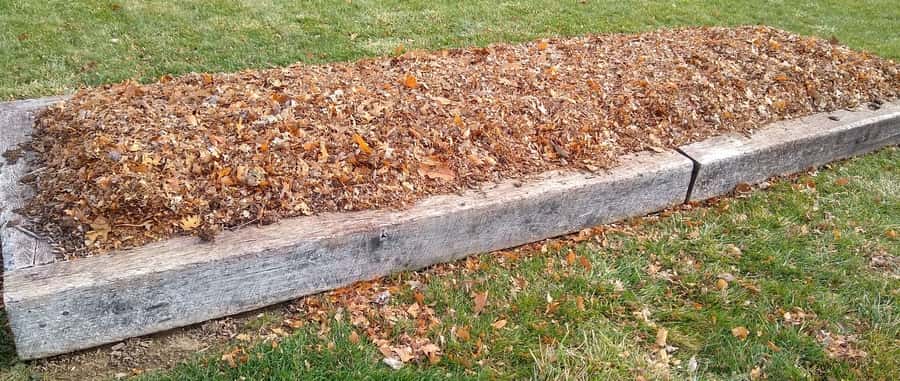
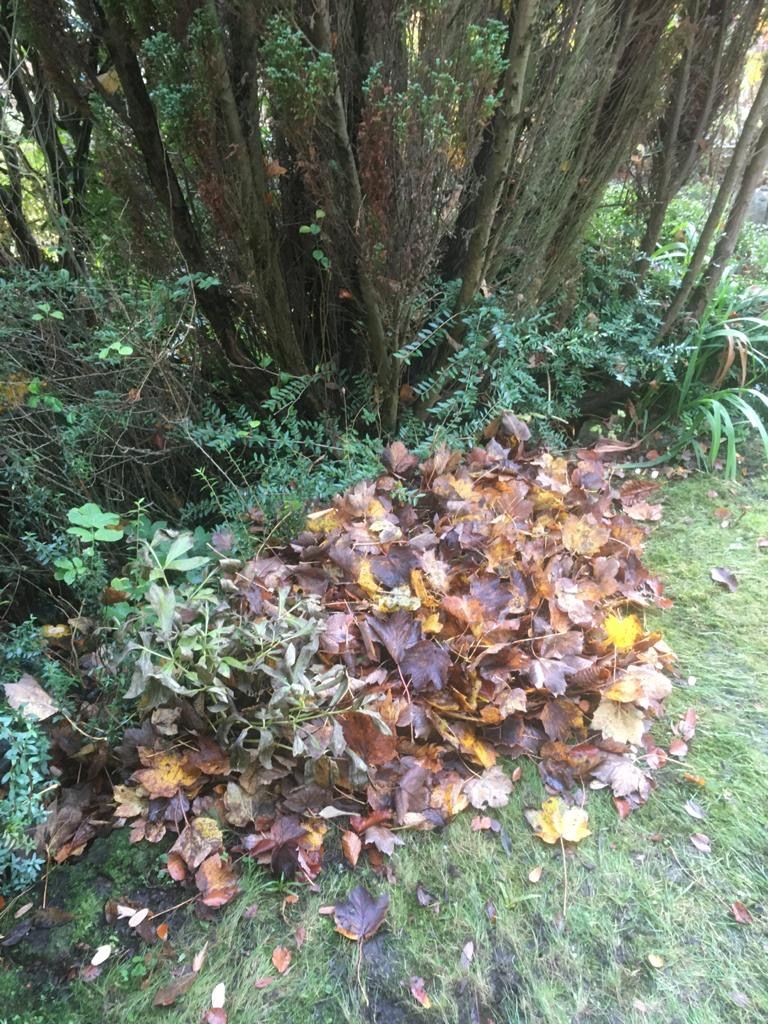
* Put down a layer of leaves anywhere over dirt. Earthworms will come up from the dirt. If you put the leaves over pavement, worms will also appear but it will take longer unless you add some.
* To prevent the leaves from scattering, you can:
** Build a low retaining edge with boards, bricks, or limbs.
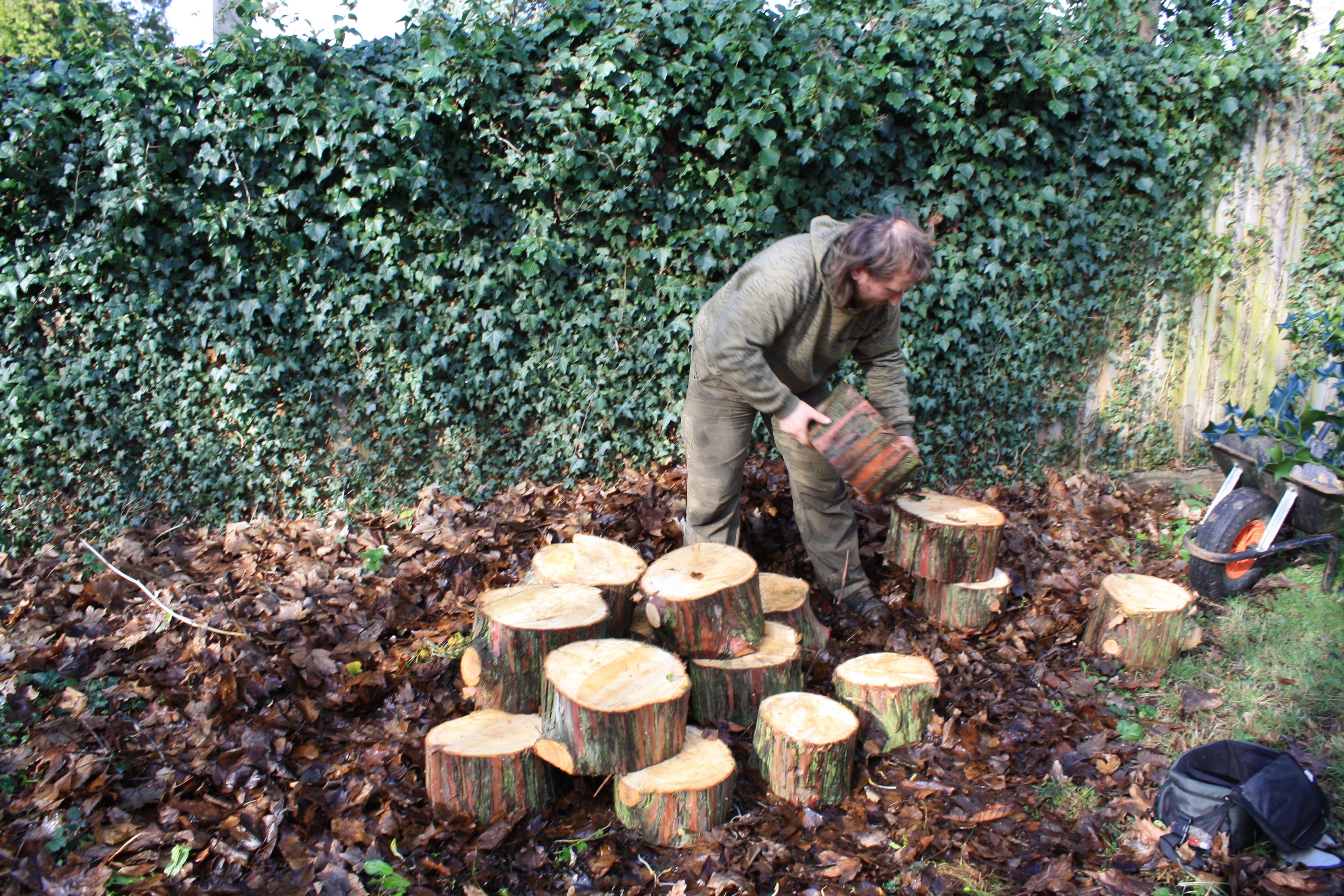
** Put branches or log sections over the leaves.
** Choose a spot where leaves naturally collect.
* If the leaves are very dry, you can water them to make them break down faster. Or you can just wait for rain.
* To grow the pile slowly, just add leaves whenever you have some.
* To grow the pile quickly, add fruit and vegetable scraps, then cover them with a layer of leaves. You can also add paper and anything else used in vermicomposting, but lightweight things are more prone to blow away unless covered.
* Anything organic will break down eventually, but if you plan to use the worm compost and/or the worms, then use mostly worm favorites that break down faster.
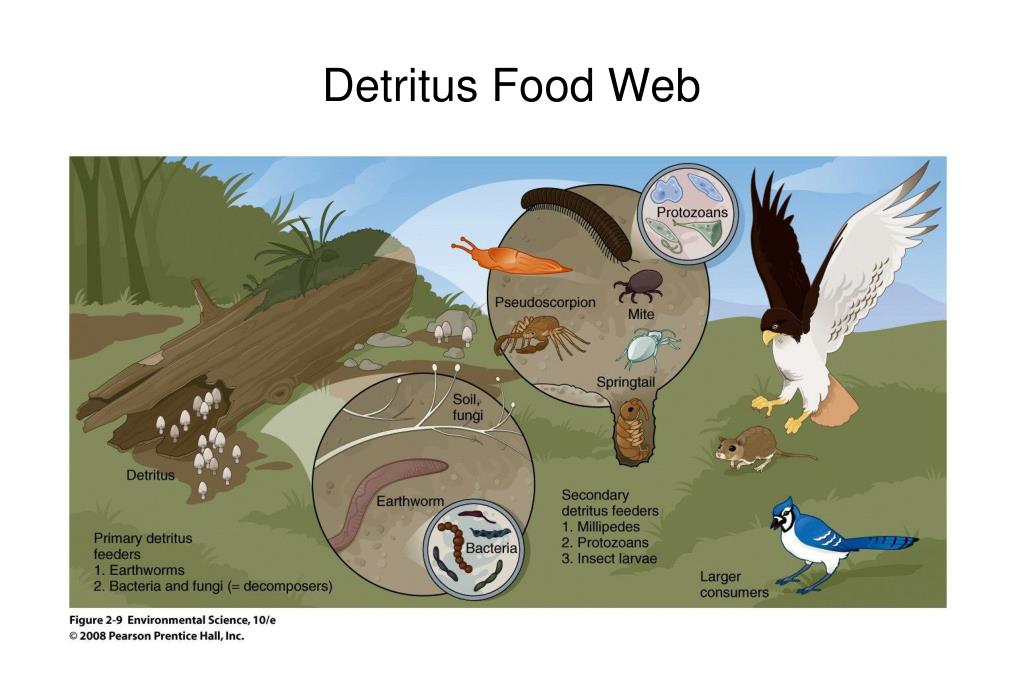
* If you just want to make a midden to manage organic waste neatly, dump it far from the home and cover with a thick layer of leaves or grass clippings. Just avoid pesticides or toxins that would disturb the detritus food web.
* To harvest the compost, remove the top layer and gently fork or scoop the wet, crumbly layer into a container for transport. Try to avoid mashing your worms, and leave plenty of them in the compost pile. Put down fresh plant scraps and replace the top layer of leaves. Move the compost to where you want it. Any worms in it will dig down away from the surface.
* To harvest the worms, remove the top layer and pick up all the worms you see. If you don't get enough, gently dig through the upper layers of compost to find more. Then put down fresh plants scraps and replace the top layer of leaves. Store live worms in damp compost in a cool dark place.
** If you plan a few days in advance, put down large worm favorites such as banana peels or melon rinds. When you lift these, you will find many worms right underneath.
** Make a worm sandwich by layering plant scraps between 2-3 layers of cardboard. Remove the top leaves, put down the worm sandwich, water it, then cover with leaves.
** Worms also love to hide under heavy things, so if you weight your worm pile with branches, they will gather under the heaviest parts.
You can do all this without spending a dime if you want to.
Note that in addition to worms you will also attract many other types of wildlife such as pillbugs, millipedes, frogs, toads, salamanders, lizards, snakes, hedgehogs, birds, and/or squirrels. If you live in a rural or wild area then you'll also probably get scroungers such as raccoons, skunks, possums, badgers, weasels, foxes, etc. A big pile of vegetable food quickly produces a big pile of squirmy food. My detritus food web is 3 days to apex. \o/
* Put down a layer of leaves anywhere over dirt. Earthworms will come up from the dirt. If you put the leaves over pavement, worms will also appear but it will take longer unless you add some.
* To prevent the leaves from scattering, you can:
** Build a low retaining edge with boards, bricks, or limbs.
** Put branches or log sections over the leaves.
** Choose a spot where leaves naturally collect.
* If the leaves are very dry, you can water them to make them break down faster. Or you can just wait for rain.
* To grow the pile slowly, just add leaves whenever you have some.
* To grow the pile quickly, add fruit and vegetable scraps, then cover them with a layer of leaves. You can also add paper and anything else used in vermicomposting, but lightweight things are more prone to blow away unless covered.
* Anything organic will break down eventually, but if you plan to use the worm compost and/or the worms, then use mostly worm favorites that break down faster.
* If you just want to make a midden to manage organic waste neatly, dump it far from the home and cover with a thick layer of leaves or grass clippings. Just avoid pesticides or toxins that would disturb the detritus food web.
* To harvest the compost, remove the top layer and gently fork or scoop the wet, crumbly layer into a container for transport. Try to avoid mashing your worms, and leave plenty of them in the compost pile. Put down fresh plant scraps and replace the top layer of leaves. Move the compost to where you want it. Any worms in it will dig down away from the surface.
* To harvest the worms, remove the top layer and pick up all the worms you see. If you don't get enough, gently dig through the upper layers of compost to find more. Then put down fresh plants scraps and replace the top layer of leaves. Store live worms in damp compost in a cool dark place.
** If you plan a few days in advance, put down large worm favorites such as banana peels or melon rinds. When you lift these, you will find many worms right underneath.
** Make a worm sandwich by layering plant scraps between 2-3 layers of cardboard. Remove the top leaves, put down the worm sandwich, water it, then cover with leaves.
** Worms also love to hide under heavy things, so if you weight your worm pile with branches, they will gather under the heaviest parts.
You can do all this without spending a dime if you want to.
Note that in addition to worms you will also attract many other types of wildlife such as pillbugs, millipedes, frogs, toads, salamanders, lizards, snakes, hedgehogs, birds, and/or squirrels. If you live in a rural or wild area then you'll also probably get scroungers such as raccoons, skunks, possums, badgers, weasels, foxes, etc. A big pile of vegetable food quickly produces a big pile of squirmy food. My detritus food web is 3 days to apex. \o/

(no subject)
Date: 2021-03-13 03:17 am (UTC)I'm always had a compost pile in a lazy, low-key way, but this year I'm trying to building it up to a more useful volume so I can use it to improve my garden soil. I've started adding torn-up newspaper to the pile for moisture absorbency and added carbon, which should give it some bulk and keep it from getting too soggy. I have high hopes for it! :D
Try this ...
Date: 2021-03-13 03:46 am (UTC)* wood shavings (break down faster than chips)
* wood chips (add more bulk than chips)
* corrugated cardboard
* straw or other hollow plant matter
* one or more ventilated pipes
* turning pile with a shovel
To avoid sogginess:
* make a bottom layer of large criss-crossed branches
* include an occasional layer of twigs (also aids aeration)
* put compost pile atop a slope
* place one or more perforated drain pipes under pile, slanting down away from it
Re: Try this ...
Date: 2021-03-13 03:56 am (UTC)Thankfully my compost heap is on a slope, so I don't have to worry too much about drainage. Last year's annuals went into the heap as broken-up twigs. This spring I do need to trim back the honeysuckle vine beside it, and those trimmings will all go in the pile! I plan to pick up some mulch from one of my city's free mulch days, too, which will add some woody matter and pre-composted material. (I picked up a bucket today for this purpose, in fact, since the city's distribution method is dumping it in a big pile by a nearby park; it's BYO shovel and containers!)
Re: Try this ...
Date: 2021-03-13 04:07 am (UTC)Re: Try this ...
Date: 2021-03-13 02:53 pm (UTC)Re: Try this ...
Date: 2021-03-13 07:38 pm (UTC)If you look up ratios and lists for "brown" and "green" compost, those will also help you maximize production. For now, that and an open pile should be good approaches.
In the future, if you decide that you like composting a lot, consider investing in a tumbler, preferably one with multiple chambers. They're rarely cheap, but an industrious human can make a cubic yard of compost in about 2 weeks with one of those. Turned less often, they work a little slower, but still seem to be the fastest method. It takes about a century for nature to make an inch of topsoil, so this is one thing humans can do very very well. Even making a pile you never touch will top that in a year.
(no subject)
Date: 2021-03-13 10:19 am (UTC)