Skills Heroes Need: Physical Fitness
Jan. 19th, 2021 04:33 pm![[personal profile]](https://www.dreamwidth.org/img/silk/identity/user.png) ysabetwordsmith
ysabetwordsmithPhysical fitness is a key skill for heroes, applicable to most heroic situations. The more fit you are, the better prepared you are to handle physical challenges. Even if you are not an athlete, do what you can to prepare yourself for likely situations. Think about the kind of actions that heroes most often perform. Decide which of those you are willing and able to do. Then develop a plan that will prepare you for those challenges.
If you have physical limitations, then you will need to think about how to work around them. Scroll down for some ideas on that.
* Adrenaline training. The adrenaline rush is designed to facilitate survival maneuvers, but can be overwhelming if you are unfamiliar with it. Learn how your body and mind respond to adrenaline, how to use it to your advantage, and how to minimize drawbacks. Practice activating, managing, and deactivating your 4F survival mode. Note that adrenaline surges in anticipation of a physical challenge. After a nonphysical crisis, one of the best ways to burn off excess adrenaline is with a short burst of intense physical activity: this tells your hindbrain that you have escaped the predator and can now relax. If your body tends to overdo adrenaline, there are ways to reduce that. Here are some adrenaline adventures to consider and resources for dealing with adrenaline. Anyone can do this: if you have physical limitations, choose psychological challenges like scary movies.
* Calisthenics. You don't need weights or fancy machines to work out, you just need your body. Here is a list of exercises. This is the most important type of exercise for heroic development, because it expands what you can do with the body you have.
* Crossfit. This approach to exercises uses highly varied, highly intense activities to cultivate a body that can do just about anything. It features the kind of training used by first responders, military, and other groups who do risky and physically demanding work. It can be done in a group or by yourself. You can set up a crossfit gym at home.
* Eating a healthy diet. Your body needs raw materials to build, maintain, and repair itself. Here is a ranked list of popular diets if you want a specific plan. If your exercise program aims to build muscle, then you may need more protein. Here is a list of high-protein foods. If you don't eat meat, or want to eat less meat, there are plants and animal products you can choose instead.
* Escapes. Most people are more likely to face wriggling into or out of a tight spot than escaping from nonconsensual bondage, but this stuff really can save a life. Here are some ways to fit yourself into small spaces and escape various types of bondage. Caving has great techniques for navigating small, awkward areas. Regarding bondage for personal amusement: Know how to do it safely and how to remove it quickly. If there is an erotic accident, you can be a hero by staying calm, handling the emergency, and not making it any more humiliating than it already is.
* Flexibility. Heroes need to reach, bend, and twist a lot. Also the more flexible you are as a baseline, the lower the chance of injury if you have to do sudden exertion without warmup in an emergency. Learn how to become flexible and improve flexibility. Good exercises include aikido, pilates, qui gong, tai chi, and yoga. Many people who cannot do strength or stamina training can still work on flexibility.
* Freerunning and/or parkour. These emphasize the swift and creative crossing of obstacles and dodging hazards. In a conflict, they excel at impeding your opponent's progress. They're also more fun on average compared to many other types of exercise. Learn how to get started and browse a list of moves.
* Hobbies. Heroes benefit from active hobbies. They can contribute to strength, stamina, agility, dexterity, situational awareness, and social interaction. They also make exercising fun.
* Lifting. Heroes often need to lift heavy objects or carry people. Learn how to begin weight training, lift heavier weights, lift safely, and build muscle. How much do you need to lift? Police standards vary, but a typical test involves lifting or dragging a dummy that weighs 125-165 pounds. The average weight of an adult human is 170-200 pounds. There are many options for carrying people:
Perform First Aid Assists and Carries
Carry Someone Who's Bigger Than You
Carry a Girl
Basic Lift video
Ranger Roll video
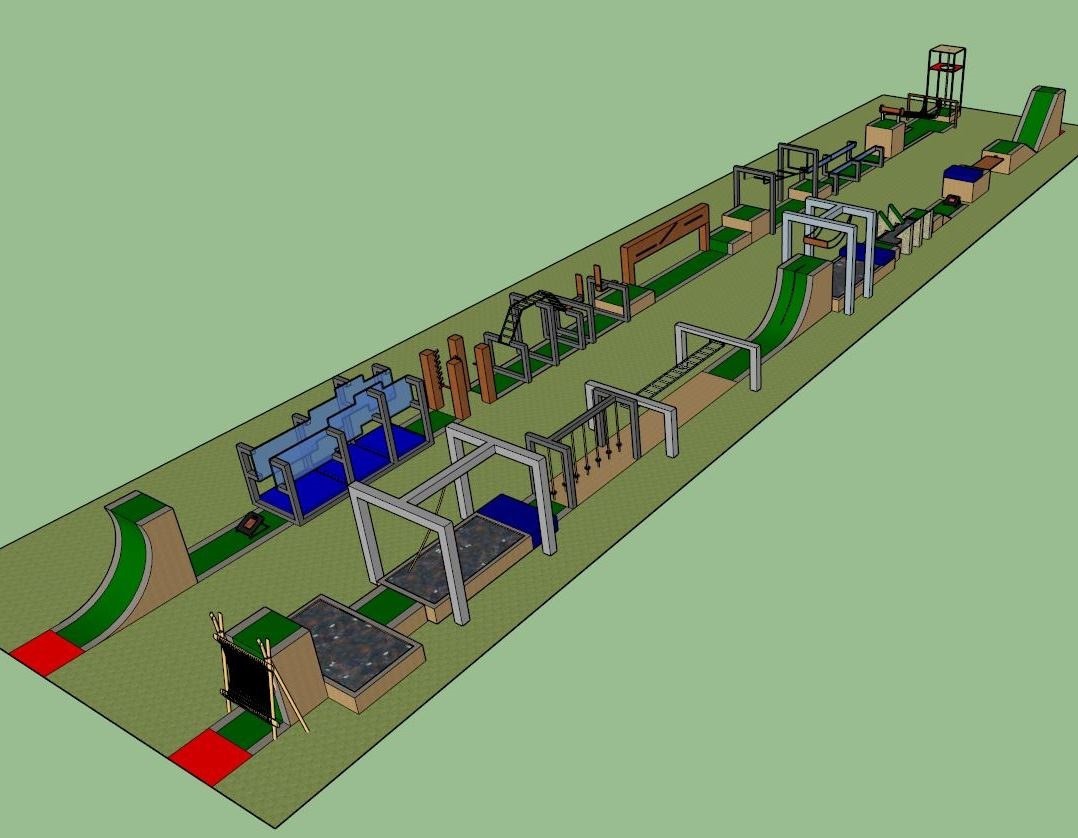
* Obstacle courses. These come in different styles Traditional courses chiefly divide into urban and wilderness. Some combine the two types of terrain. High and low rope courses have different arrangements. The modern "ninja" type courses have more extreme (and unlikely) obstacles. You can build your own or buy obstacles. Practice with one that suits the terrain where you most often spend time, or most often encounter difficulties. The obstacles in your chosen course(s) should address situations you may encounter in a crisis, while challenging your agility and ingenuity. Here are some books on obstacle course training and an overview of Army obstacles.
* Pullups. If you were holding onto an edge, could you pull yourself up? If someone else was clinging for dear life, could you pull them up? Could you hoist a heavy load with a rope? Learn to do your first pullup, do more pullups, and do a one-arm pullup. You can do these and related exercises without a standard pullup bar.
* Running. Consider its uses in offense and defense. Focus on building both stamina and speed. You need both of these in order to chase problems that need to be caught and escape problems that need to be fled. Learn how to start running and use proper form. If you can't run, consider walking instead -- especially walking with grace and walking safely on ice.
* Swimming. Everyone should at least know how not to drown, if that is feasible for them to learn. Ideally, learn how to swim. If you are a good swimmer, move on to studying water rescue.
Working Around Physical Limitations
Everyone is good at some things and bad at other things. Nobody -- even the heroes of legend -- can do everything equally well. People with physical limitations need to think about what they can and can't do, along with how to think outside the box and accomplish their goals despite the challenges.
* Learn about your strengths and weaknesses. Even your personal strengths and weaknesses can influence your physical accomplishments. Test your body to find physical weaknesses and how to correct them. The Farmer's Walk in that list is a fantastic exercise for people who can walk and carry things but not do more vigorous activities. You can then work to improve your strengths and counteract your weaknesses.
* Capitalize on your strengths. Some disabilities tend to boost other abilities. If you use a manual wheelchair, take advantage of your upper-body strength. Jar Opening Dude is an everyday hero, and so is Car Jack Operator. Blind people sometimes find their other senses improving. If you can smell when food is starting to go bad before anyone else can, then you may save someone from a case of food poisoning. Like most things, blind skills will advance faster and farther if you train them. Practice with hearing, smell, and touch. Start where you are, use what you have, do what you can.
* If you use adaptive equipment, maximize your use of it. Many tools can be used for more than their most obvious or common applications. See a text handbook and video lessons on wheelchair skills. White cane navigation is primarily used by vision-impaired people, but anyone can learn it. Explore a text reference and video tutorials. Know the basic skills for canes, crutches, and walkers. When you have mastered these, you can learn more creative uses, like propping a door open with a crutch or cane. If you wear eyeglasses, learn how to start a fire with them. Practice this before you need it.
* Situational awareness. Pay attention to the environment around you and use it to your advantage. You do not need to physically defeat an opponent if you can arrange for him to do it to himself. Example: during a conflict, stand in front of a window, staircase, or other hazard. If your opponent charges at you, move aside, allowing him to fall. Use timing to your advantage, such as ducking into an elevator or onto a bus just before the doors close. In order to learn these skills, it helps to do environmental training, where you work out in different places and make use of local features in your drills.
* Defense for disabilities. If you have a disability, consider martial arts or self-defense training designed for that. Cat-Ching-Do caters to people with special needs. Criptaedo accommodates a variety of physical disabilities. See the Criptaedo YouTube channel. Cane Jitsu relies on the use of a cane for self-defense. Hard Target focuses on youth with developmental disabilities. Here are some self-defense tips for wheelchair users. Don't limit yourself to physical options. The Gentle Art of Verbal Self-Defense defuses conflicts before they turn physical. It is a great deal more powerful than most people realize. It includes a survey of Verbal Attack Patterns, and while offensive use is not covered, it is not difficult to figure out.
* Hero support. You do not have to do the physical heroics yourself. You can choose a different role. For instance, every emergency benefits from knowledge, so you can memorize useful information that you can relay to other people, just like a dispatcher would talk someone through a crisis. See training handbooks for fire dispatchers, medical dispatchers, police dispatchers and general call takers or radio operators. This is also excellent training if your chosen role in an emergency is Phone Person, another very commonly needed role. Learn emergency phrases in world languages or whatever is a minority language in your area. Here are some basics for emergency American Sign Language, Spanish, French, Arabic, Chinese, German, Hindi, Italian, and Russian. You can also help heroes find problems that need their attention, solve puzzles, and locate resources. Oracle is a classic example.
If you have physical limitations, then you will need to think about how to work around them. Scroll down for some ideas on that.
* Adrenaline training. The adrenaline rush is designed to facilitate survival maneuvers, but can be overwhelming if you are unfamiliar with it. Learn how your body and mind respond to adrenaline, how to use it to your advantage, and how to minimize drawbacks. Practice activating, managing, and deactivating your 4F survival mode. Note that adrenaline surges in anticipation of a physical challenge. After a nonphysical crisis, one of the best ways to burn off excess adrenaline is with a short burst of intense physical activity: this tells your hindbrain that you have escaped the predator and can now relax. If your body tends to overdo adrenaline, there are ways to reduce that. Here are some adrenaline adventures to consider and resources for dealing with adrenaline. Anyone can do this: if you have physical limitations, choose psychological challenges like scary movies.
* Calisthenics. You don't need weights or fancy machines to work out, you just need your body. Here is a list of exercises. This is the most important type of exercise for heroic development, because it expands what you can do with the body you have.
* Crossfit. This approach to exercises uses highly varied, highly intense activities to cultivate a body that can do just about anything. It features the kind of training used by first responders, military, and other groups who do risky and physically demanding work. It can be done in a group or by yourself. You can set up a crossfit gym at home.
* Eating a healthy diet. Your body needs raw materials to build, maintain, and repair itself. Here is a ranked list of popular diets if you want a specific plan. If your exercise program aims to build muscle, then you may need more protein. Here is a list of high-protein foods. If you don't eat meat, or want to eat less meat, there are plants and animal products you can choose instead.
* Escapes. Most people are more likely to face wriggling into or out of a tight spot than escaping from nonconsensual bondage, but this stuff really can save a life. Here are some ways to fit yourself into small spaces and escape various types of bondage. Caving has great techniques for navigating small, awkward areas. Regarding bondage for personal amusement: Know how to do it safely and how to remove it quickly. If there is an erotic accident, you can be a hero by staying calm, handling the emergency, and not making it any more humiliating than it already is.
* Flexibility. Heroes need to reach, bend, and twist a lot. Also the more flexible you are as a baseline, the lower the chance of injury if you have to do sudden exertion without warmup in an emergency. Learn how to become flexible and improve flexibility. Good exercises include aikido, pilates, qui gong, tai chi, and yoga. Many people who cannot do strength or stamina training can still work on flexibility.
* Freerunning and/or parkour. These emphasize the swift and creative crossing of obstacles and dodging hazards. In a conflict, they excel at impeding your opponent's progress. They're also more fun on average compared to many other types of exercise. Learn how to get started and browse a list of moves.
* Hobbies. Heroes benefit from active hobbies. They can contribute to strength, stamina, agility, dexterity, situational awareness, and social interaction. They also make exercising fun.
* Lifting. Heroes often need to lift heavy objects or carry people. Learn how to begin weight training, lift heavier weights, lift safely, and build muscle. How much do you need to lift? Police standards vary, but a typical test involves lifting or dragging a dummy that weighs 125-165 pounds. The average weight of an adult human is 170-200 pounds. There are many options for carrying people:
Perform First Aid Assists and Carries
Carry Someone Who's Bigger Than You
Carry a Girl
Basic Lift video
Ranger Roll video
* Obstacle courses. These come in different styles Traditional courses chiefly divide into urban and wilderness. Some combine the two types of terrain. High and low rope courses have different arrangements. The modern "ninja" type courses have more extreme (and unlikely) obstacles. You can build your own or buy obstacles. Practice with one that suits the terrain where you most often spend time, or most often encounter difficulties. The obstacles in your chosen course(s) should address situations you may encounter in a crisis, while challenging your agility and ingenuity. Here are some books on obstacle course training and an overview of Army obstacles.
* Pullups. If you were holding onto an edge, could you pull yourself up? If someone else was clinging for dear life, could you pull them up? Could you hoist a heavy load with a rope? Learn to do your first pullup, do more pullups, and do a one-arm pullup. You can do these and related exercises without a standard pullup bar.
* Running. Consider its uses in offense and defense. Focus on building both stamina and speed. You need both of these in order to chase problems that need to be caught and escape problems that need to be fled. Learn how to start running and use proper form. If you can't run, consider walking instead -- especially walking with grace and walking safely on ice.
* Swimming. Everyone should at least know how not to drown, if that is feasible for them to learn. Ideally, learn how to swim. If you are a good swimmer, move on to studying water rescue.
Working Around Physical Limitations
Everyone is good at some things and bad at other things. Nobody -- even the heroes of legend -- can do everything equally well. People with physical limitations need to think about what they can and can't do, along with how to think outside the box and accomplish their goals despite the challenges.
* Learn about your strengths and weaknesses. Even your personal strengths and weaknesses can influence your physical accomplishments. Test your body to find physical weaknesses and how to correct them. The Farmer's Walk in that list is a fantastic exercise for people who can walk and carry things but not do more vigorous activities. You can then work to improve your strengths and counteract your weaknesses.
* Capitalize on your strengths. Some disabilities tend to boost other abilities. If you use a manual wheelchair, take advantage of your upper-body strength. Jar Opening Dude is an everyday hero, and so is Car Jack Operator. Blind people sometimes find their other senses improving. If you can smell when food is starting to go bad before anyone else can, then you may save someone from a case of food poisoning. Like most things, blind skills will advance faster and farther if you train them. Practice with hearing, smell, and touch. Start where you are, use what you have, do what you can.
* If you use adaptive equipment, maximize your use of it. Many tools can be used for more than their most obvious or common applications. See a text handbook and video lessons on wheelchair skills. White cane navigation is primarily used by vision-impaired people, but anyone can learn it. Explore a text reference and video tutorials. Know the basic skills for canes, crutches, and walkers. When you have mastered these, you can learn more creative uses, like propping a door open with a crutch or cane. If you wear eyeglasses, learn how to start a fire with them. Practice this before you need it.
* Situational awareness. Pay attention to the environment around you and use it to your advantage. You do not need to physically defeat an opponent if you can arrange for him to do it to himself. Example: during a conflict, stand in front of a window, staircase, or other hazard. If your opponent charges at you, move aside, allowing him to fall. Use timing to your advantage, such as ducking into an elevator or onto a bus just before the doors close. In order to learn these skills, it helps to do environmental training, where you work out in different places and make use of local features in your drills.
* Defense for disabilities. If you have a disability, consider martial arts or self-defense training designed for that. Cat-Ching-Do caters to people with special needs. Criptaedo accommodates a variety of physical disabilities. See the Criptaedo YouTube channel. Cane Jitsu relies on the use of a cane for self-defense. Hard Target focuses on youth with developmental disabilities. Here are some self-defense tips for wheelchair users. Don't limit yourself to physical options. The Gentle Art of Verbal Self-Defense defuses conflicts before they turn physical. It is a great deal more powerful than most people realize. It includes a survey of Verbal Attack Patterns, and while offensive use is not covered, it is not difficult to figure out.
* Hero support. You do not have to do the physical heroics yourself. You can choose a different role. For instance, every emergency benefits from knowledge, so you can memorize useful information that you can relay to other people, just like a dispatcher would talk someone through a crisis. See training handbooks for fire dispatchers, medical dispatchers, police dispatchers and general call takers or radio operators. This is also excellent training if your chosen role in an emergency is Phone Person, another very commonly needed role. Learn emergency phrases in world languages or whatever is a minority language in your area. Here are some basics for emergency American Sign Language, Spanish, French, Arabic, Chinese, German, Hindi, Italian, and Russian. You can also help heroes find problems that need their attention, solve puzzles, and locate resources. Oracle is a classic example.


(no subject)
Date: 2021-01-20 07:14 pm (UTC)(no subject)
Date: 2021-01-24 02:09 am (UTC)HELP
https://www.signasl.org/sign/help
(If asking 'I HELP YOU?,' move your hands toward the helper, and raise your eyebrows a little.)
This website looks pretty good for looking up other words, too.
Thank you!
Date: 2021-01-24 02:16 am (UTC)https://www.ems1.com/patient-care/articles/24-asl-signs-all-first-responders-should-know-Dhf0nQKPKcrkmWf2/