![[personal profile]](https://www.dreamwidth.org/img/silk/identity/user.png) ysabetwordsmith
ysabetwordsmithHere are the location notes for "The Most Dangerous Animal in the Zoo."
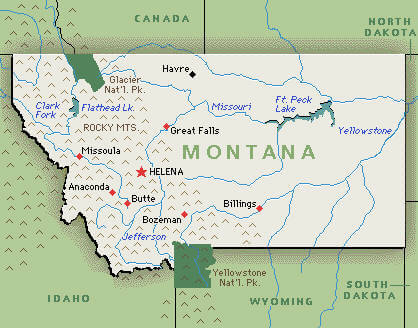
Montana Geographic Map
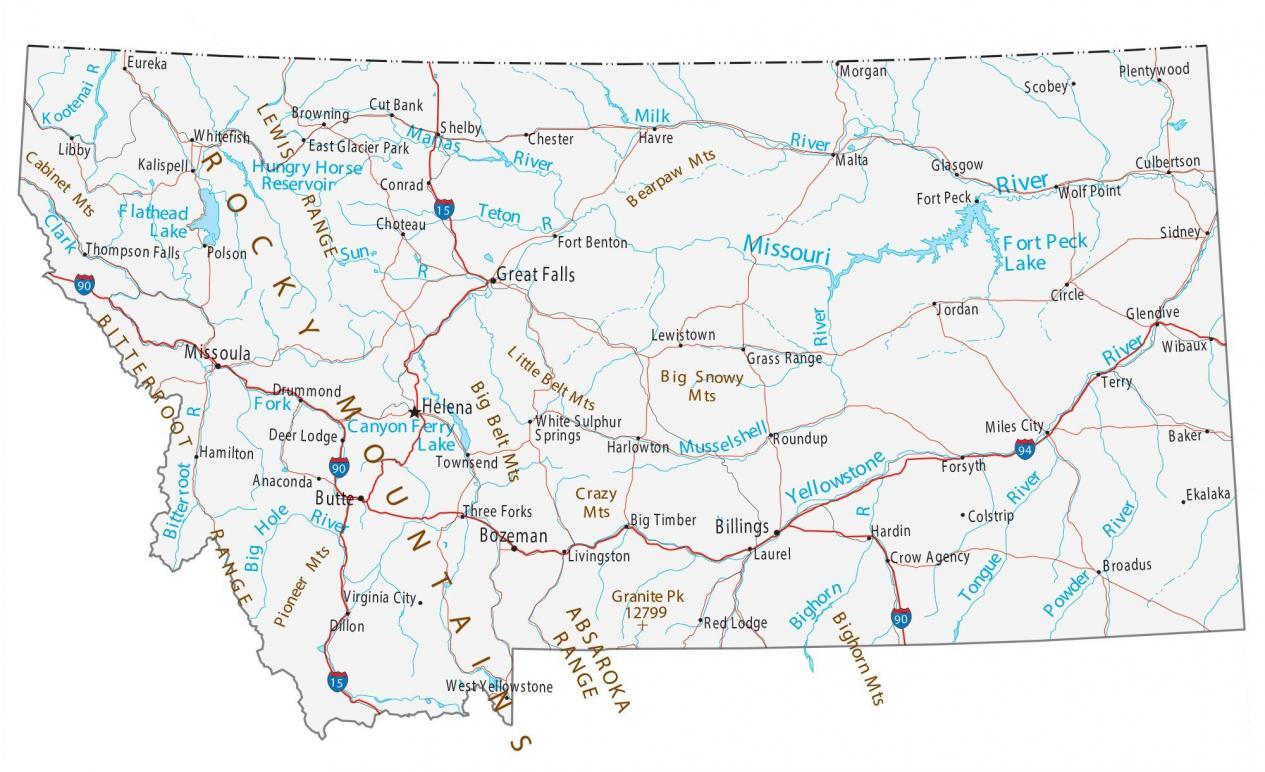
Montana Roads and Cities Map
Montana Counties Map
Two roads get almost all the east-west cross-state traffic in Montana: US Highway 2 in the north and Interstate 94 in the south. That makes US Highway 2 and nearby areas ideal for roadside attractions.
A roadside attraction is a feature along the side of a road meant to attract tourists. In general, these are places one might stop on the way to somewhere, rather than actually being a destination. They are frequently advertised with billboards.
Havre is the county seat and largest city in Hill County, Montana, United States. As of the 2010 census the population was 9,310.
Havre Hobby Habitat
7221 48th St W
Havre, MT 59501
This is at the southwest end of Havre, just north of Interstate 87. Beaver Creek runs through the farm.
72 Ave W is just across US Highway 87 from 48th St W. Continuing southwest along US Highway 87, the road goes to Box Elder in Rocky Boy's Reservation. Continuing north into Have, US Highway 87 connects with US Highway 2 which runs west to Cut Bank in the Blackfeet Reservation.
Montana Havre Hobby Habitat Gas Station
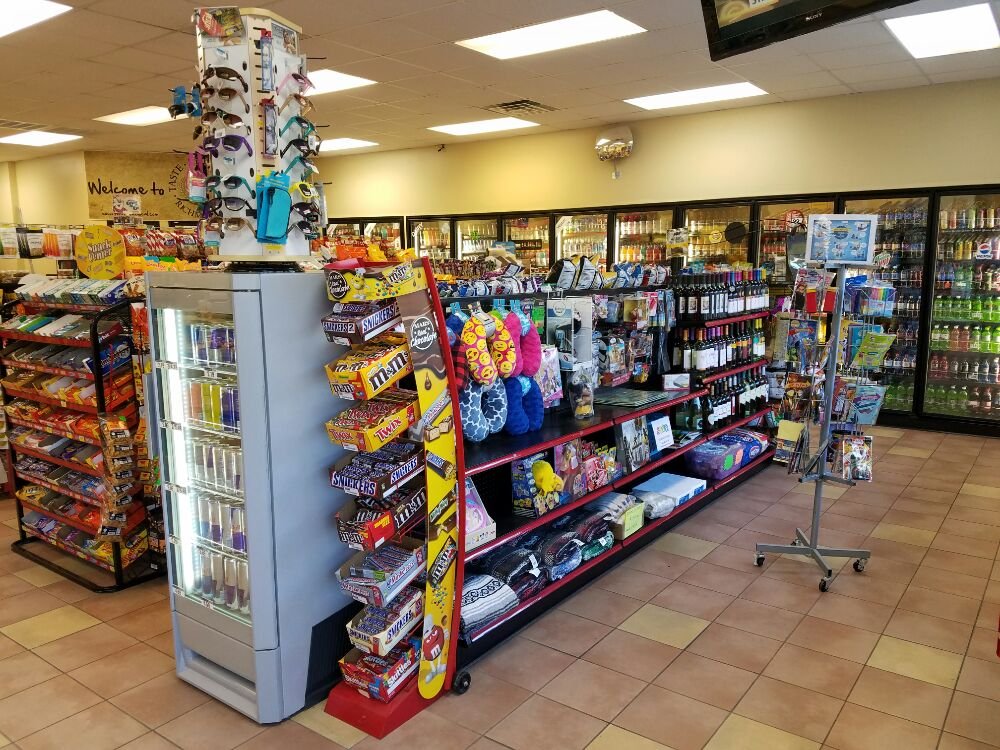
The gas station has two old pumps, one for unleaded gas and one for diesel fuel. The much newer Tesla supercharger is off to the left side in what used to be one of the parking spaces. Inside, the gas station has a convenience store, dinette, and two accessible dotties.
Montana Havre Hobby Habitat Gas Station Tesla Charger
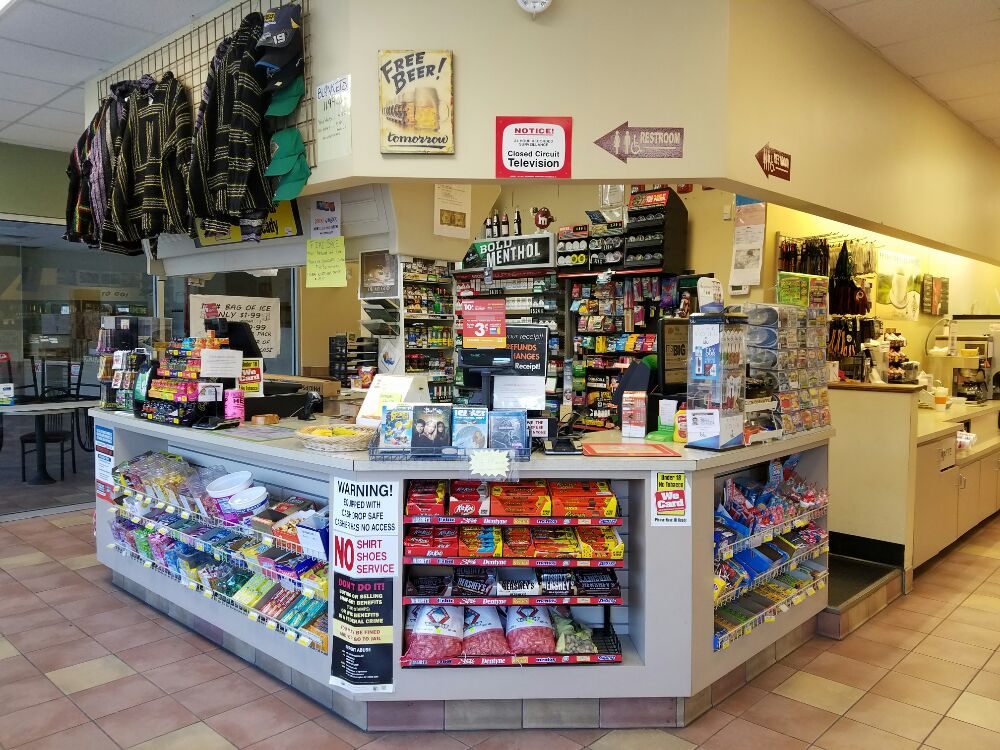
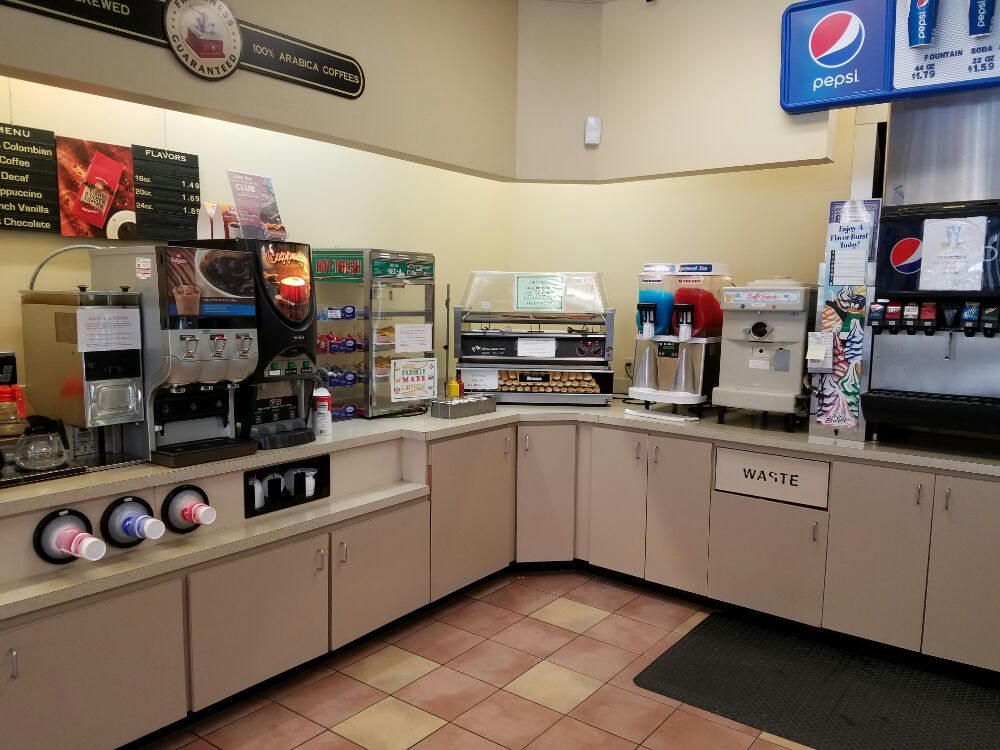
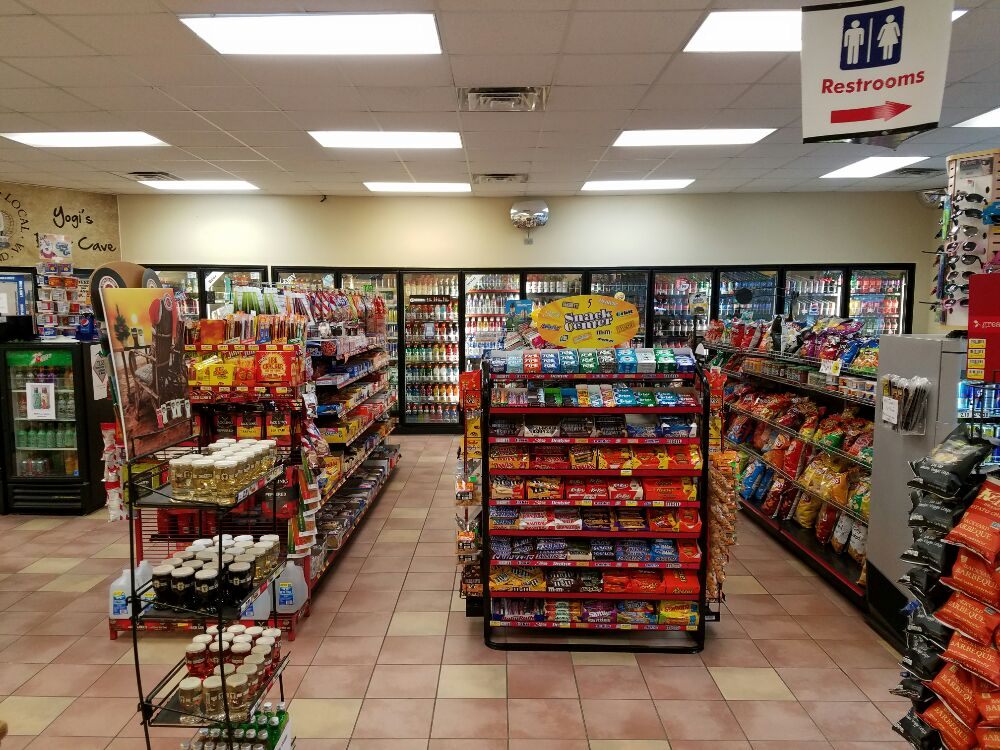
The wraparound counter has a couple of tables with chairs off to its left side, while the right side leads to the snack bar. The snack bar includes hot and cold beverages, pizza slices, hot dogs, and a frozen yogurt machine. The gas station gets a subsidy to carry fresh produce and cold lunch items such as salads, sandwiches, snack trays, meat and cheese, peeled hard-boiled eggs, and bottled water to support healthy eating habits. Travel supplies are to the left side of the shelves. The refrigerated section is at the back.
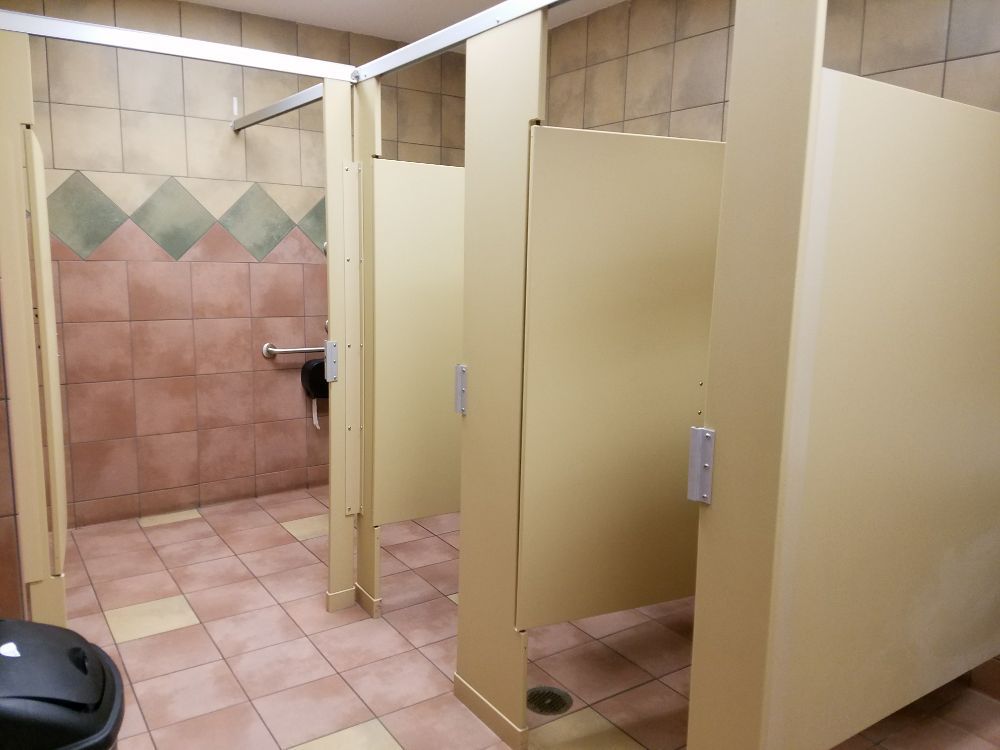
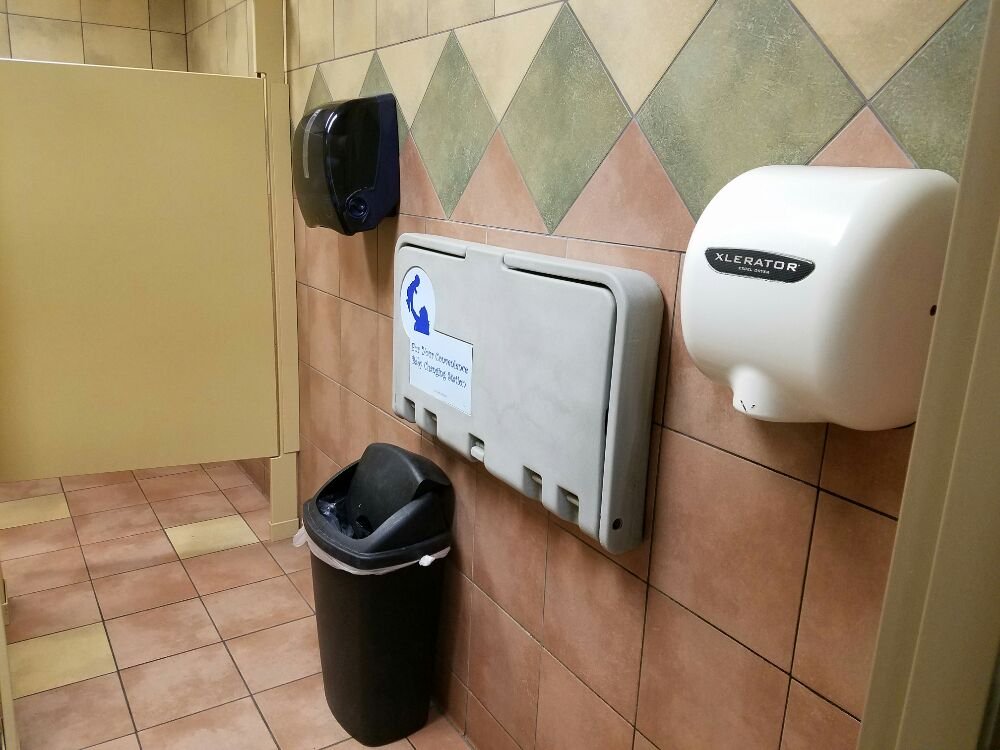
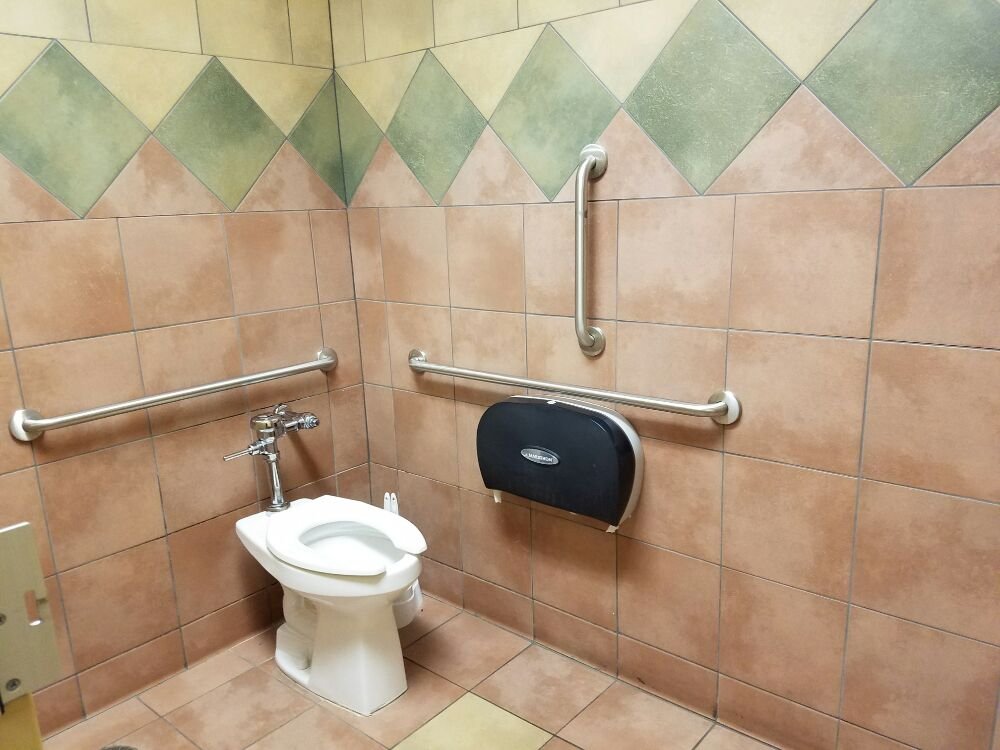
The women's bathroom has two regular and one handicapped stall. The men's room is similar but with only one handicapped stall and two urinals. Both bathrooms have a baby-changing station. The dottie includes a toilet, a pull-down dressing-changing bench, and a sink (not visible here).
The entrance to Havre Hobby Habitat is flanked by two small homemade sheds built from salvaged materials. The left holds the business office and ticket window. The right holds the gift shop.
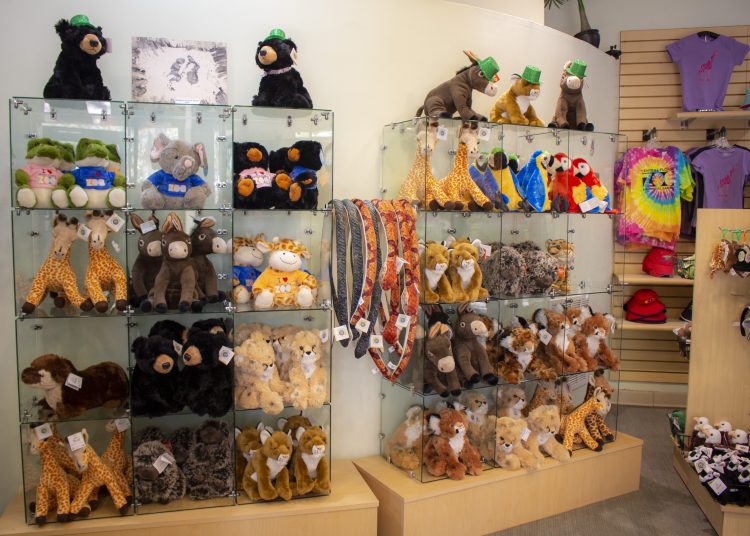
Inside the gift shop are souvenirs such as stuffed animals and clothes. An art cart offers free supplies including blank paper, a stack of printouts with titles like "You can draw a ... PIG!" and baskets of pencil stubs and crayons. Another stack includes activity pages with things like nature scavenger hunts or animal-themed mazes.
A rack of photos stands under a sign reading, Candid Critters. These are taken by Jerome's oldest daughter, who also posts Candid Critters videos on the zoo's website. Stills and videos are replaced whenever she takes one she likes better of each animal type. Each year the zoo puts out a calendar with the best pictures from the previous months.
A large wooden stage with a roof provides space for scheduled animal shows like Peggy the Pirate Queen and Einstein the Goaticorn. At other times, people may use the stage for busking, sheltering from inclement weather, or taking breaks.
Chicks are among the poultry exhibits. When a hen goes broody, she and her eggs are moved here for safekeeping, where they stay until the chicks have their full feathers and no longer need extra heat or protection. Then they rejoin the main flock on the farm. This is necessary because the farm raises heritage chickens that can reproduce on their own, instead of nonbroody commercial breeds that must be repurchased frequently.
Normally the chickens are free-range on the farm. In the brooder they get commercial chicken feed supplemented with farm scraps. Crickets dusted with vitamin powder are served in a stack of cardboard layers to encourage foraging. Any fishing worms past their sell-by date are available for zoo guests to buy for the hens while supplies last.
At scheduled times, "Chicken Jean" Kingsland gives presentations about keeping chickens, broody hens, chick care, and heritage breeds.
The Buff Orpington underpins a unique cultural heritage for its remarkable plumage and exceptional bearing. They are identified by large, robust build with soft yellowish/ golden feathers and pinkish-white feet and beak.
They are mainly known to be docile and overly friendly. As such, you’d often find that they are the most suitable for your backyard setting. Buff Orpington chickens are exceptionally good at egg production, with annual production varying from 200 to 280.
They are broody, and their size makes flight a tad difficult for them. So, you’d find them relatively easy to control. They are also known as a good meat source if harvested for food purposes.
The Orpingtons were developed in the 1880’s. The Buff Orpington is a popular breed with a beautiful golden buff plumage. The Buff is a large, friendly bird and is a back-yard favorite. They are also one of the most broody of the heritage breeds and are excellent mothers. They mature to around 6 pounds and will start laying large brown eggs at about 6 months.
A troupe of several lemurs share a large indoor-outdoor exhibit with lots of things to climb. Part of the indoor area is private, and part is visible to zoo patrons for rainy days. Patrons can buy food to hand-feed the lemurs, who are pretty tame. These were added in 2014 when a traveling dealer of exotics stopped at the zoo and offered them.
Feeding process: Shoo lemurs into outdoor enclosure and release crickets dusted with vitamin powder to occupy lemurs. Open zookeeper access to shed, fill water and food dishes, then move lemurs into shed. Fill outdoor water dish, distribute fresh fruits and vegetables all around the climbing branches and wire sides, then add a treat ball full of leaf-eater biscuits. Let the lemurs have free choice of indoor-outdoor areas. This requires them to forage for their food, not just sit and stuff their faces. Feeding is repeated three times a day, with the scheduled hours listed on the zoo flyer. A vending machine outside the enclosure allows zoo guests to buy raisins for feeding the lemurs until the day's ration of treats runs out.
Not all zoos, including accredited ones, take this much trouble with feeding enrichment. Jerome simply finds it a free way to keep both lemurs and guests entertained. This minimizes the cost of lemur toys.
Ringtails eat leaves, flowers and insects. They can also eat fruit, herbs and small vertebrates.
At the Smithsonian's National Zoo, they are fed a mixture of fruits, vegetables and leaf-eater biscuits multiple times a day.
Social Structure
Ring-tailed lemurs live found in social groups ranging in size from three to 25 individuals. The groups include multiple males and females. Females spend their whole lives in their birth group. Generally males change groups when they reach sexual maturity at age three.
Dotty Tom the serval is a retired stud from a Savanna Cat breeder, just added in August. His exhibit features climbing branches, stumps, and rocks. He adores solving puzzles; one of his favorite enrichment toys is a homemade honeycomb feeder where cat treats are hidden inside random holes. The small tubes are straight, while the larger ones have a baffle inside to make it more challenging. He eats high-protein dry cat food from a dish and butcher scraps from metal baskets hung on branches for foraging. Like the lemur exhibit, this one has an indoor shelter with private and public areas for rainy days.
Cheetah's enclosure stands between the serval exhibit and the goat exhibit. The fence is to keep zoo patrons from groping her; it locks from her side only. It includes a lounging platform with accessible steps, padded with a bowl chair cushion in a camouflage pattern. Cheetah spends much of her work time there because she can't move easily. A shelter includes a private breakroom and a public viewing area for rainy days. A sign reads, "Pet the Kitty -- $10 per minute" and "Your Picture with the Kitty -- $20" above a dropbox. Her $15/hour wage comes out of the zoo revenues like the other employees; the petting box was her idea and counts as tips, so she keeps everything in it. Mostly she spends the money on live fish to eat, adaptive equipment, or home entertainment.
Cheetah has an accessible tiny house near the farmhouse where Jerome and his family live. She finds wheelchairs uncomfortable, so instead she uses a wheeled seat indoors, which she can move with her hands and feet. Outdoors, she uses a sort of garden cart that Jerome built for her, with one side that drops down into a ramp and the floor padded with a cushion. She can wheel it on her own, but it's easier to get around if someone else pushes it.
A herd of several goats enjoy a pen with splendid climbing structures. They eat primarily goat feed and farm scraps, but edible weeds and brush trimmings are thrown in when available. Large leafy branches can be dropped in whole for the goats to climb and forage. Another option is a treat ball filled with goat biscuits, which also works for other grazing/browsing livestock. Zoo visitors can buy a bucket of fruit and vegetable chunks to feed the all domestic livestock, who are chosen for friendliness; this is a good way to use up things like apples and carrots that are too blemished to sell or use as human food.
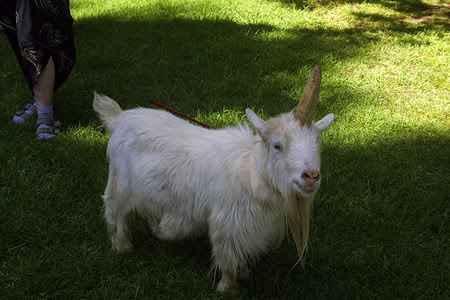
Einstein the Goaticorn was created by merging his horn buds as a kid. The single horn gives him great point control, allowing him to open latches and untie simple rope knots with it. He performs these tricks for a crowd to get treats -- or whenever he wants to get into something he shouldn't. His pen includes ropes attached to the top rail. Zoo guests can tie knots for him to play with.
Llamas are popular with patrons because they hum. They have access to a pasture for grazing and browsing, hay nets, and commercial llama feed. A run-in shed offers shelter from inclement weather.
Several potbellied pigs share a pen with a little hog house, mud and sand for rooting, and plenty of rocks to push around. These were rescues from people who got them as pets, not realizing how big they'd get. The pigs get a portion of standard hog feed for a balanced diet, but mostly they eat farm scraps.
A herd of ponies provide pony rides at scheduled times or for large groups. Their pasture includes a run-in shed. The hay racks, pony feed buckets, and water stations are all widely separated, encouraging the ponies to move around.
Cheetah's tiny house includes a walkway with turnabout, a path to an enclosed private patio, and a ramp up to the porch. Much of this was built with salvaged materials, especially windows and doors, hence the different colors and styles. The outside cladding is a mix of salvaged scraps and full-price wood from a local lumberyard. The roof was bought new from a park supplier. Jerome and his family built the tiny house; Cheetah owns the house, pays her own utilities, and rents her yard for a dollar a month. As Jerome puts it, "I wasn't using the land for anything, so no point overcharging her to use it." Built with a sturdy wooden foundation, the tiny house would be easy to move if necessary.
Cheetah keeps a rolling seat in the house. It has a bicycle seat on a telescoping stem for sitting, knee cups for kneeling, a work tray between them, and five swiveling wheels held together with a sturdy metal frame. A brake lever can lock the wheels. This was the first piece of adaptive equipment that Cheetah bought for herself, and she's very proud of it. The seat was intended for mechanics rather than disabled people, so it was actually affordable.
The kitchen includes an apartment-sized refrigerator, a double sink, a rangetop, a small overhead cabinet, and a small base cabinet between the kneespaces. The sink was salvaged but the appliances are new. All the work surfaces are set at comfortable wheelchair height. The built-in shelf can be used for appliances, storage, or a computer station.
Opposite the kitchenette, a log cabin living room set occupies the corner by the door. It includes a futon chair, an end table with a lamp, a futon loveseat, and a coffee table.
The log cabin dinette set at the end of the living room set includes a small table and two chairs.
The hallway to the bathroom and bedroom has large windows for natural light.
The bathroom has a shower and sink on the right side, and a toilet on the back side. The toilet has grab bars and sits under a window of frosted glass. The shower includes grab bars and a fold-down seat.
The bedroom includes a solid door and a closet. Cheetah has clothes now, but not a lot, because she doesn't actually enjoy wearing them unless the weather is freezing cold. She normally performs in a spotted bikini designed to match her dappled fuzz without bothering her too much. It also has a storage shelf beside one window. Cheetah sleeps in a bowl bed. Much of her furniture is salvaged, but this piece she bought new.
Montana Mini-Ecosystem Exhibit
5411 US-2
Havre, MT 59501
This is northeast of Havre, just south of the Prairie Farms Golf Course on the Milk River, off of US Highway 2.
Prairie Farms Golf Course
4910 Shepherd Rd N
Havre, MT 59501
The Montana Mini-Ecosystem Exhibit started out as an animal-themed tourist trap and gradually evolved into a larger facility with live animals. It still has a visitor center with an educational display and a gift shop featuring locally made animal products, artwork, and related items. The parking lot includes a row of three half-hour electric vehicle chargers. Open parking is free, but zoo patrons may also rent a space in the parking pavilion for protection against hot sun, rain, or other inclement weather. A food stand offers refreshments including bison, venison, and locally grown produce. It's actually half-farm and half-zoo because it raises bison and deer as livestock; the zoo patrons provide a ready market, creating a diversified income stream.
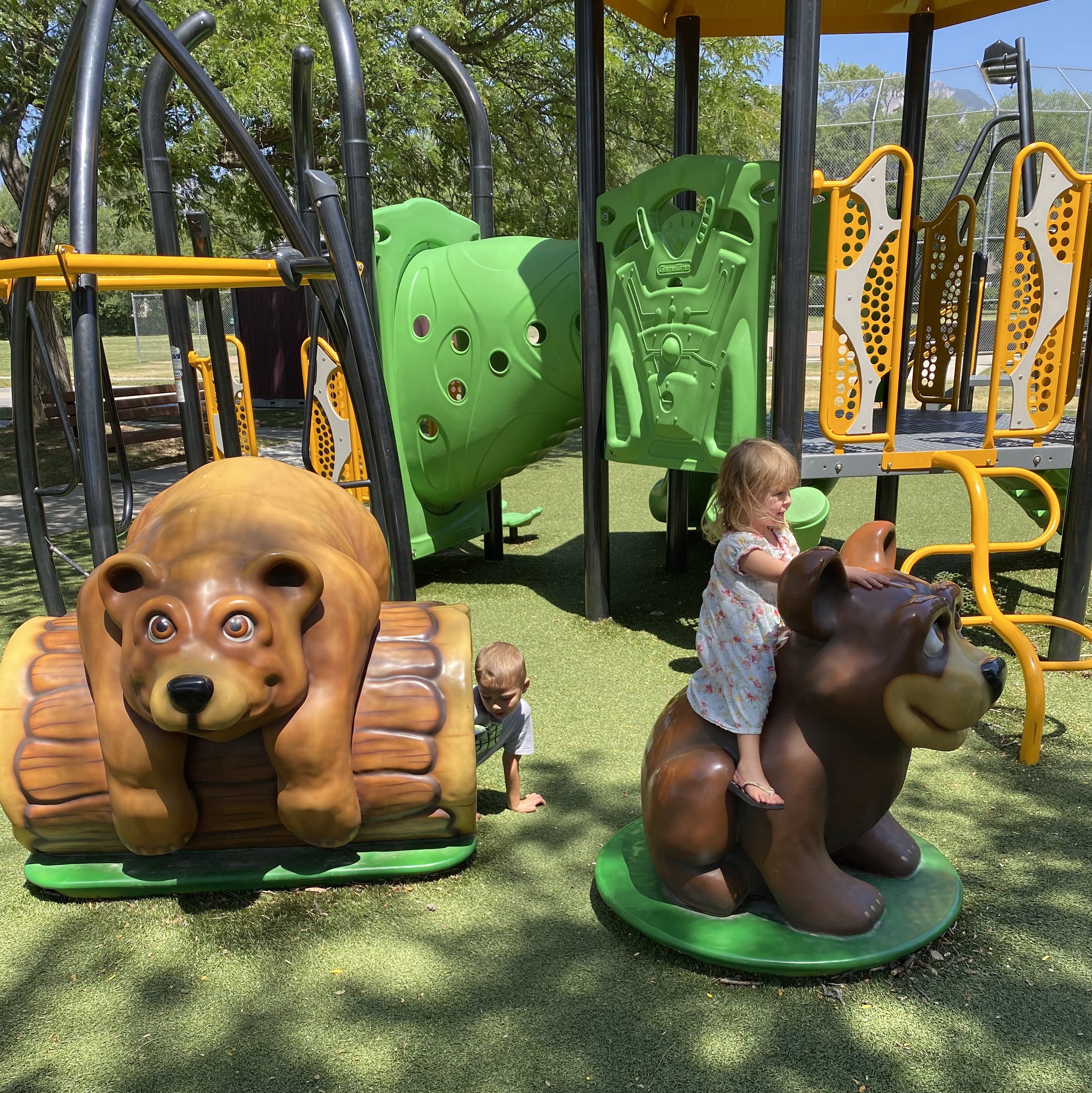
The animal-themed playground is free to the public, whether or not people buy tickets to enter the zoo. People are also welcome to look at the animals from a distance.
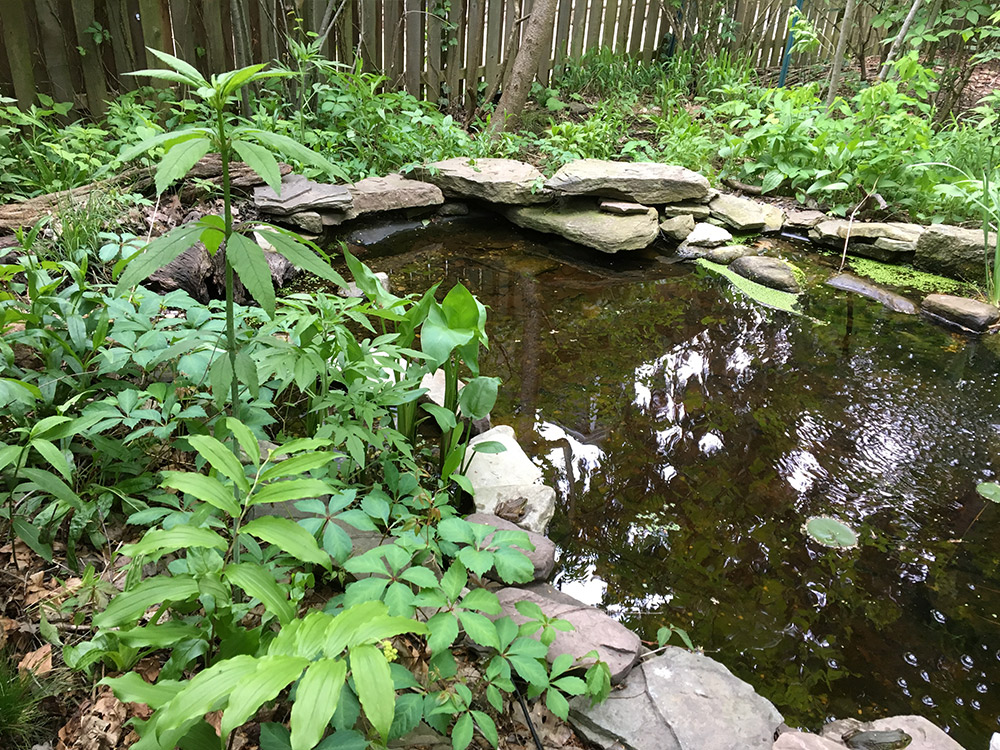
A wildlife feeding exhibit entices wild squirrels with deer skulls and shed antlers to gnaw. Feeding stations attract birds and other wildlife. A nature pond offers water and habitat. Along one side of the enclosure, a deck with wooden benches and a shelter for rainy days allows zoo patrons to walk past or sit and watch the animals. Proximity to the Milk River and surrounding forest makes it easy to attract a wide range of species.
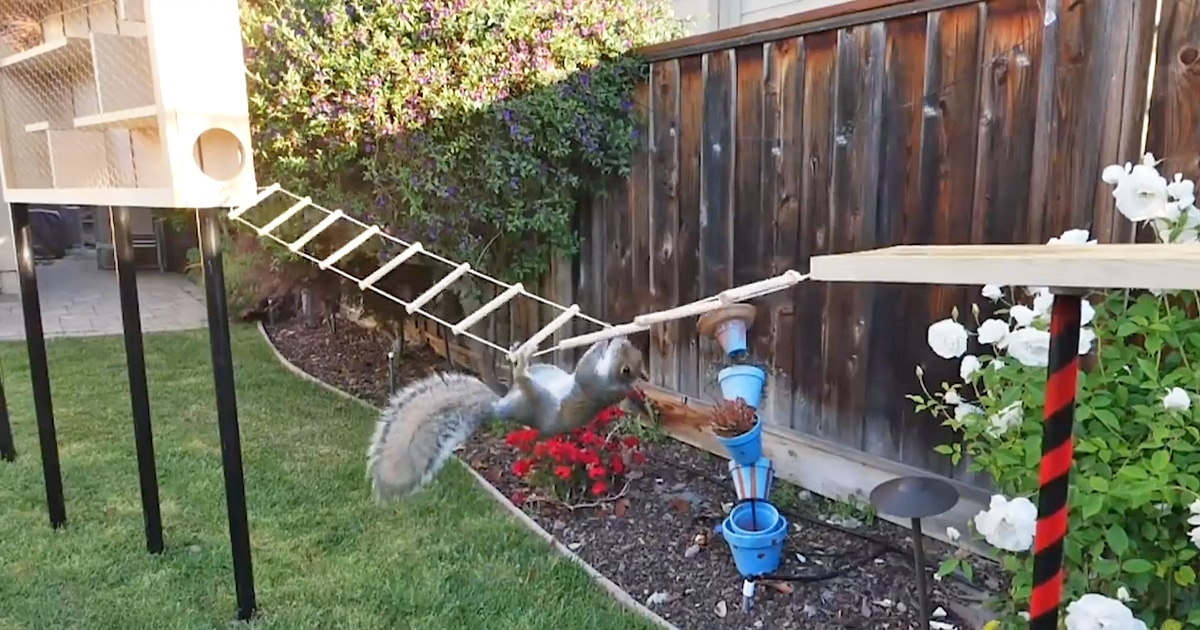
The squirrel obstacle course is a long path offering many elements for squirrels to explore. Each day, peanuts are hidden in various parts of the path.
Montana Havre Montana Mini-Ecosystem Exhibit Squirrel Feeder Pinwheel
Montana Havre Montana Mini-Ecosystem Exhibit Wildlife Feeding Station Chipmunk Jar Feeder
Montana Havre Montana Mini-Ecosystem Exhibit Wildlife Feeding Station
Montana Havre Montana Mini-Ecosystem Exhibit Wildlife Pond
The Canada lynx enjoys a large roofed enclosure with with big tree branches to climb. A shed holds an indoor enclosure, part of which is visible to zoo guests. The lynx eats whole raw prey, typically rabbits or chickens, and is free to hunt small birds or rodents that venture into the enclosure.
The bobcat enclosure is a cleverly repurposed silo containing large branches for climbing, boulders, various shelters, and a small swimming pool. If you're looking for the bobcat in this picture, he is asleep on a branch in the upper left corner. He eats whole raw prey, typically rabbits with chickens or feeder rats for variety, and is free to hunt small birds or rodents that venture into the enclosure. As this bobcat loves water, live fish are served in the pool.
Flocks of Assiniboine bronze turkeys rotate among several pastures variously furnished with native grasses, fruit and nut trees, or turkey food plots. While some are harvested for the food stand, most are sold as holiday turkeys. Zoo guests can reserve a bird early in the year to get a discount. The handsome feathers are used for many crafts sold in the zoo gift shop, from feather fans to handmade fishing flies, as well as raw materials for crafters to use.
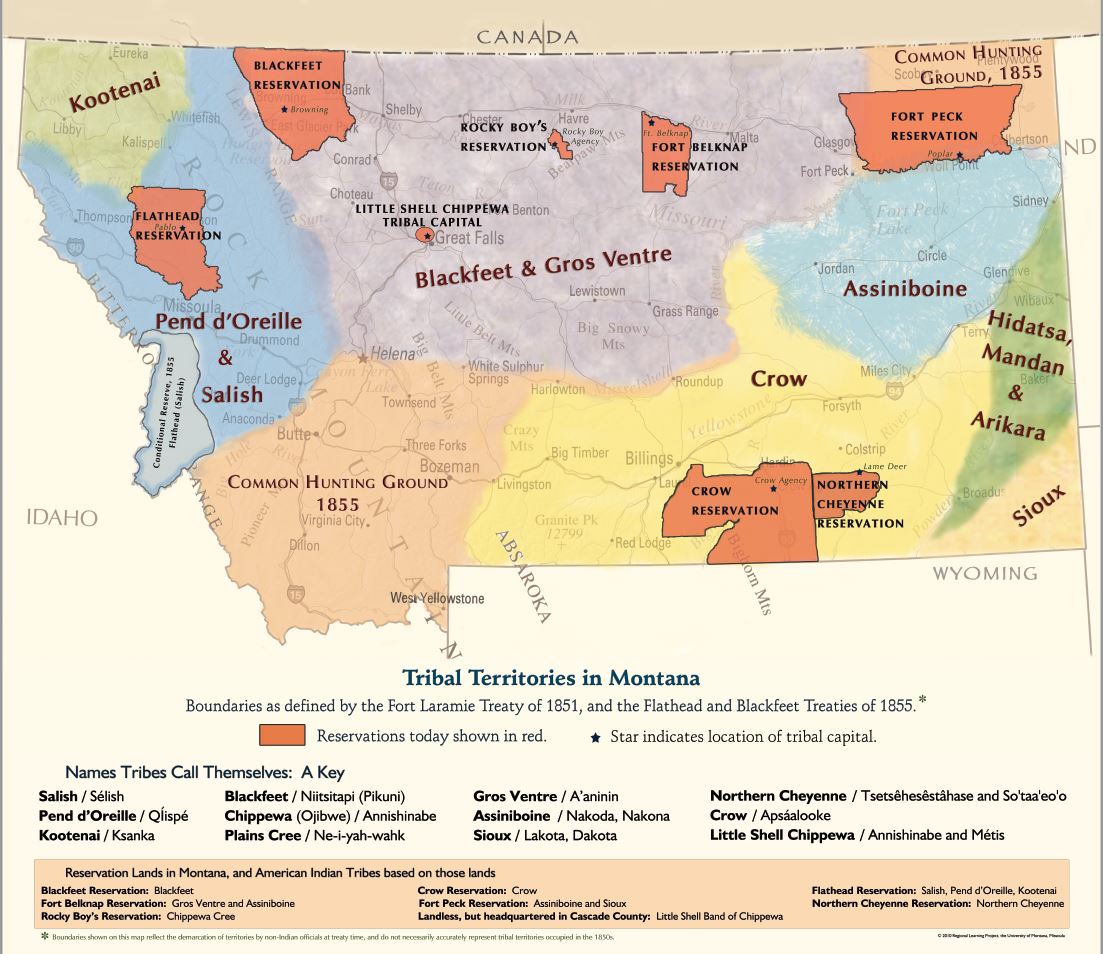
Montana Tribes Map
Montana Tribes and Reservations Map
Assiniboine Bronze is a Terramagne-American heritage turkey breed developed by the Assiniboine tribe in what is now northeast Montana. Fort Peck Reservation keeps many flocks, some for private families and others on turkey farms, as well as a hatchery. Fort Belknap has primarily family flocks and a couple of farms that sell turkey products, but they exchange breeding stock with Fort Peck to maintain genetic diversity. These date back before the founding of the reservations. In fact, one official early in Fort Peck history encouraged tribe members to farm turkeys as a business.
Wild Turkeys
Heritage Turkeys
The large size, iridescent bronze plumage, and naked bluish head should distinguish Wild Turkeys from all other birds. Males have a prominent red neck wattle, a beard, and spurs on their legs. Their back and breast feathers are tipped with black. Females are smaller, less brightly colored, and generally lack a beard (a few females have beards up to 3 inches in length). The back and breast feathers of females are tipped with yellowish brown or white. Adult males average 48 inches in length and 16.3 pounds in weight, while adult females average 34 inches in length and 9.3 pounds in weight.
The bison herd rotates through a set of several pastures for grazing. They get supplemental hay in winter. A covered wagon takes guests on zoo tours. This herd supplies bison meat for the zoo's food stand and craft materials for its gift shop.
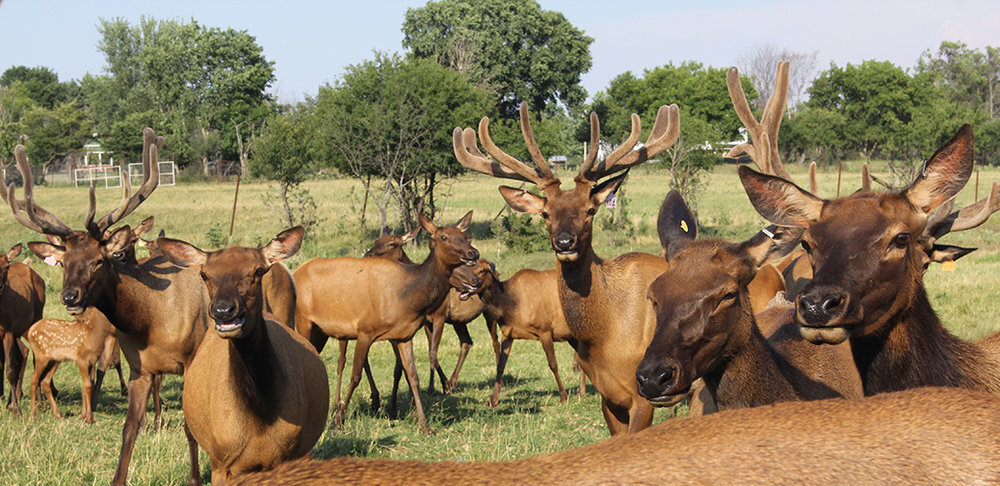
A herd of elk rotate among several pastures for grazing and browsing. Some have native plants, others are sown with food plot seed. They get supplemental hay and deer pellets in winter. The elk supply venison for the zoo's food stand and craft materials for its gift shop. The bulls that develop the largest antlers are used for breeding. Some of these also go to the state's breeding program in hopes of reversing the damage done by hunting wild bulls with the biggest antlers.
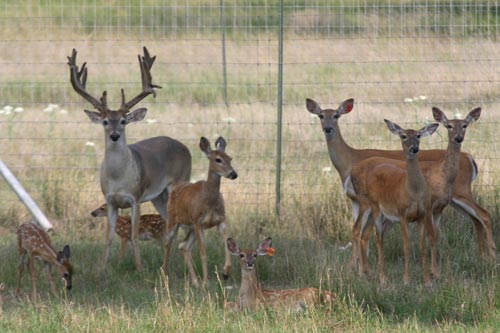
Herds of white-tailed deer rotate among several pastures for grazing and browsing. Some have native plants, others are sown with food plot seed. They get supplemental hay and deer pellets in winter. The deer supply venison for the zoo's food stand and craft materials for its gift shop. Most bucks are separated from the does, and those that develop the largest antlers are used for breeding. Some of these also go to the state's breeding program in hopes of reversing the damage done by hunting wild bucks with the biggest antlers.
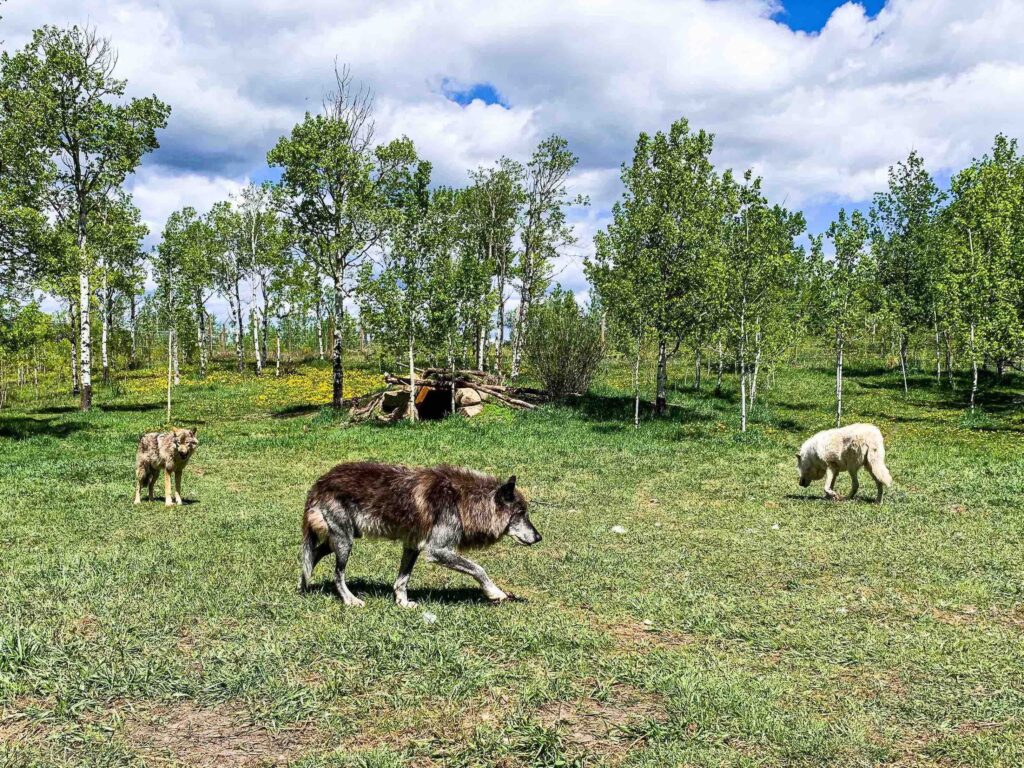
A pack of wolfdogs (who are more wolf than dog) share a large enclosure with a constructed den as well as brush piles to attract prey. Birch trees indicate that it lies near the Milk River. As former pets, these are all neutered. They eat a combination of high-protein dry dog food and butcher scraps. They are also free to hunt anything they can catch inside their territory such as rabbits, squirrels, mice, and pheasants.
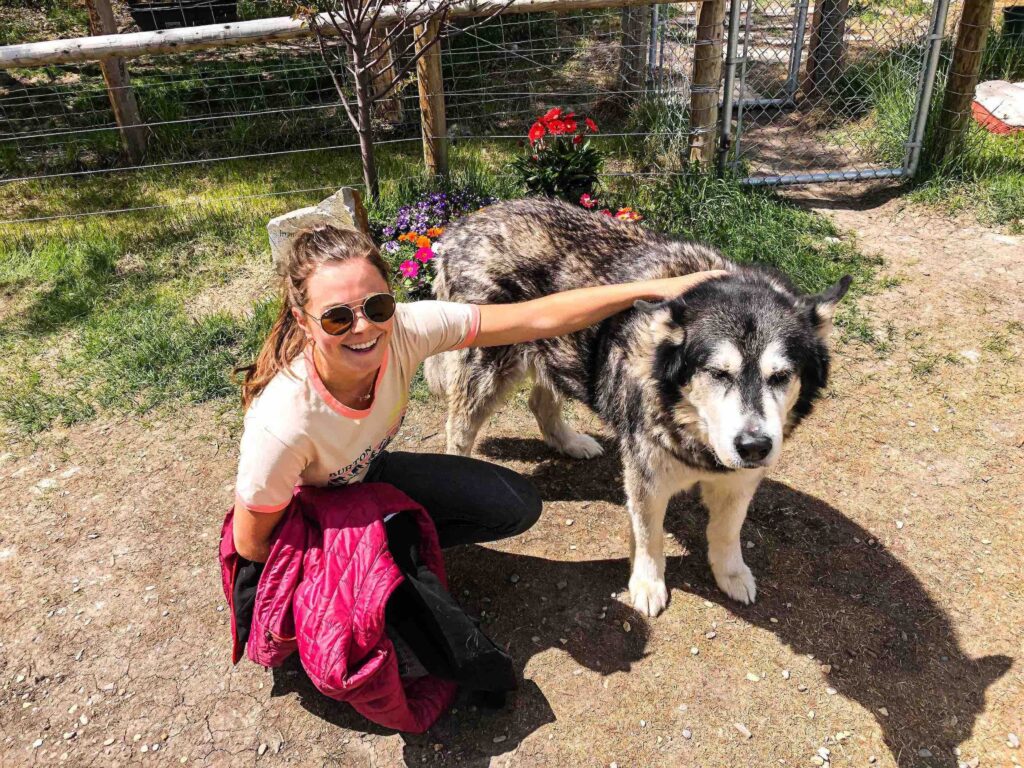
A few friendly wolfdogs (who are more dog than wolf) have a play pen where zoo patrons can pet them. Arling Hanson's wife Lulu "Lupe" Hanson manages the wolfdogs. These eat high-protein dry and canned dog food.
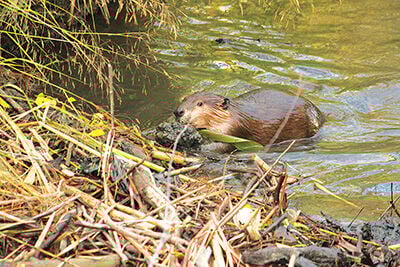
The beavers invited themselves in and dammed a small creek feeding into the Milk River. They do not belong to the zoo. Their "exhibit" consists of a fence to keep zoo patrons out of beaver territory, and a path for the covered wagon tour to follow alongside it so people can see the beavers. These animals eat tree bark and green shoots, cattails, and other riparian plants as well as harvesting woody materials to maintain their dam and lodge.
Montana Geographic Map
Montana Roads and Cities Map
Montana Counties Map
Two roads get almost all the east-west cross-state traffic in Montana: US Highway 2 in the north and Interstate 94 in the south. That makes US Highway 2 and nearby areas ideal for roadside attractions.
A roadside attraction is a feature along the side of a road meant to attract tourists. In general, these are places one might stop on the way to somewhere, rather than actually being a destination. They are frequently advertised with billboards.
Havre is the county seat and largest city in Hill County, Montana, United States. As of the 2010 census the population was 9,310.
Havre Hobby Habitat
7221 48th St W
Havre, MT 59501
This is at the southwest end of Havre, just north of Interstate 87. Beaver Creek runs through the farm.
72 Ave W is just across US Highway 87 from 48th St W. Continuing southwest along US Highway 87, the road goes to Box Elder in Rocky Boy's Reservation. Continuing north into Have, US Highway 87 connects with US Highway 2 which runs west to Cut Bank in the Blackfeet Reservation.
Montana Havre Hobby Habitat Gas Station
The gas station has two old pumps, one for unleaded gas and one for diesel fuel. The much newer Tesla supercharger is off to the left side in what used to be one of the parking spaces. Inside, the gas station has a convenience store, dinette, and two accessible dotties.
Montana Havre Hobby Habitat Gas Station Tesla Charger
The wraparound counter has a couple of tables with chairs off to its left side, while the right side leads to the snack bar. The snack bar includes hot and cold beverages, pizza slices, hot dogs, and a frozen yogurt machine. The gas station gets a subsidy to carry fresh produce and cold lunch items such as salads, sandwiches, snack trays, meat and cheese, peeled hard-boiled eggs, and bottled water to support healthy eating habits. Travel supplies are to the left side of the shelves. The refrigerated section is at the back.
The women's bathroom has two regular and one handicapped stall. The men's room is similar but with only one handicapped stall and two urinals. Both bathrooms have a baby-changing station. The dottie includes a toilet, a pull-down dressing-changing bench, and a sink (not visible here).
The entrance to Havre Hobby Habitat is flanked by two small homemade sheds built from salvaged materials. The left holds the business office and ticket window. The right holds the gift shop.
Inside the gift shop are souvenirs such as stuffed animals and clothes. An art cart offers free supplies including blank paper, a stack of printouts with titles like "You can draw a ... PIG!" and baskets of pencil stubs and crayons. Another stack includes activity pages with things like nature scavenger hunts or animal-themed mazes.
A rack of photos stands under a sign reading, Candid Critters. These are taken by Jerome's oldest daughter, who also posts Candid Critters videos on the zoo's website. Stills and videos are replaced whenever she takes one she likes better of each animal type. Each year the zoo puts out a calendar with the best pictures from the previous months.
A large wooden stage with a roof provides space for scheduled animal shows like Peggy the Pirate Queen and Einstein the Goaticorn. At other times, people may use the stage for busking, sheltering from inclement weather, or taking breaks.
Chicks are among the poultry exhibits. When a hen goes broody, she and her eggs are moved here for safekeeping, where they stay until the chicks have their full feathers and no longer need extra heat or protection. Then they rejoin the main flock on the farm. This is necessary because the farm raises heritage chickens that can reproduce on their own, instead of nonbroody commercial breeds that must be repurchased frequently.
Normally the chickens are free-range on the farm. In the brooder they get commercial chicken feed supplemented with farm scraps. Crickets dusted with vitamin powder are served in a stack of cardboard layers to encourage foraging. Any fishing worms past their sell-by date are available for zoo guests to buy for the hens while supplies last.
At scheduled times, "Chicken Jean" Kingsland gives presentations about keeping chickens, broody hens, chick care, and heritage breeds.
The Buff Orpington underpins a unique cultural heritage for its remarkable plumage and exceptional bearing. They are identified by large, robust build with soft yellowish/ golden feathers and pinkish-white feet and beak.
They are mainly known to be docile and overly friendly. As such, you’d often find that they are the most suitable for your backyard setting. Buff Orpington chickens are exceptionally good at egg production, with annual production varying from 200 to 280.
They are broody, and their size makes flight a tad difficult for them. So, you’d find them relatively easy to control. They are also known as a good meat source if harvested for food purposes.
The Orpingtons were developed in the 1880’s. The Buff Orpington is a popular breed with a beautiful golden buff plumage. The Buff is a large, friendly bird and is a back-yard favorite. They are also one of the most broody of the heritage breeds and are excellent mothers. They mature to around 6 pounds and will start laying large brown eggs at about 6 months.
A troupe of several lemurs share a large indoor-outdoor exhibit with lots of things to climb. Part of the indoor area is private, and part is visible to zoo patrons for rainy days. Patrons can buy food to hand-feed the lemurs, who are pretty tame. These were added in 2014 when a traveling dealer of exotics stopped at the zoo and offered them.
Feeding process: Shoo lemurs into outdoor enclosure and release crickets dusted with vitamin powder to occupy lemurs. Open zookeeper access to shed, fill water and food dishes, then move lemurs into shed. Fill outdoor water dish, distribute fresh fruits and vegetables all around the climbing branches and wire sides, then add a treat ball full of leaf-eater biscuits. Let the lemurs have free choice of indoor-outdoor areas. This requires them to forage for their food, not just sit and stuff their faces. Feeding is repeated three times a day, with the scheduled hours listed on the zoo flyer. A vending machine outside the enclosure allows zoo guests to buy raisins for feeding the lemurs until the day's ration of treats runs out.
Not all zoos, including accredited ones, take this much trouble with feeding enrichment. Jerome simply finds it a free way to keep both lemurs and guests entertained. This minimizes the cost of lemur toys.
Ringtails eat leaves, flowers and insects. They can also eat fruit, herbs and small vertebrates.
At the Smithsonian's National Zoo, they are fed a mixture of fruits, vegetables and leaf-eater biscuits multiple times a day.
Social Structure
Ring-tailed lemurs live found in social groups ranging in size from three to 25 individuals. The groups include multiple males and females. Females spend their whole lives in their birth group. Generally males change groups when they reach sexual maturity at age three.
Dotty Tom the serval is a retired stud from a Savanna Cat breeder, just added in August. His exhibit features climbing branches, stumps, and rocks. He adores solving puzzles; one of his favorite enrichment toys is a homemade honeycomb feeder where cat treats are hidden inside random holes. The small tubes are straight, while the larger ones have a baffle inside to make it more challenging. He eats high-protein dry cat food from a dish and butcher scraps from metal baskets hung on branches for foraging. Like the lemur exhibit, this one has an indoor shelter with private and public areas for rainy days.
Cheetah's enclosure stands between the serval exhibit and the goat exhibit. The fence is to keep zoo patrons from groping her; it locks from her side only. It includes a lounging platform with accessible steps, padded with a bowl chair cushion in a camouflage pattern. Cheetah spends much of her work time there because she can't move easily. A shelter includes a private breakroom and a public viewing area for rainy days. A sign reads, "Pet the Kitty -- $10 per minute" and "Your Picture with the Kitty -- $20" above a dropbox. Her $15/hour wage comes out of the zoo revenues like the other employees; the petting box was her idea and counts as tips, so she keeps everything in it. Mostly she spends the money on live fish to eat, adaptive equipment, or home entertainment.
Cheetah has an accessible tiny house near the farmhouse where Jerome and his family live. She finds wheelchairs uncomfortable, so instead she uses a wheeled seat indoors, which she can move with her hands and feet. Outdoors, she uses a sort of garden cart that Jerome built for her, with one side that drops down into a ramp and the floor padded with a cushion. She can wheel it on her own, but it's easier to get around if someone else pushes it.
A herd of several goats enjoy a pen with splendid climbing structures. They eat primarily goat feed and farm scraps, but edible weeds and brush trimmings are thrown in when available. Large leafy branches can be dropped in whole for the goats to climb and forage. Another option is a treat ball filled with goat biscuits, which also works for other grazing/browsing livestock. Zoo visitors can buy a bucket of fruit and vegetable chunks to feed the all domestic livestock, who are chosen for friendliness; this is a good way to use up things like apples and carrots that are too blemished to sell or use as human food.
Einstein the Goaticorn was created by merging his horn buds as a kid. The single horn gives him great point control, allowing him to open latches and untie simple rope knots with it. He performs these tricks for a crowd to get treats -- or whenever he wants to get into something he shouldn't. His pen includes ropes attached to the top rail. Zoo guests can tie knots for him to play with.
Llamas are popular with patrons because they hum. They have access to a pasture for grazing and browsing, hay nets, and commercial llama feed. A run-in shed offers shelter from inclement weather.
Several potbellied pigs share a pen with a little hog house, mud and sand for rooting, and plenty of rocks to push around. These were rescues from people who got them as pets, not realizing how big they'd get. The pigs get a portion of standard hog feed for a balanced diet, but mostly they eat farm scraps.
A herd of ponies provide pony rides at scheduled times or for large groups. Their pasture includes a run-in shed. The hay racks, pony feed buckets, and water stations are all widely separated, encouraging the ponies to move around.
Cheetah's tiny house includes a walkway with turnabout, a path to an enclosed private patio, and a ramp up to the porch. Much of this was built with salvaged materials, especially windows and doors, hence the different colors and styles. The outside cladding is a mix of salvaged scraps and full-price wood from a local lumberyard. The roof was bought new from a park supplier. Jerome and his family built the tiny house; Cheetah owns the house, pays her own utilities, and rents her yard for a dollar a month. As Jerome puts it, "I wasn't using the land for anything, so no point overcharging her to use it." Built with a sturdy wooden foundation, the tiny house would be easy to move if necessary.
Cheetah keeps a rolling seat in the house. It has a bicycle seat on a telescoping stem for sitting, knee cups for kneeling, a work tray between them, and five swiveling wheels held together with a sturdy metal frame. A brake lever can lock the wheels. This was the first piece of adaptive equipment that Cheetah bought for herself, and she's very proud of it. The seat was intended for mechanics rather than disabled people, so it was actually affordable.
The kitchen includes an apartment-sized refrigerator, a double sink, a rangetop, a small overhead cabinet, and a small base cabinet between the kneespaces. The sink was salvaged but the appliances are new. All the work surfaces are set at comfortable wheelchair height. The built-in shelf can be used for appliances, storage, or a computer station.
Opposite the kitchenette, a log cabin living room set occupies the corner by the door. It includes a futon chair, an end table with a lamp, a futon loveseat, and a coffee table.
The log cabin dinette set at the end of the living room set includes a small table and two chairs.
The hallway to the bathroom and bedroom has large windows for natural light.
The bathroom has a shower and sink on the right side, and a toilet on the back side. The toilet has grab bars and sits under a window of frosted glass. The shower includes grab bars and a fold-down seat.
The bedroom includes a solid door and a closet. Cheetah has clothes now, but not a lot, because she doesn't actually enjoy wearing them unless the weather is freezing cold. She normally performs in a spotted bikini designed to match her dappled fuzz without bothering her too much. It also has a storage shelf beside one window. Cheetah sleeps in a bowl bed. Much of her furniture is salvaged, but this piece she bought new.
Montana Mini-Ecosystem Exhibit
5411 US-2
Havre, MT 59501
This is northeast of Havre, just south of the Prairie Farms Golf Course on the Milk River, off of US Highway 2.
Prairie Farms Golf Course
4910 Shepherd Rd N
Havre, MT 59501
The Montana Mini-Ecosystem Exhibit started out as an animal-themed tourist trap and gradually evolved into a larger facility with live animals. It still has a visitor center with an educational display and a gift shop featuring locally made animal products, artwork, and related items. The parking lot includes a row of three half-hour electric vehicle chargers. Open parking is free, but zoo patrons may also rent a space in the parking pavilion for protection against hot sun, rain, or other inclement weather. A food stand offers refreshments including bison, venison, and locally grown produce. It's actually half-farm and half-zoo because it raises bison and deer as livestock; the zoo patrons provide a ready market, creating a diversified income stream.
The animal-themed playground is free to the public, whether or not people buy tickets to enter the zoo. People are also welcome to look at the animals from a distance.
A wildlife feeding exhibit entices wild squirrels with deer skulls and shed antlers to gnaw. Feeding stations attract birds and other wildlife. A nature pond offers water and habitat. Along one side of the enclosure, a deck with wooden benches and a shelter for rainy days allows zoo patrons to walk past or sit and watch the animals. Proximity to the Milk River and surrounding forest makes it easy to attract a wide range of species.
The squirrel obstacle course is a long path offering many elements for squirrels to explore. Each day, peanuts are hidden in various parts of the path.
Montana Havre Montana Mini-Ecosystem Exhibit Squirrel Feeder Pinwheel
Montana Havre Montana Mini-Ecosystem Exhibit Wildlife Feeding Station Chipmunk Jar Feeder
Montana Havre Montana Mini-Ecosystem Exhibit Wildlife Feeding Station
Montana Havre Montana Mini-Ecosystem Exhibit Wildlife Pond
The Canada lynx enjoys a large roofed enclosure with with big tree branches to climb. A shed holds an indoor enclosure, part of which is visible to zoo guests. The lynx eats whole raw prey, typically rabbits or chickens, and is free to hunt small birds or rodents that venture into the enclosure.
The bobcat enclosure is a cleverly repurposed silo containing large branches for climbing, boulders, various shelters, and a small swimming pool. If you're looking for the bobcat in this picture, he is asleep on a branch in the upper left corner. He eats whole raw prey, typically rabbits with chickens or feeder rats for variety, and is free to hunt small birds or rodents that venture into the enclosure. As this bobcat loves water, live fish are served in the pool.
Flocks of Assiniboine bronze turkeys rotate among several pastures variously furnished with native grasses, fruit and nut trees, or turkey food plots. While some are harvested for the food stand, most are sold as holiday turkeys. Zoo guests can reserve a bird early in the year to get a discount. The handsome feathers are used for many crafts sold in the zoo gift shop, from feather fans to handmade fishing flies, as well as raw materials for crafters to use.
Montana Tribes Map
Montana Tribes and Reservations Map
Assiniboine Bronze is a Terramagne-American heritage turkey breed developed by the Assiniboine tribe in what is now northeast Montana. Fort Peck Reservation keeps many flocks, some for private families and others on turkey farms, as well as a hatchery. Fort Belknap has primarily family flocks and a couple of farms that sell turkey products, but they exchange breeding stock with Fort Peck to maintain genetic diversity. These date back before the founding of the reservations. In fact, one official early in Fort Peck history encouraged tribe members to farm turkeys as a business.
Wild Turkeys
Heritage Turkeys
The large size, iridescent bronze plumage, and naked bluish head should distinguish Wild Turkeys from all other birds. Males have a prominent red neck wattle, a beard, and spurs on their legs. Their back and breast feathers are tipped with black. Females are smaller, less brightly colored, and generally lack a beard (a few females have beards up to 3 inches in length). The back and breast feathers of females are tipped with yellowish brown or white. Adult males average 48 inches in length and 16.3 pounds in weight, while adult females average 34 inches in length and 9.3 pounds in weight.
The bison herd rotates through a set of several pastures for grazing. They get supplemental hay in winter. A covered wagon takes guests on zoo tours. This herd supplies bison meat for the zoo's food stand and craft materials for its gift shop.
A herd of elk rotate among several pastures for grazing and browsing. Some have native plants, others are sown with food plot seed. They get supplemental hay and deer pellets in winter. The elk supply venison for the zoo's food stand and craft materials for its gift shop. The bulls that develop the largest antlers are used for breeding. Some of these also go to the state's breeding program in hopes of reversing the damage done by hunting wild bulls with the biggest antlers.
Herds of white-tailed deer rotate among several pastures for grazing and browsing. Some have native plants, others are sown with food plot seed. They get supplemental hay and deer pellets in winter. The deer supply venison for the zoo's food stand and craft materials for its gift shop. Most bucks are separated from the does, and those that develop the largest antlers are used for breeding. Some of these also go to the state's breeding program in hopes of reversing the damage done by hunting wild bucks with the biggest antlers.
A pack of wolfdogs (who are more wolf than dog) share a large enclosure with a constructed den as well as brush piles to attract prey. Birch trees indicate that it lies near the Milk River. As former pets, these are all neutered. They eat a combination of high-protein dry dog food and butcher scraps. They are also free to hunt anything they can catch inside their territory such as rabbits, squirrels, mice, and pheasants.
A few friendly wolfdogs (who are more dog than wolf) have a play pen where zoo patrons can pet them. Arling Hanson's wife Lulu "Lupe" Hanson manages the wolfdogs. These eat high-protein dry and canned dog food.
The beavers invited themselves in and dammed a small creek feeding into the Milk River. They do not belong to the zoo. Their "exhibit" consists of a fence to keep zoo patrons out of beaver territory, and a path for the covered wagon tour to follow alongside it so people can see the beavers. These animals eat tree bark and green shoots, cattails, and other riparian plants as well as harvesting woody materials to maintain their dam and lodge.