Notes for "Incompressible"
Dec. 28th, 2025 10:59 pm![[personal profile]](https://www.dreamwidth.org/img/silk/identity/user.png) ysabetwordsmith
ysabetwordsmithThese are the notes for "Incompressible."
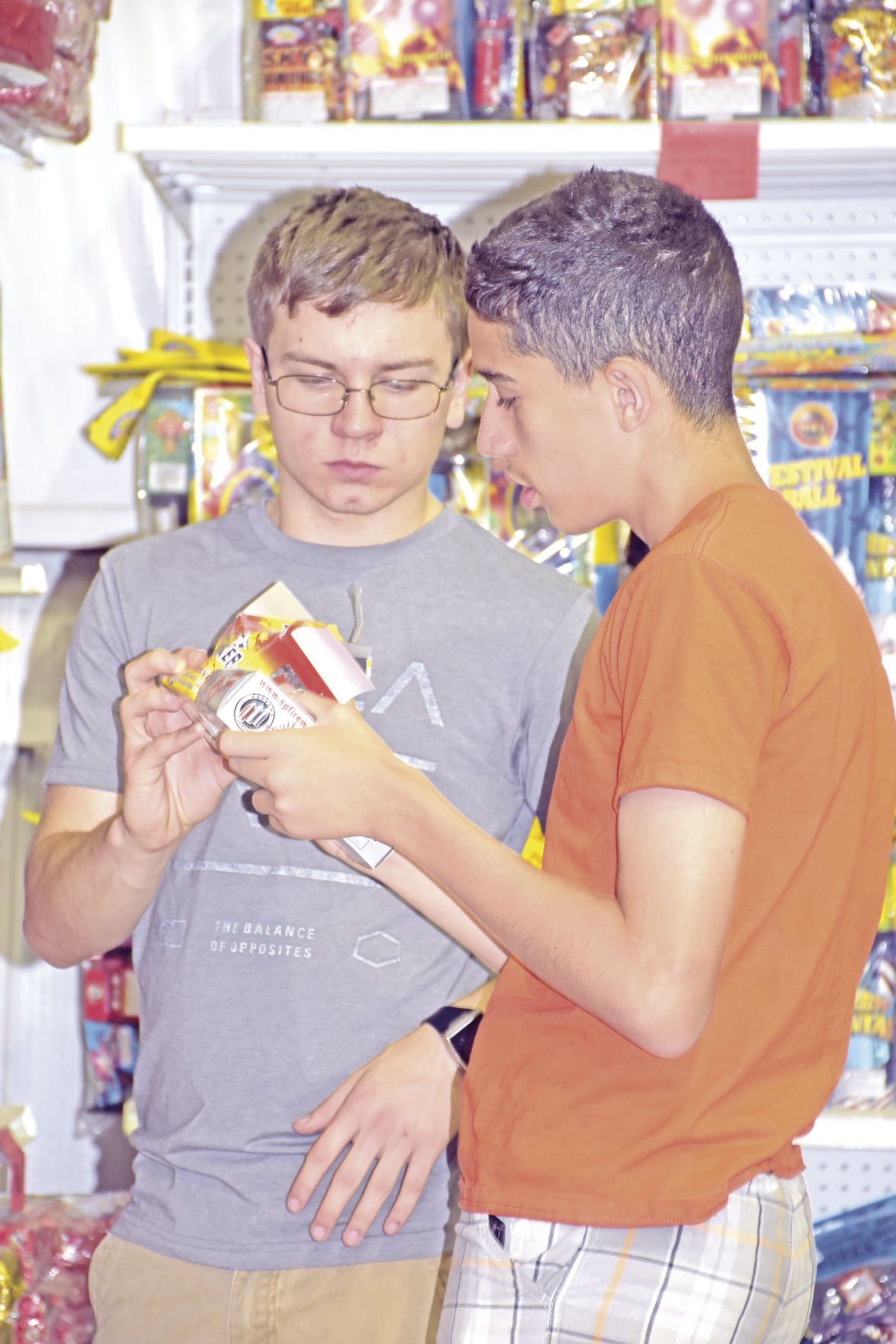
Robert Cavendish -- He has fair skin with pimples, blue eyes, and short brown hair. He wears glasses. His heritage is American; he speaks English and Spanish. He is 17 years old in 2015.
Robert Cavendish lives in Omaha, Nebraska. He is in his junior year of high school and already thinking about college. He wants to attend one with good science and technical programs. His knack for logic and math makes him excel at science classes. His balance lets do great tricks on a skateboard. Robert is friends with Julio de León, a sophomore. Julio is rowdy and prone to vandalism, whereas Robert tends to be stuffy. Robert wears practical boy clothes often in shades of gray, khaki, white, and blue. He likes T-shirts with science themes.
Qualities: Good (+2) Balance, Good (+2) Logical-Mathematical Intelligence, Good (+2) Science Nerd, Good (+2) Skateboarder
Poor (-2) Stuffy
Julio de León -- He has tinted skin, black eyes, and short black hair. His heritage is Hispanic; he speaks English and Spanish. He is 16 years old in 2015.
Julio lives in Omaha, Nebraska. He is a foster child because his parents were deported to Mexico. He resents the whole American government, including Family Services. So he takes it out on whatever hapless foster family has him currently. Julio is very destructive and like a wide variety of vandalism. He also has a habit of running away, so he's very streetwise. He has a lot of Hispanic friends, but he also hangs out with Robert Cavendish. Julio is a sophomore in high school, while Robert is a junior. Julio enjoys listening to music. He wears practical boy clothes often in shades of brown, gray, rust, and white.
Qualities: Good (+2) Fast, Good (+2) Hispanic Friends, Good (+2) Music Fan, Good (+2) Streetwise
Poor (-2) Vandal
Taylor Turriano -- He has tinted skin, brown eyes, and short brown hair with a mustache and beard. He is homoromantic homosexual. His heritage includes American, French, Spanish, and Italian. He speaks English, Esperanto, French, German, Italian, and Spanish. He is 28 years old in 2015.
Taylor grew up in Columbus, Ohio. After high school, he took a Get a Life Year visiting queer-friendly countries: Canada, Iceland, Portugal, Spain, United Kingdom, Denmark, Germany, Switzerland, Malta, Australia, New Zealand, and Uruguay. Taylor earned a Bachelor of Science with a major in General Science and a minor in Big Questions at Ohio State University in Columbus. There he joined Come to the Darkslide skateboarders, Game On!, Science Club, Philosophy Club, and QUILTBAG Club.
After finishing his undergraduate work, Taylor took a Get a Life Year visiting countries known for science: Brazil, Sweden, Poland, Netherlands, France, Italy, Turkey, Egypt, India, Taiwan, South Korea, and Japan. Next he earned a master's degree in Emergency Engineering with a graduate minor in Queer Studies at Ohio State University in Columbus. When you need to construct a solution to a problem before something collapses, explodes, or contaminates your city then you call an Emergency Engineer. Taylor joined the Blitzenspieler high-pressure practice club, Come to the Darkslide skateboarders, Emergency Management Association, Game On!, and QUILTBAG Club.
The first few years after college, he moved around different locations, taking short-to-medium-term jobs with various aid organizations and engineering companies. Over time, he met more and more brains on all sides of the cape, and decided that he cared more about that than he did about cape politics. So now Taylor often consults with SPOON, Kraken, and other soup organizations.
Origin: Taylor was working on his capstone project for his master's degree, a focus-enhancing headband for use in emergency situations. An accident in the field while wearing it left him with superpowers -- and the same occasionally happens to other users.
Uniform: He favors men's business wear, with just a little casual, mostly in shades of gray, khaki, white, blue, and yellow.
Qualities: Good (+2) Linguistic Intelligence
Powers: Good (+2) Super-Intellect
Motivation: To keep things from getting worse.
Bachelor of Science in General Science (T-American)
at Ohio State University in Columbus
A General Science degree includes class series on scientific history, biology, chemistry, physics, scientific math, and individual classes on things like geology, meteorology, linguistics, psychology, etc. This training would support careers in any field for the purpose of interdisciplinary study or avoiding silo thinking. So like a Generalist degree, but with an emphasis on science. It also serves as a basis for most advanced degrees in science.
Major (73 credits)
Core Courses (40 credits):
BIOL 101: Biology I and Lab
BIOL 102: Biology II and Lab
CHEM 101: Chemistry I and Lab
CHEM 102: Chemistry II and Lab
HIST 235: History of Science I
HIST 236: History of Science II
LOG 101: Logic and Critical Thinking
MATH 220: Mathematics for Science
PHYS 101: Physics I
PHYS 102: Physics II
PSYCH 101: Introduction to Psychology
SOC 101: Introduction to Sociology
Formal Sciences (6 credits):
Majors choose 2 courses (6 credits), at least one of which must be 300-400 level.
COMP 201: Computer Programming
COMP 375: Game Theory
Natural Sciences (6 credits):
Majors choose 2 courses (6 credits), at least one of which must be 300-400 level.
BIOL 220: Evolution
GEOL 326: Hydrology
Social Sciences (6 credits):
Majors choose 2 courses (6 credits), at least one of which must be 300-400 level.
PSYC 315: Conflict Theory
QUST 210: Queer Theory
Applied Sciences (6 credits):
Majors choose 2 courses (6 credits), at least one of which must be 300-400 level.
ENGR 377: Archaic Engineering
HLTH 202: Emotional First Aid
Generalist Courses (6 credits):
Majors choose 2 courses (6 credits), at least one of which must be 300-400 level.
GENL 205: Learning from Failure
GENL 450: Specialization Is for Insects
(Taylor's group studied ways that scientific ignorance causes problems at institutional levels, and proposed ideas for counteracting each of the routes and problems thus identified. The university filed the paper and promptly ignored it. Their supervisor nominated all of them for master programs.)
Capstone (3 credits):
PSYCH 395: Group Research Project (2-6 credits)
Minor in Big Questions (T-American)
at Ohio State University in Columbus
This interdisciplinary field is widely offered as a minor and sometimes as a major. It tends to span Ethics, Philosophy, Political Science, and various hard sciences. Universities often include one or more Big Questions courses among their general requirements. In support of this, they often require each department to offer at least one such course. This gives students a very wide range of options, so most people can find one in their area of expertise. As a major or minor, studying Big Questions will prepare students to think about major world issues in their field, or across fields. This makes it a very popular combination with other fields such as Art, Business, Political Science, Writing, or any of the sciences.
Minor (24 credits) -- Core 9, Lower-Level 3, Upper-Level 6, Electives 6
Core Courses
Major students take PHIL 170 and one course at each level. Minor students take PHIL 170, one course at 100-200 level, and one course at 300-400 level. Certificate students take PHIL 170.
PHIL 170: Introduction to Big Questions (3 credits)
LOG 201: Logical Fallacies (3 credits)
PHIL 470: Risk Assessment (2 credits)
AND one or both of:
PHIL: 475 X-Risks (1 credit)
PHIL: 476 S-Risks (1 credit)
Lower-Level Courses
Minor students take 3 credits of lower-level courses.
ETHC 105: Survey of Ethical Systems (3 credits)
Upper-Level Courses
Minor students take 6 credits of upper-level courses.
COMPS 345: How Is Technology Changing Culture? (3 credits)
GS 477: What Do Men Want? Lecture (2 credits)
GS 478: How to Understand Men Lab (1 credit)
Electives
Minor students choose 6 credits of courses from the list below, or any other course not already taken.
GEOG 271: Are State Boundaries Legitimate? (1 credit)
HIST 220: How the Past Affects the Present (2 credits)
PHIL 472: Working in a Think Tank (3 credits)
Clubs (T-American)
Come to the Darkslide
Skateboarders come together to learn, teach, and show off. We meet weekday afternoons at the Darkslide skatedot and weekend days at local skateparks.
Game On!
Join us for fun and competition in gaming. Board games, card games, and general tabletop games are held Tuesday and Thursday evenings from 5 to 9 PM. Roleplaying and miniatures games are held Wednesday evenings from 5 to 9 PM and Saturday from noon to midnight. Video games are held Friday evenings from 5 to 9 PM and Sunday from noon to 9 PM.
Science Club
Explore a range of soft and hard sciences through presentations, experiments, field trips, and other exciting activities. Open to majors and minors in the Science Department as well as other students.
Philosophy Club
If you like thinking about human nature, or asking questions, or tackling big issues, then this is the club for you! Open to majors and minors in the Philosophy Department as well as other students.
QUILTBAG Club
We welcome students of all orientations and identities to explore their sexual and romantic selves.
Master of Science in Emergency Engineering (T-American)
at Ohio State University in Columbus
Core Courses
Emergency Management Module
EMERM 501: Introduction to Emergency Management
EMERM 502: Natural and Manmade Disasters
EMERM 505: Emergency Plans and Surge Capacity
EMERM 510: Teamwork with Emergency Responders
EMERM 601: Advanced Emergency Management
EMERM 625: Damage Control and Harm Reduction
Engineering Module
ENGR 550: Introduction to Emergency Engineering
ENGR 551: Equipment for Emergency Engineering
ENGR 646: Cape Fights and Other Superpowered Emergencies
ENGR 647: Superpowered Assistance in Emergencies
ENGR 667: Advances in Emergency Technology
ENGR 695: Practicum in Emergency Engineering
This 1-hour course must be taken at least once, and can be added to any course in this program. Students have access to a comprehensive lab for Emergency Engineering where they can learn to use equipment, analyze samples, and practice techniques for a wide variety of subjects under the supervision of an experienced professor.
ENGR 505: Emergency Engingeering Lab
Electives
Choose 6 courses from at least 3 different departments.
ARCHT 555: Building Safety Inspections
COMP 625: Hackers, Black Hats and White Hats
ETHC 515: Ethical Obligations in Extremity
GAME 667: Games for Emergency Management
METAL 515: Metallurgical Concerns in Crisis Situations
PHYS 545: Practical Fluid Mechanics
PSYCH 511: Psychology of Panic
(For his internship, Taylor worked with Emergent Engineering, an organization that develops cutting-edge and zetetic equipment for use in catastrophic situations such as factory explosions or earthquakes. For his capstone project, he started with the company's headband for reducing panic and adapted it to improve focus under stress. It works, but when used repeatedly it has about a 1% chance of manifesting Super-Intellect. However, that phenomenon has only been observed in field use at actual emergencies; it doesn't seem to happen in lab conditions, or at least it hasn't yet.)
Capstone
Students choose either Thesis Track or Project Track. Take a minimum of 6 hours in relevant courses.
ENGR 695: Internship (1-6 hours)
ENGR 698: Capstone Project (1-12 hours)
Graduate Minor in Queer Studies (T-American)
at Ohio State University in Columbus
Core Courses
Choose one introductory course:
SGS 503: Introduction to the QUILTBAG (Credits: 3)
Choose 6 credits at 500 level:
HIS 520: History of Sex and Gender (Credits: 2)
AND one intensive study session:
HIS 524: The Stonewall Era (Credits: 1)
FS 530: Development of Human Sexuality (Credits: 3)
Choose 6 credits at 600 level:
SGS 620: Sex and Gender Activism (Credits: 2)
AND one of:
SGS 621: Activism Tools and Techniques (Credits: 1)
SGS 650: QUILTBAG Families (Credits: 2)
AND one intensive study session:
SGS 652: Gay Families (Credits: 1)
Electives:
One philosophy course may count:
PHILO 533 - Philosophy of Family Ties (Credits: 3)
One psychology course may count:
PSYCH 631 - Psychology of Masculinity (Credits: 3)
One political science course may count:
POLSC 408 - Politics and Family Policy (Credits: 3)
Clubs (T-American)
Blitzenspieler
This club supports students in learning how to work fast under pressure. Join us for timed games, high-stakes competitions, handicapper races, and other exciting challenges.
Come to the Darkslide
Skateboarders come together to learn, teach, and show off. We meet weekday afternoons at the Darkslide skatedot and weekend days at local skateparks.
https://www.surfertoday.com/skateboarding/the-glossary-of-skateboarding-terms-and-slang
Emergency Management Association
This organization supports emergency management through presentations, field trips, and practice scenarios. Students may also choose from a wide range of volunteer opportunities with first responder and disaster aid organizations.
Game On!
Join us for fun and competition in gaming. Board games, card games, and general tabletop games are held Tuesday and Thursday evenings from 5 to 9 PM. Roleplaying and miniatures games are held Wednesday evenings from 5 to 9 PM and Saturday from noon to midnight. Video games are held Friday evenings from 5 to 9 PM and Sunday from noon to 9 PM.
QUILTBAG Club
We welcome students of all orientations and identities to explore their sexual and romantic selves.
* * *
Water is incompressible, which means that you can't squash it to make room for air. Air is compressible, which means that you can compress (or squash) the air and add a little bit more air.
Watch a video of toilet destruction.
Robert Cavendish -- He has fair skin with pimples, blue eyes, and short brown hair. He wears glasses. His heritage is American; he speaks English and Spanish. He is 17 years old in 2015.
Robert Cavendish lives in Omaha, Nebraska. He is in his junior year of high school and already thinking about college. He wants to attend one with good science and technical programs. His knack for logic and math makes him excel at science classes. His balance lets do great tricks on a skateboard. Robert is friends with Julio de León, a sophomore. Julio is rowdy and prone to vandalism, whereas Robert tends to be stuffy. Robert wears practical boy clothes often in shades of gray, khaki, white, and blue. He likes T-shirts with science themes.
Qualities: Good (+2) Balance, Good (+2) Logical-Mathematical Intelligence, Good (+2) Science Nerd, Good (+2) Skateboarder
Poor (-2) Stuffy
Julio de León -- He has tinted skin, black eyes, and short black hair. His heritage is Hispanic; he speaks English and Spanish. He is 16 years old in 2015.
Julio lives in Omaha, Nebraska. He is a foster child because his parents were deported to Mexico. He resents the whole American government, including Family Services. So he takes it out on whatever hapless foster family has him currently. Julio is very destructive and like a wide variety of vandalism. He also has a habit of running away, so he's very streetwise. He has a lot of Hispanic friends, but he also hangs out with Robert Cavendish. Julio is a sophomore in high school, while Robert is a junior. Julio enjoys listening to music. He wears practical boy clothes often in shades of brown, gray, rust, and white.
Qualities: Good (+2) Fast, Good (+2) Hispanic Friends, Good (+2) Music Fan, Good (+2) Streetwise
Poor (-2) Vandal
Taylor Turriano -- He has tinted skin, brown eyes, and short brown hair with a mustache and beard. He is homoromantic homosexual. His heritage includes American, French, Spanish, and Italian. He speaks English, Esperanto, French, German, Italian, and Spanish. He is 28 years old in 2015.
Taylor grew up in Columbus, Ohio. After high school, he took a Get a Life Year visiting queer-friendly countries: Canada, Iceland, Portugal, Spain, United Kingdom, Denmark, Germany, Switzerland, Malta, Australia, New Zealand, and Uruguay. Taylor earned a Bachelor of Science with a major in General Science and a minor in Big Questions at Ohio State University in Columbus. There he joined Come to the Darkslide skateboarders, Game On!, Science Club, Philosophy Club, and QUILTBAG Club.
After finishing his undergraduate work, Taylor took a Get a Life Year visiting countries known for science: Brazil, Sweden, Poland, Netherlands, France, Italy, Turkey, Egypt, India, Taiwan, South Korea, and Japan. Next he earned a master's degree in Emergency Engineering with a graduate minor in Queer Studies at Ohio State University in Columbus. When you need to construct a solution to a problem before something collapses, explodes, or contaminates your city then you call an Emergency Engineer. Taylor joined the Blitzenspieler high-pressure practice club, Come to the Darkslide skateboarders, Emergency Management Association, Game On!, and QUILTBAG Club.
The first few years after college, he moved around different locations, taking short-to-medium-term jobs with various aid organizations and engineering companies. Over time, he met more and more brains on all sides of the cape, and decided that he cared more about that than he did about cape politics. So now Taylor often consults with SPOON, Kraken, and other soup organizations.
Origin: Taylor was working on his capstone project for his master's degree, a focus-enhancing headband for use in emergency situations. An accident in the field while wearing it left him with superpowers -- and the same occasionally happens to other users.
Uniform: He favors men's business wear, with just a little casual, mostly in shades of gray, khaki, white, blue, and yellow.
Qualities: Good (+2) Linguistic Intelligence
Powers: Good (+2) Super-Intellect
Motivation: To keep things from getting worse.
Bachelor of Science in General Science (T-American)
at Ohio State University in Columbus
A General Science degree includes class series on scientific history, biology, chemistry, physics, scientific math, and individual classes on things like geology, meteorology, linguistics, psychology, etc. This training would support careers in any field for the purpose of interdisciplinary study or avoiding silo thinking. So like a Generalist degree, but with an emphasis on science. It also serves as a basis for most advanced degrees in science.
Major (73 credits)
Core Courses (40 credits):
BIOL 101: Biology I and Lab
BIOL 102: Biology II and Lab
CHEM 101: Chemistry I and Lab
CHEM 102: Chemistry II and Lab
HIST 235: History of Science I
HIST 236: History of Science II
LOG 101: Logic and Critical Thinking
MATH 220: Mathematics for Science
PHYS 101: Physics I
PHYS 102: Physics II
PSYCH 101: Introduction to Psychology
SOC 101: Introduction to Sociology
Formal Sciences (6 credits):
Majors choose 2 courses (6 credits), at least one of which must be 300-400 level.
COMP 201: Computer Programming
COMP 375: Game Theory
Natural Sciences (6 credits):
Majors choose 2 courses (6 credits), at least one of which must be 300-400 level.
BIOL 220: Evolution
GEOL 326: Hydrology
Social Sciences (6 credits):
Majors choose 2 courses (6 credits), at least one of which must be 300-400 level.
PSYC 315: Conflict Theory
QUST 210: Queer Theory
Applied Sciences (6 credits):
Majors choose 2 courses (6 credits), at least one of which must be 300-400 level.
ENGR 377: Archaic Engineering
HLTH 202: Emotional First Aid
Generalist Courses (6 credits):
Majors choose 2 courses (6 credits), at least one of which must be 300-400 level.
GENL 205: Learning from Failure
GENL 450: Specialization Is for Insects
(Taylor's group studied ways that scientific ignorance causes problems at institutional levels, and proposed ideas for counteracting each of the routes and problems thus identified. The university filed the paper and promptly ignored it. Their supervisor nominated all of them for master programs.)
Capstone (3 credits):
PSYCH 395: Group Research Project (2-6 credits)
Minor in Big Questions (T-American)
at Ohio State University in Columbus
This interdisciplinary field is widely offered as a minor and sometimes as a major. It tends to span Ethics, Philosophy, Political Science, and various hard sciences. Universities often include one or more Big Questions courses among their general requirements. In support of this, they often require each department to offer at least one such course. This gives students a very wide range of options, so most people can find one in their area of expertise. As a major or minor, studying Big Questions will prepare students to think about major world issues in their field, or across fields. This makes it a very popular combination with other fields such as Art, Business, Political Science, Writing, or any of the sciences.
Minor (24 credits) -- Core 9, Lower-Level 3, Upper-Level 6, Electives 6
Core Courses
Major students take PHIL 170 and one course at each level. Minor students take PHIL 170, one course at 100-200 level, and one course at 300-400 level. Certificate students take PHIL 170.
PHIL 170: Introduction to Big Questions (3 credits)
LOG 201: Logical Fallacies (3 credits)
PHIL 470: Risk Assessment (2 credits)
AND one or both of:
PHIL: 475 X-Risks (1 credit)
PHIL: 476 S-Risks (1 credit)
Lower-Level Courses
Minor students take 3 credits of lower-level courses.
ETHC 105: Survey of Ethical Systems (3 credits)
Upper-Level Courses
Minor students take 6 credits of upper-level courses.
COMPS 345: How Is Technology Changing Culture? (3 credits)
GS 477: What Do Men Want? Lecture (2 credits)
GS 478: How to Understand Men Lab (1 credit)
Electives
Minor students choose 6 credits of courses from the list below, or any other course not already taken.
GEOG 271: Are State Boundaries Legitimate? (1 credit)
HIST 220: How the Past Affects the Present (2 credits)
PHIL 472: Working in a Think Tank (3 credits)
Clubs (T-American)
Come to the Darkslide
Skateboarders come together to learn, teach, and show off. We meet weekday afternoons at the Darkslide skatedot and weekend days at local skateparks.
Game On!
Join us for fun and competition in gaming. Board games, card games, and general tabletop games are held Tuesday and Thursday evenings from 5 to 9 PM. Roleplaying and miniatures games are held Wednesday evenings from 5 to 9 PM and Saturday from noon to midnight. Video games are held Friday evenings from 5 to 9 PM and Sunday from noon to 9 PM.
Science Club
Explore a range of soft and hard sciences through presentations, experiments, field trips, and other exciting activities. Open to majors and minors in the Science Department as well as other students.
Philosophy Club
If you like thinking about human nature, or asking questions, or tackling big issues, then this is the club for you! Open to majors and minors in the Philosophy Department as well as other students.
QUILTBAG Club
We welcome students of all orientations and identities to explore their sexual and romantic selves.
Master of Science in Emergency Engineering (T-American)
at Ohio State University in Columbus
Core Courses
Emergency Management Module
EMERM 501: Introduction to Emergency Management
EMERM 502: Natural and Manmade Disasters
EMERM 505: Emergency Plans and Surge Capacity
EMERM 510: Teamwork with Emergency Responders
EMERM 601: Advanced Emergency Management
EMERM 625: Damage Control and Harm Reduction
Engineering Module
ENGR 550: Introduction to Emergency Engineering
ENGR 551: Equipment for Emergency Engineering
ENGR 646: Cape Fights and Other Superpowered Emergencies
ENGR 647: Superpowered Assistance in Emergencies
ENGR 667: Advances in Emergency Technology
ENGR 695: Practicum in Emergency Engineering
This 1-hour course must be taken at least once, and can be added to any course in this program. Students have access to a comprehensive lab for Emergency Engineering where they can learn to use equipment, analyze samples, and practice techniques for a wide variety of subjects under the supervision of an experienced professor.
ENGR 505: Emergency Engingeering Lab
Electives
Choose 6 courses from at least 3 different departments.
ARCHT 555: Building Safety Inspections
COMP 625: Hackers, Black Hats and White Hats
ETHC 515: Ethical Obligations in Extremity
GAME 667: Games for Emergency Management
METAL 515: Metallurgical Concerns in Crisis Situations
PHYS 545: Practical Fluid Mechanics
PSYCH 511: Psychology of Panic
(For his internship, Taylor worked with Emergent Engineering, an organization that develops cutting-edge and zetetic equipment for use in catastrophic situations such as factory explosions or earthquakes. For his capstone project, he started with the company's headband for reducing panic and adapted it to improve focus under stress. It works, but when used repeatedly it has about a 1% chance of manifesting Super-Intellect. However, that phenomenon has only been observed in field use at actual emergencies; it doesn't seem to happen in lab conditions, or at least it hasn't yet.)
Capstone
Students choose either Thesis Track or Project Track. Take a minimum of 6 hours in relevant courses.
ENGR 695: Internship (1-6 hours)
ENGR 698: Capstone Project (1-12 hours)
Graduate Minor in Queer Studies (T-American)
at Ohio State University in Columbus
Core Courses
Choose one introductory course:
SGS 503: Introduction to the QUILTBAG (Credits: 3)
Choose 6 credits at 500 level:
HIS 520: History of Sex and Gender (Credits: 2)
AND one intensive study session:
HIS 524: The Stonewall Era (Credits: 1)
FS 530: Development of Human Sexuality (Credits: 3)
Choose 6 credits at 600 level:
SGS 620: Sex and Gender Activism (Credits: 2)
AND one of:
SGS 621: Activism Tools and Techniques (Credits: 1)
SGS 650: QUILTBAG Families (Credits: 2)
AND one intensive study session:
SGS 652: Gay Families (Credits: 1)
Electives:
One philosophy course may count:
PHILO 533 - Philosophy of Family Ties (Credits: 3)
One psychology course may count:
PSYCH 631 - Psychology of Masculinity (Credits: 3)
One political science course may count:
POLSC 408 - Politics and Family Policy (Credits: 3)
Clubs (T-American)
Blitzenspieler
This club supports students in learning how to work fast under pressure. Join us for timed games, high-stakes competitions, handicapper races, and other exciting challenges.
Come to the Darkslide
Skateboarders come together to learn, teach, and show off. We meet weekday afternoons at the Darkslide skatedot and weekend days at local skateparks.
https://www.surfertoday.com/skateboarding/the-glossary-of-skateboarding-terms-and-slang
Emergency Management Association
This organization supports emergency management through presentations, field trips, and practice scenarios. Students may also choose from a wide range of volunteer opportunities with first responder and disaster aid organizations.
Game On!
Join us for fun and competition in gaming. Board games, card games, and general tabletop games are held Tuesday and Thursday evenings from 5 to 9 PM. Roleplaying and miniatures games are held Wednesday evenings from 5 to 9 PM and Saturday from noon to midnight. Video games are held Friday evenings from 5 to 9 PM and Sunday from noon to 9 PM.
QUILTBAG Club
We welcome students of all orientations and identities to explore their sexual and romantic selves.
* * *
Water is incompressible, which means that you can't squash it to make room for air. Air is compressible, which means that you can compress (or squash) the air and add a little bit more air.
Watch a video of toilet destruction.