![[personal profile]](https://www.dreamwidth.org/img/silk/identity/user.png) ysabetwordsmith
ysabetwordsmithHere are the character notes for "Constantly Tossed About."
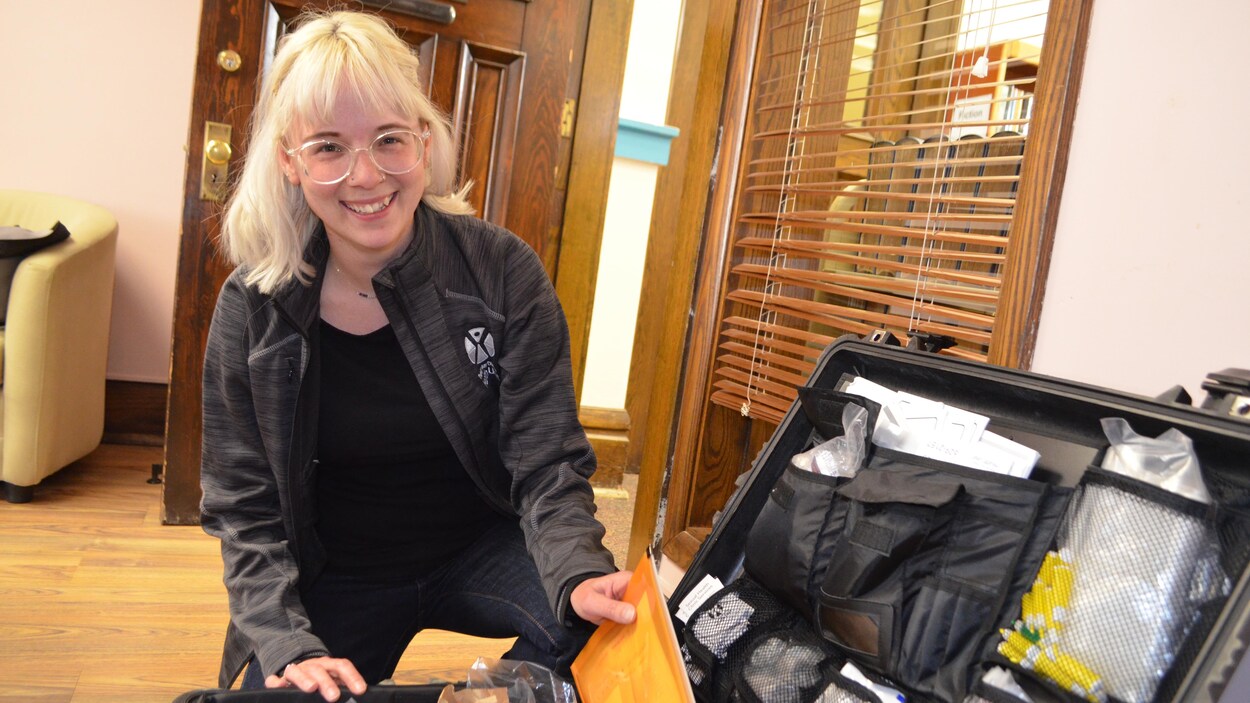
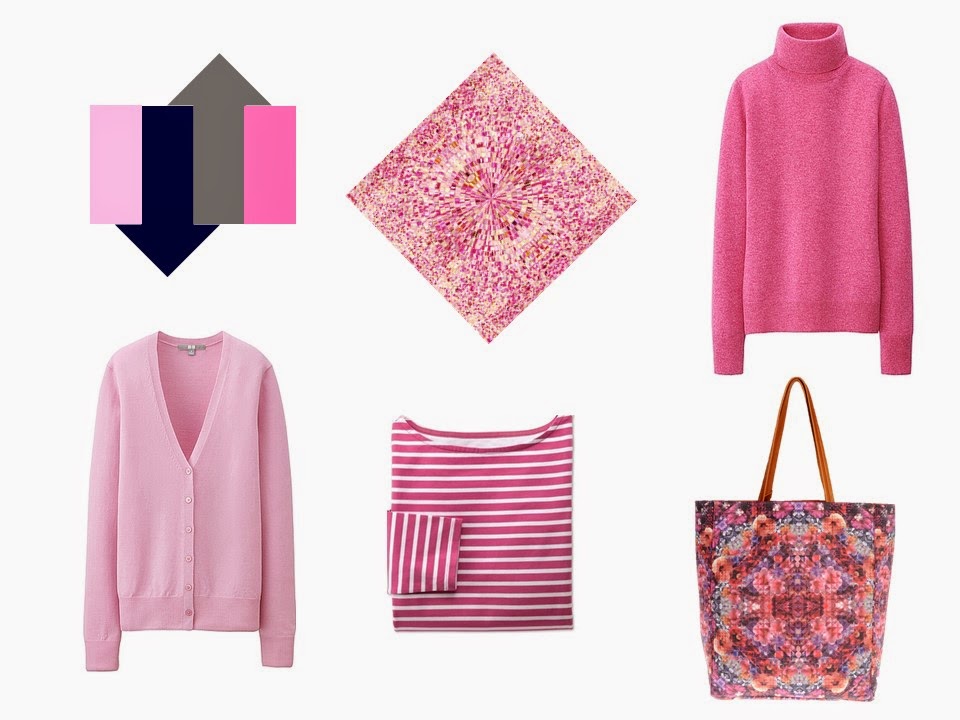
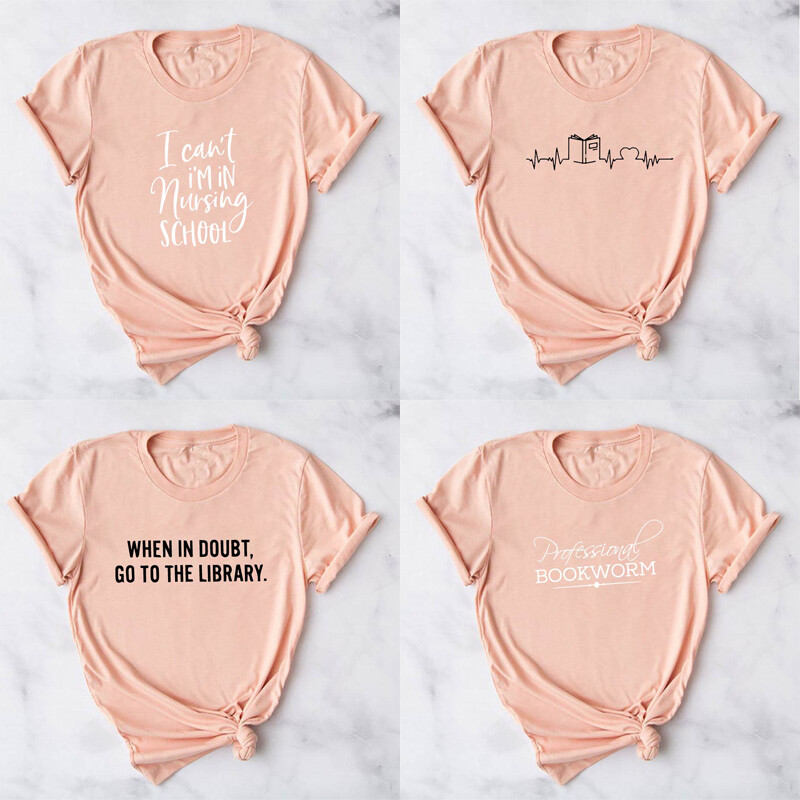
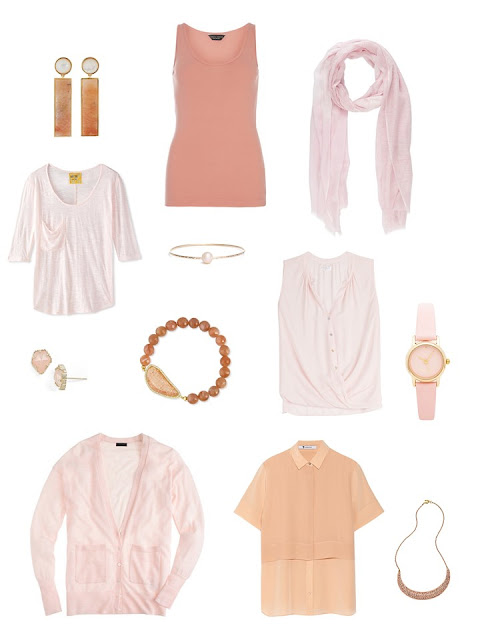
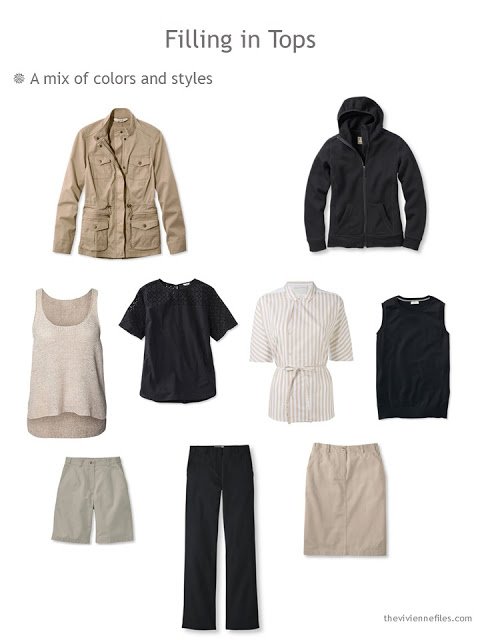
Eira Norden -- She has pinkish-fair skin, dark blue eyes, and white-blonde hair cut to shoulder length. She is petite with shallow curves. She wears glasses. Her heritage is American and Norwegian. She speaks English and Spanish. She is 18 when the Big One hits in 2016, in the second semester of college, having completed prerequisites through advanced placement classes in high school. Eira is studying toward an Associate in Nursing at Seattle Central College in Seattle, Rain City, Washington. She covers the tuition by volunteering as a street nurse to provide basic first aid to homeless people, working out of a local library and serving the blocks immediately around it. She typically volunteers for a 2-hour block each weekday and a 5-hour block on each weekend day. This also fulfills the clinical practice hours required for her degree. Eira has already earned a Global Competency Certificate. As a hobby, she loves reading. While she enjoys many genres, she especially likes BiblioThecla: Romance for Worldly Women. Eira typically wears practical girl clothes in black and gray accented with soft shades of pink, peach, blue, and lavender. Her accessories are mostly gray and silver.
Qualities: Good (+2) Bookworm, Good (+2) Cheerful, Good (+2) Dexterity, Good (+2) Extrovert, Good (+2) Street Nurse
Poor (-2) Needs Glasses
Associate in Nursing
at Seattle Central College in Seattle, Rain City, Washington
This full-time degree program is six quarters long and takes two years to complete, plus about one year to complete prerequisites.
Program Prerequisites
Prefix Course Credits
BIOL& 160 General Biology 5
BIOL& 241 Human Anatomy & Physiology 1 5
BIOL& 242 Human Anatomy & Physiology 2 5
BIOL& 260 Microbiology 5
CHEM& 121 Introduction to Chemistry 5
MATH& 146 Q-Introduction to Statistics 5
ENGL& 101 English Composition 5
PSYC& 100 General Psychology 5
PSYC& 200 Lifespan Psychology 5
Total 45
First Quarter
Prefix Course Credits
NURS 101 Fundamentals of Nursing 4
NURS 111 Skills Lab I 2
NURS 121 Nursing Practice 3
NUTR& 101 Nutrition 5
PHIL 131 Ethics and Policy in Healthcare I 1
Second Quarter
Prefix Course Credits
NURS 102 Medical-Surgical Nursing I 3
NURS 112 Nursing Practice I 3
NURS 132 Behavioral Health Nursing 3
NURS 142 Behavioral Health Practice 3
Third Quarter
Prefix Course Credits
NURS 103 Medical-Surgical Nursing II 3
NURS 113 Skills Lab II 1
NURS 123 Nursing Practice II 4
PHIL 132 Ethics and Policy in Healthcare II 2
PSYC 132 Psychosocial Issues in Healthcare I 2
Fourth Quarter
Prefix Course Credits
NURS 204 Medical-Surgical Nursing III 5
NURS 214 Nursing Practice III 3
NURS 224 Pediatric Nursing 3
NURS 234 Pediatric Practice 1
Fifth Quarter
Prefix Course Credits
NURS 205 Medical-Surgical Nursing IV 4
NURS 215 Maternal Nursing 3
NURS 225 Maternal Practice 1
PHIL 230 Ethics and Policy in Healthcare III 2
PSYC 231 Psychosocial Issues in Healthcare II 2
Sixth Quarter
Prefix Course Credits
NURS 206 Health Promotion and Managing Care in Nursing 3
NURS 216 Nursing Practice IV 5
NURS 226 Transitions to Professional Nursing Role 3
PSYC 232 Psychosocial Issues in Healthcare III 1
Associate in Nursing (AN–DTA/MRP) Degree
Total Program Credits = 96
Global Competency Certificate
at Seattle Central College in Seattle, Rain City, Washington
The Global Competency Certificate (GCC) program is a 10-week module offered during Winter and Spring Quarters. Open to students, staff, and faculty, it is designed to provide the structure and space to explore world cultures, examine issues of global significance, and to interact with people from diverse linguistic and cultural backgrounds.
Participants will tap into the rich cultural resources of Seattle and Seattle Central College through 4 or more of the following activities:
• Attend an event about a gender or sexuality issue
Sex, Gender, and Identity roundtable (T-American)
• Attend an event about a global health or sustainability issue
Refugee Health workshop (T-American)
• Attend an event about a social or economic issue
Socioeconomics of Success and Failure lecture (T-American)
• Attend an international film, theater, or book event
Jean-Luc Auel author presentation on Women Who Run with the Saberteeth book reading / discussion of domestic violence (T-American)
• Attend a religious service or a cultural ritual
Coast Salish cultural fair with Lushootseed lessons, Potlatch card game, and potlatch feast/giveaway (T-American)
• Participate in community service
Street Nurse service covers ADN degree costs in a straight trade of one
semester work for one semester tuition. (T-American)
• Try an international cuisine
Filipino Dinner Party (T-American)
• Visit a museum or cultural site
Northwest African American Museum
The 10-week program will begin with an orientation meeting during the first week of Winter Quarter and will be administered through Canvas.
During the quarter, participants will:
1. Join small groups comprised of other students, staff and faculty
2. Choose four or more activities to participate in
3. Meet in a group to share observations and learning from activity
4. Submit a reflection of your development
Participants who successfully complete the program will receive a completion certificate.
For students, the certificate will appear on the official transcript. They can note the certificate on their resume, which may boost employability, and the experiences and insights gained through the program may be helpful in job interviews.
For staff and faculty, the certificate counts toward professional development on the yearly EEPD.
What is global competence?
Global competence is defined as a combination of knowledge, skills, attitudes and values, encompassing 4 capacities, which are strongly interdependent and overlapping:
1. the capacity to examine issues and situations of local, global, and cultural significance (e.g. poverty, economic interdependence, environmental risks, conflicts, cultural differences and stereotypes);
2. the capacity to understand and appreciate different perspectives and the world views of others;
3. The capacity to establish positive interactions with people of different national, ethnic, religious, social or cultural backgrounds, and gender identities;
4. the capacity to formulate responses to promote a more equitable, sustainable, and peaceful world.
Lumia (Alina LaBelle) -- She has pale skin, light blue eyes, and shaggy opalescent hair cut to chin length. Her heritage is American, French, and Swedish. She speaks English and French. She is 20 years old in May of 2016, which is her junior year of college. Lumia grew up in Seattle, Rain City, Washington and still spends many weekends there. She is studying toward a bachelor's degree in Society, Ethics & Human Behavior with a Minor in Visual and Media Arts at the University of Washington in Bothell, Washington. She has already earned a Citizen Responder Certificate. Graceful and responsible, Lumia quickly earns people's trust. However, she's not very good with math or logic.
Origin: During her class on Visual and Media Arts Techniques, she loved the unit on lighting and became fascinated with the tinted lights and especially a new set of daylight lamps using rare earths. Her hair bleached from blonde to white and took on opalescent colors. Later on, she actually began emitting light.
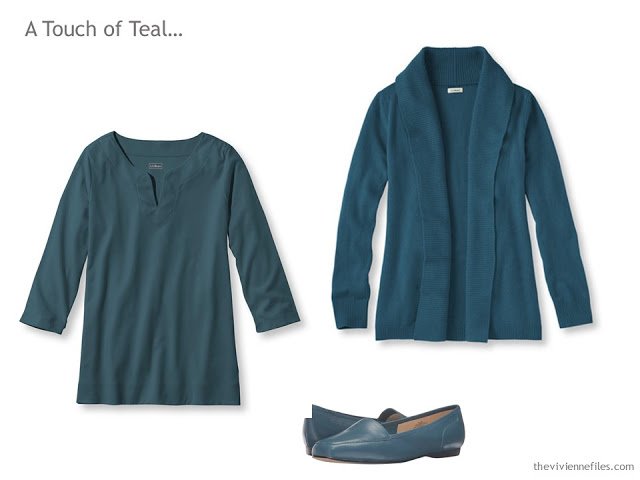
Uniform: Lumia wears comfortable women's wear in white or pale gray, accented with more whimsical garments in pastels like seaglass and seashell, with accessories of abalone or pearl.
Qualities: Good (+2) Artist, Good (+2) Citizen Responder, Good (+2) Ethics, Good (+2) Graceful, Good (+2) Visual-Spatial Intelligence
Poor (-2) Logical-Mathematical Intelligence
Powers: Average (0) Light Powers, Average (0) Opalescent Hair
Her abilities so far include Light Manipulation, Light Empowerment, Light Generation, and Color Manipulation. Lumia will probably develop Light Form, and may develop other abilities. She keeps trying and failing to make Light Constructs. Most often she uses her powers to enlighten, inspire, and uplift people.
Limitation: She can't produce saturated colors, so it is easier for her to bleach things than to recolor them, but she can create faint pastels.
Motivation: To light the way.
Coralife Power Compact Fluorescent Lamps 10,000K
USD 42.99 Price From: USD 24.99 Out of stock SKU 13904-M
This 10,000K purified super daylight lamp simulates the high-intensity lumen output of the midday tropical sun. It contains rare-earth color enhancing phosphors that emit sparkling, blue-white rays.
The Society, Ethics & Human Behavior Major
at the University of Washington in Bothell, Washington
How do social institutions and practices shape human experience?
How do individuals contribute to social stability and change?
Society, Ethics & Human Behavior (SEB) addresses these questions through a critical examination of the perspectives and tools used to understand human behavior, social institutions, and social policies. SEB combines an exploration of the ethical dimensions of individual and social action with analyses across multiple disciplines including sociology, psychology, media and cultural studies, anthropology, ethics, and political philosophy. The SEB faculty is committed to providing students with opportunities to engage in empirical research and project-based learning experiences in and beyond the classroom.
Career Focus
Graduating SEB students are ideally prepared to pursue professional careers or advanced study in a wide variety of fields, such as social work, education, public policy, law, media and cultural studies, and human resources. SEB also educates students to assume more active leadership roles within their communities, families, and workplaces. Here is more information about career possibilities or pursuing graduate school.
Requirements
Prerequisites
While there are no official requirements beyond the requirements for admission into the School of Interdisciplinary Arts & Sciences, students choosing this major will find it helpful to have completed college coursework in psychology, sociology, statistics, and philosophy.
Degree Requirements
• BIS 300 Interdisciplinary Inquiry* - min. 2.0 grade (5 credits)
• SEB Core (5 credits)
• BIS 312 (5 credits)
• SEB Courses (30 credits)
• BIS 499 Portfolio Capstone - min. 2.5 grade (5 credits)
• Additional IAS Coursework (20 credits)
TOTAL= 70 Credits
*Should be taken in the first quarter of IAS enrollment.
School of Interdisciplinary Arts & Sciences (IAS) Requirements & Policies
Interdisciplinary Practice & Reflection (IPR)
The IPR requirement can be completed through elective credits or it can overlap with major coursework.
Areas of Knowledge
25 credits must be completed in each Area of Knowledge. The Areas of Knowledge are: Visual, Literary and Performing Arts (VLPA), Individuals and Societies (I&S), and Natural World (NW).
Multiply-designated courses may not be double-counted as fulfilling two Areas of Knowledge. Courses may apply to both an Area of Knowledge requirement and an SEB major requirement.
Upper Division Credit Policy
Of the credits applying to SEB major requirements, a minimum of 48 must be completed at the Upper Division (300-400) level.
Recommended Preparation
Interested in exploring this major, but not ready to commit? Consider taking one of the below courses! Any of these selections will help familiarize you with the academic program and prepare you for advanced coursework in the major.
• BIS 255 Critical Diversity Studies
A. SEB Core Courses (SEB:CORE)
• BISSTA 304 Institutions and Social Change
• BISSTA 331 The Family in U.S. Society
• BISSTA 333 The Individual and Society
• BISSTA 359 Ethics and Society
B. Methods and Modes of Inquiry (SEB:METHODS)
*An SEB student must take one of the above required courses.
• BIS 312* Approaches to Social Research
C. Individual Behavior (SEB)
• BIS 337 Risk and Resilience
D. Institutions (SEB)
• BIS 436 Comparative Family Systems
E. Social Policy and Social Justice (SEB)
• BIS 353 Human Rights in Theory and Practice
F. Culture and Society (SEB)
• BIS 238 Language, Identity, Culture and Power
G. Ethics, Philosophy and Social Theory (SEB)
• BIS 281 Contemporary Political Ideas and Ideologies
• BIS 345 American Environmental Thought
• BIS 356 Ethics and the Environment
• BIS 357 Native American Religious and Philosophical Thought
• BIS 380 Bioethics
I. Topics (SEB)
Topics courses under the below course numbers may apply to the SEB major depending on the subject and title. Please see the Time Schedule notes to determine how they count toward the major.
• BIS 450 Topics in Sociology: Superpowers and Society (T-American)
Minor in Visual and Media Arts
at the University of Washington in Bothell, Washington
The Minor in Visual & Media Arts enables students to explore and engage diverse visual and media arts practices and to develop artistic, critical and conceptual competence in an interdisciplinary context.
Students who may benefit from the minors include:
• Students who want to develop specializations in a particular artistic medium
• Students who are looking for ways to signal creative written and visual competence
• Students who are interested in experimental, critical and reflexive thinking
• Students who wish to supplement other areas of study with forms of creative practice and engagement.
Students are advised to pursue minor coursework early in their studies to ensure enough time to meet course requirements. Not all courses listed below are offered on a regular basis.
Minor Requirements
IA Core (5 credits)
• BISIA 319 Interdisciplinary Arts
20 credits of BISIA courses in the area of
Visual & Media Arts Coursework
Students are required to take at least 15 credits at the 300 or 400 level
• BISIA 240 Visual and Media Arts Techniques
BISIA 283 Interdisciplinary Art Techniques Drawing Practice & Critical Thinking
BISIA 283 Interdisciplinary Art Techinques Every Picture Tells a Story-Story Telling Through the Visual Image
Courses
BISIA 319 Interdisciplinary Arts (5) VLPA J. HEUVING, J. MILUTIS
Investigates relationships between the study and making of art. Explores connections among written, visual, and performance arts and engages their intellectual, social, and aesthetic dimensions.
(2 credits)
BISIA 240 Visual and Media Arts Techniques (1-5, max. 10) VLPA
Develops intermediate art skills and applications, with an emphasis on visual and media arts.
(2 credits)
BISIA 283 Interdisciplinary Art Techniques: Drawing Practice and Critical Thinking (1-5, max. 10) VLPA J. MILUTIS
Develops intermediate skills and applications in one or more studio arts in order to enhance students' abilities as performers, arts creators, or educators.
(2 credits)
BISIA 283 Interdisciplinary Art Techniques: Every Picture Tells a Story-Story Telling Through the Visual Image (1-5, max. 10) VLPA J. MILUTIS
Develops intermediate skills and applications in one or more studio arts in order to enhance students' abilities as performers, arts creators, or educators.
BISIA 342 Materials and Meanings (5) VLPA B. Noah
Explores the relationship between materials and meanings in art works, focusing on contemporary art practice. Students will create and critique art projects that engage diverse and often hybrid media, including painting, drawing, sculpture, film, written language, as well as non-traditional and found materials.
BISIA 450 Image and Imagination (5) VLPA Hiebert
Explores image-based arts in a contemporary context in an advanced arts workshop. Emphasizes the development of creative and conceptual projects in a practice-oriented setting.
BISIA 484 Arts Learning in the Community (5-10, max. 10) J. HEUVING, J. MILUTIS, L. WATTS
Develops a theoretical and practical understanding of arts-practices in relation to a selected community context. Engages in a specific project at an educational, social service, or arts organization, or in an arts-project that works across communities.
Citizen Responder Certificate
at the University of Washington in Bothell, Washington
In Terramagne-America, the University of Washington offers a Citizen Responder Certificate consisting of six classes:
B BUS 501 Leadership, Team Process and Decision Making: A Workshop (4)
Examines factors associated with leader and team effectiveness using high- and low-element exercises and lecture/discussion. Introduces management analysis and decision-making using the case study method. Three-day off-campus retreat followed by two evening class meetings on campus. Credit/no-credit only. Offered: A.
B HLTH 179 Interpersonal Communication (5) I&S
Provides an overview of the theoretical and practical concerns in the study and practice of communication within interpersonal encounters. Emphasizes how to analyze communicative behavior and practice applied strategies for improving communication skills in the context of interpersonal settings of work, family, friendship, and romance.
B HLTH 196 Preparing to Work in Partnerships with Communities (5) I&S
Provides an introduction to participatory and asset-oriented approaches to forming community partnerships. Students learn concepts and skills necessary for successfully engaging in community building, including: the importance of self-reflection; personal skill assessment; cultural humility; issues regarding power and privilege; reciprocity; and core principles inherent in community-based participatory approaches.
Emergency Response Skills
First Aid and CPR Certification
Duration: 5 hours
This hands-on training course will teach you how to provide CPR and first aid for fractures, respiratory failure, and environmental emergencies such as bites, stings, hypothermia and heat stroke. The course will also instruct you how to respond to shock and heart conditions and inform you of the Good Samaritan law.
Psychological First Aid
Fast Plant (Fosco Cotton) -- He has bronze skin, brown eyes, and nappy black hair in shoulder-length dreadlocks. His heritage is African-American. He is 24 years old when the Big One hits in 2016. Fast Plant grew up in a rough part of Seattle, Rain City, Washington. He did poorly in school even before his superpowers made students and teachers pick on him, so he soon got fed up with that and quit. Currently he works as a gray hat courier, and does not appreciate people trying to pull him to one side or the other. He is absolutely fearless, and his skateboard stunts impress people.
Origin: Growing up, he was always fast and always hungry. His superpowers grew in erratically during his teens as he pushed for more and more speed in skateboarding.
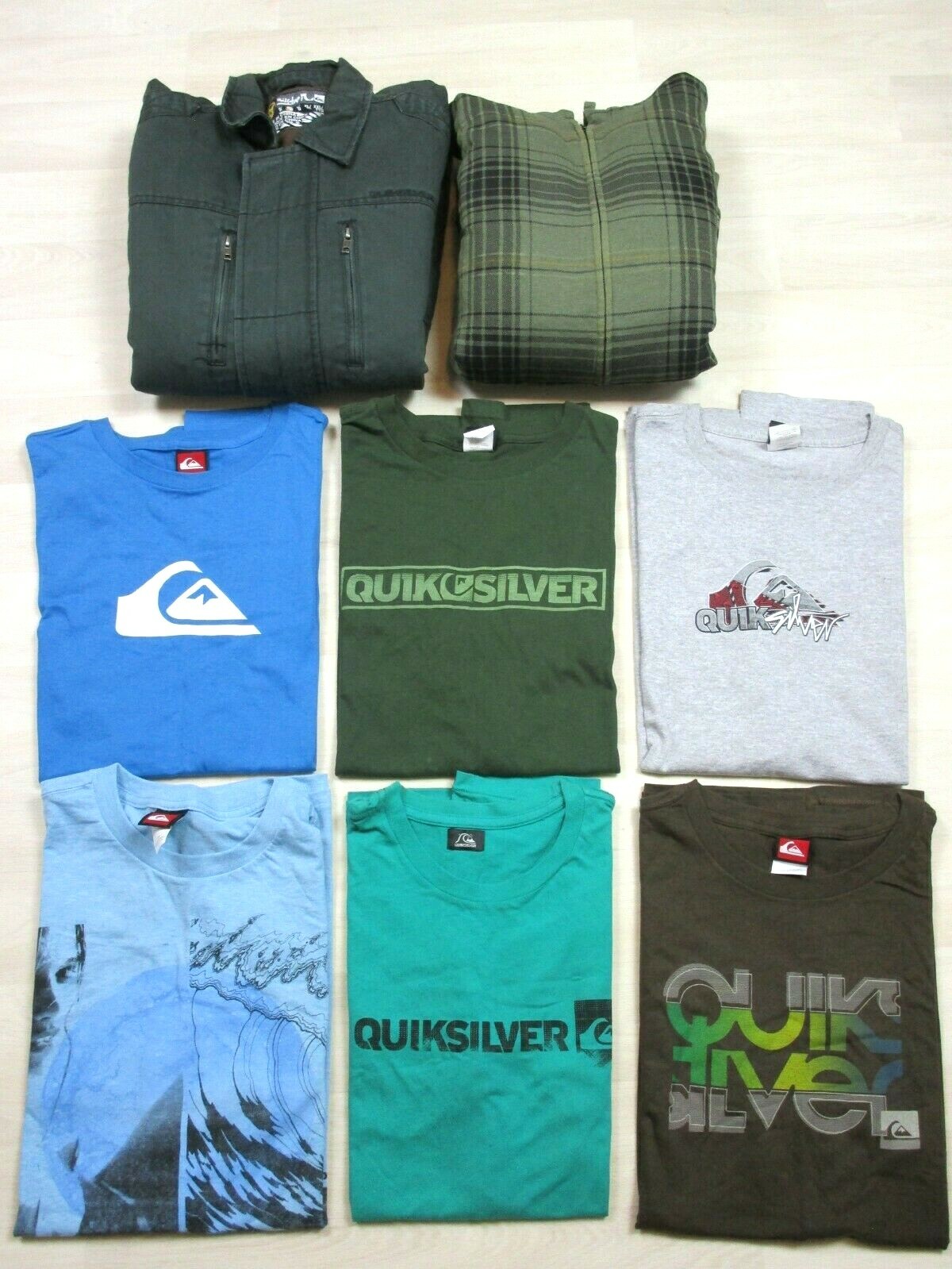
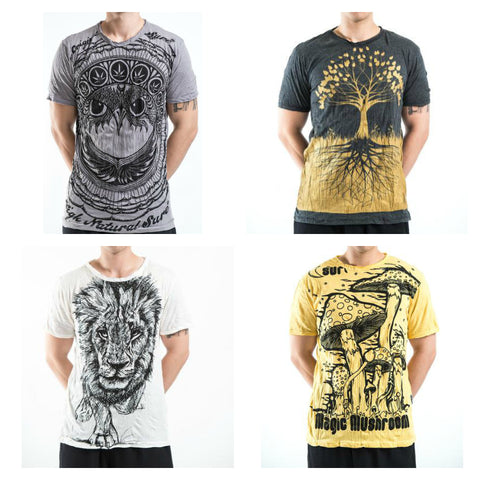
Uniform: He wears street clothes in shades of black, gray, blue, and green. He collects skateboard shirts.
Qualities: Good (+2) Courier, Good (+2) Fearless, Good (+2) Impressing People, Good (+2) Kinesthetic Intelligence, Good (+2) Skateboarding
Poor (-2) High School Dropout
Powers: Good (+2) Super-Speed
He has a high-burn metabolism about four times average when working hard.
Motivation: To get ahead of the game.
Fast plant
A trick initiated with an ollie, the back foot then planting on the ground and pushing off while the board is controlled by the front foot and some kind of grab; the trick is landed with both feet on the board
Raiden (Ray Dangerfield) -- He has copper skin, brown eyes, and straight black hair cut short. His heritage is American, Asian, and Coast Salish. He speaks English fluently and can also swear in Chinese, Filipino, Lushootseed (Salish), Spanish, and Vietnamese. He is 27 years old when the Big One hits in 2016.
Ray was studying toward an Associate of Applied Science Degree Electronics Technology at North Seattle College in Seattle, Rain City, Washington. When an accident caused him to develop electrical powers, which frequently misfired, the school insisted that he "take a leave of absence." He never went back. He didn't go home either, not being very close to his family and definitely not wanting to deal with their disappointment.
Eventually Ray achieved some control over his superpowers, and discovered that he could use them to start cars or disable electronic door locks. He took the name Raiden and became a supervillain, mostly stealing cars and robbing vending machines, sometimes robbing ATMs, and occasionally breaking into buildings. He enjoys life as a black hat and finds Seattle an easy place to steal things.
Origin: Another student's foolishness caused an accident in the electronics shop and shorted out Ray's body. Before paramedics could arrive, though, his superpowers manifested and restarted his heart. However, he had little control over his abilities at first.
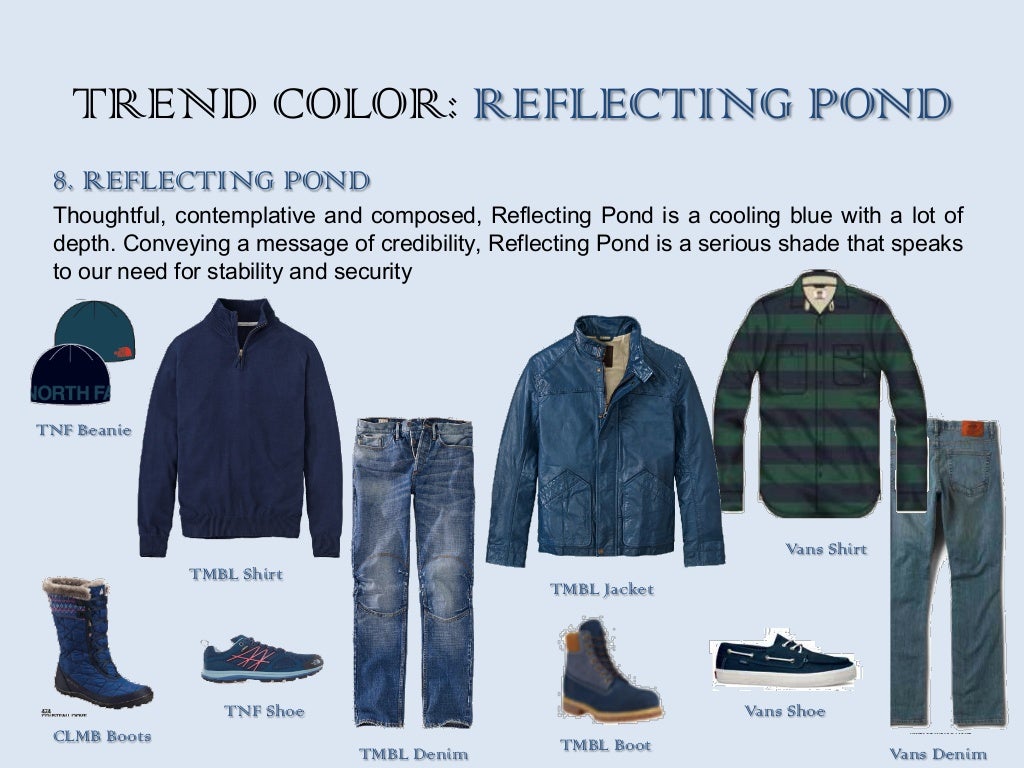
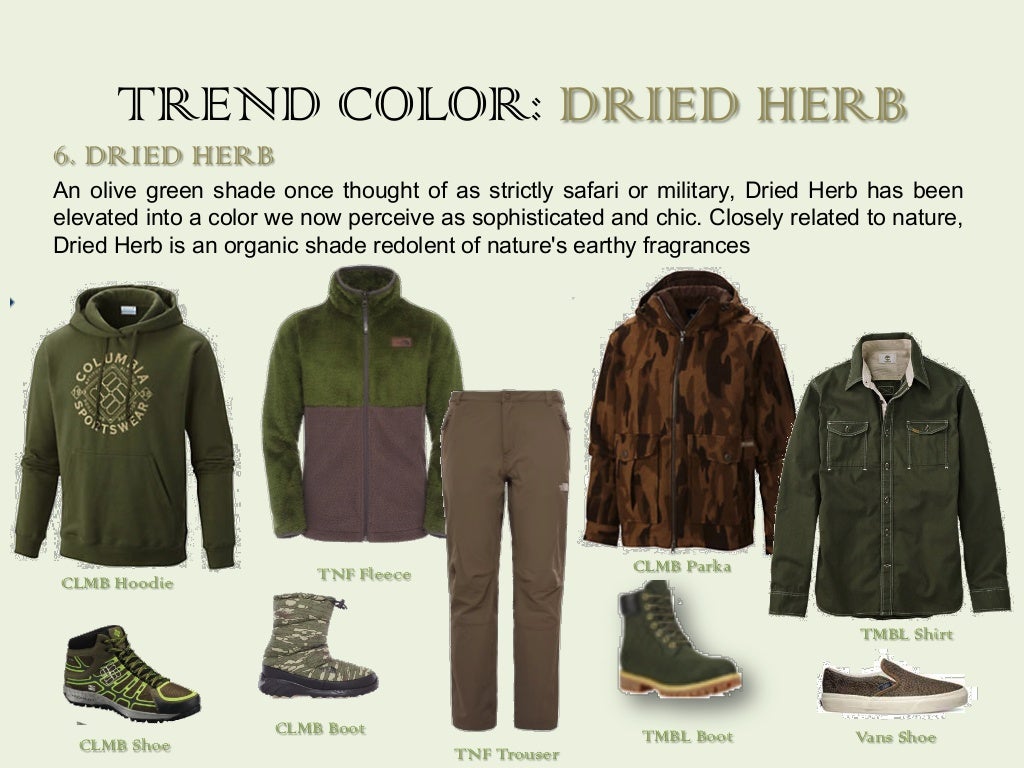
Uniform: Raiden wears casual menswear, often in shades of black, gray, blue, and olive.
Qualities: Good (+2) Intimidating People, Good (+2) Mechanical Aptitude, Good (+2) Street Smart, Good (+2) Thief, Good (+2) Tough
Poor (-2) College Dropout
Powers: Good (+2) Lightning Powers
Vulnerability: If he gets wet unexpectedly, that can cause his powers to discharge, draining energy and often damaging objects or people. Less destructive but sometimes still troublesome, when he gets upset, ominous sparks start to crawl over his skin and arc between his fingers.
Motivation: Money.
Electronics Technology Associate of Applied Science Degree (AAS)
at North Seattle College in Seattle, Rain City, Washington
This pathway meets AAS Electronics Technology degree requirements. The program emphasizes a practical, hands-on approach to the field of electronics and prepares students for a career as an electronics technician. Completion of this degree opens doors to a variety of careers in specialties including aerospace, manufacturing, avionics, biomedical, industrial automation and robotics, and telecommunications in the commercial and government sectors.
Students in this pathway learn to analyze and troubleshoot direct current (DC) and alternating current (AC) circuits, solid state and integrated circuit-based analog and digital electronics, programmable logic controllers (PLCs), fluid power systems, robotics, and information technology (IT).
Students have the opportunity to earn FCC licensure and industry certifications in many subjects including A+, fiber optics, robotics, and others.
Estimated Length of Completion
Degree Quarters Credits
Associate of Applied Science Degree (AAS) Full Time: 8
Part Time: 11 108.0 - 111.0
Program lengths are estimates, not guarantees. For the most current program information, please check with the program contact.
For Placement Testing: contact Testing Center, 527-3674 To begin program, students must test into the English and Math courses listed below:
Course Course ID Credits
BUS 169 Using Computers in Business 5.0
ENGL 097 English 097: Integrated Reading and Writing I 10.0
MATH 084 Algebra I 5.0
Technical Specialty Courses
Course Course ID Credits Availability
EET 105 Introduction to Technology 2.0
EET 106 Introduction to Soldering 1.0
EET 108 Introduction to Fiber Optics 5.0
EET 131 IT Essentials I - A+ Certification 5.0
EET 137 Introduction to Robotics 5.0
EET 161 D.C. Principles of Electronics 5.0
Related Instruction - Technical Electives
Any non-required course(s) from the following departments - EEL, EET, HVC, CSC, CHEM, ENGR or course listed below: See Advising Center for assistance.
Course Course ID Credits Availability
BUS 229 Project Management Tools Techniques and Control 5.0
Related Instruction - Human Relations
Choose from one of the following: BUS 236 - Interpersonal Communications is the preferred course
Course Course ID Credits Availability
BUS 236 Interpersonal Communications for the Workplace 5.0
Related Instruction
Course Course ID Credits Availability
BUS 112 Multi-Cultural Issues in the American Workplace 5.0
Fubuko Moto -- She has amber skin, almond-shaped brown eyes, and chin-length straight hair that was black but is now Prussian blue. She is slim and limber. Her heritage is Japanese-American. She speaks English and Japanese. She is 16 years old when the Big One hits in 2016. She grew up in Seattle, Rain City, Washington. When Fubuko was 14, her hair started changing color and her parents became uneasy. By 15, it was entirely blue and wisps of colorful energy began leaking from her fingers. Her parents lost patience with her "unnatural ways" and kicked her out of the house. She's been living on the streets of Seattle ever since. Quiet and observant, Fubuko notices what happens all around her, but she feels lonely and isolated.
Origin: Her mother blames her father, her father blames her mother, and both of them blame her. But nobody really knows why it happened.
Uniform: She wears street clothes, mostly in shades of gray, blue, and green.
Qualities: Good (+2) Limber, Good (+2) Observant, Good (+2) Quiet
Poor (-2) Lonely
Powers: Average (0) Blue Hair, Average (0) Energy Wisps
The energy wisps make pretty colors and have the vague fuzzy feel of static electricity, but they don't actually do anything.
Motivation: Survival.
Her name literally means "bad wind child," or more colloquially, "fart girl." Chinese parents sometimes give their children nasty names to fool demons that might otherwise steal the baby, and the custom occasionally appears in Japanese culture too.
不 (fu) meaning "negative, non-, bad, ugly, clumsy"
風 (bu) meaning "wind, air, style, manner"
子 (Ko) meaning “child”
FUJIO ふじを, 藤生, 藤男, 藤暢, 藤尾 m Japanese
From Japanese 藤 (fuji) meaning "wisteria", 二 (fu) meaning "two", 不 (fu) meaning "negative, non-, bad, ugly, clumsy",
FUBUKI 冬雪, 吹雪, 吹風綺, 芙咲, 風吹 f & m Japanese
From Japanese 冬 (fu) meaning "winter", 吹 (fu) meaning "blow, breathe, puff, emit, smoke", 芙 (fu) meaning "lotus, Mt Fuji" or 風 (fu) meaning "wind, air, style, manner", 風 (bu) meaning "wind, air, style, manner"
FUJIKO 藤子 f Japanese
From Japanese 藤 (Fuji) meaning “wisteria” combined with 子 (Ko) meaning “child”
MOTO 本 Japanese
From Japanese 本 (moto) meaning "base, root, origin". More commonly it is the final character in Japanese surnames.
Carly Marlowe -- She has pinkish-fair skin, gray eyes, and dishwater hair cut at chin length. Her heritage is American. She speaks English and has picked up some French and Spanish. She is 17 years old when the Big One hits in 2016. Carly grew up mostly in Eastbord, but her family moved around a lot so she didn't develop a strong attachment to any one place. She graduated from high school, then took a travel year hitchhiking around North America. She never quite settled down after that, sometimes couch-surfing, sometimes sleeping on the street, and working odd jobs when she can get them. Currently she lives in Seattle, Rain City, Washington. Carly excels at finding useful things or making them out of junk. She likes people gets by well enough, but rarely thinks ahead. Despite her situation, still has a hopeful outlook, which helps her spot opportunities. She wears scrounged clothes in shades of black, gray, and burgundy with T-shirts in hippie or travel themes. She likes Baja tops and other eclectic accessories.
Qualities: Good (+2) Gregarious, Good (+2) Optimist, Good (+2) Scrounge, Good (+2) Traveler
Poor (-2) Planning Ahead
Dana Crockett -- She has pinkish-fair skin that tans well, blue eyes, and wavy hair of pale blonde cut at shoulder length. She is polyamorous bisexual in a sedoretu-type family. She is 24 years old when the Big One hits in 2016. Dana grew up in foster care and wound up on the street after aging out. Despite getting moved around a lot, she kept trying to form relationships because she wanted a real family. She always cared far more about people than places.
Dana has a strong sense of compersion and likes seeing other people enjoying themselves together. Easily amused, she finds entertainment and humor wherever she goes. She spent a significant amount of time living in the wilderness and has plenty of skills there. She wears a signature coonskin cap and typically dresses in warm or cool neutrals with nature T-shirts.
Dana belongs to a group of homeless people called Quatrefoile, which is both the name of their band and of their family. They are quite insistent that they are performers, not beggars. They live in Seattle, Rain City, Washington. In the band, Dana plays mandolin and harmonica. In the sedoretu, she is the heterosexual partner of Aalap Mahato, the homosexual partner of March Guerrero, and the platonic partner of Jeffery Kemp.
Qualities: Good (+2) Compersion, Good (+2) Easily Amused, Good (+2) Emotional Intelligence, Good (+2) Musician, Good (+2) Wilderness Skills
Poor (-2) Staying in One Place
Folk. Folk musicians play mainly acoustic instruments, including guitar, banjo, harmonica, violin, string bass, flute, recorders and drums (possibly hand drums). A two-guitar lineup is popular, combining strumming or plucking with melody or bass line. Synthesized sounds are normally not used - natural sounds suit the genre much better. For a rockier sound electric guitar may be used, and some of the instruments may be amplified.
Aalap Mahato -- He has cinnamon skin, brown eyes, and wavy black hair past his shoulders. His heritage is Bangladeshi. He speaks English and some Bengali. He is polyamorous bisexual in a sedoretu-type family. He is 26 when the Big One hits in 2016.
Aalap's family moved to America when he was a small child. In school, he struggled with academics but quickly picked up music. When he was 16, his family found out about his bisexuality and kicked him out of the house. Aalap has lived on the streets since then, mostly busking to get by. Happy and tolerant, he rarely has serious conflicts with other folks. However, he regrets losing contact with Bangladeshi culture. He often wears soft earth tones with yoga T-shirts and hippie pants.
Aalap belongs to a group of homeless people called Quatrefoile, which is both the name of their band and of their family. They are quite insistent that they are performers, not beggars. They live in Seattle, Rain City, Washington. In the band, Aalap plays bones, spoons, and hand drum. In the sedoretu, he is the heterosexual partner of Dana, the homosexual partner of Jeffery Kemp, and the platonic partner of March Guerrero.
Qualities: Good (+2) Fast, Good (+2) Happy, Good (+2) Musical Intelligence, Good (+2) Percussionist, Good (+2) Tolerant
Poor (-2) Cultural Dislocation
Jeffery Kemp -- He has fair skin, blue eyes, and brown hair that falls to his shoulders in shaggy curls. He is polyamorous bisexual in a sedoretu-type family. His heritage is American. He speaks English. He knows Arabic but refuses to use it. He is 32 years old when the Big One hits in 2016.
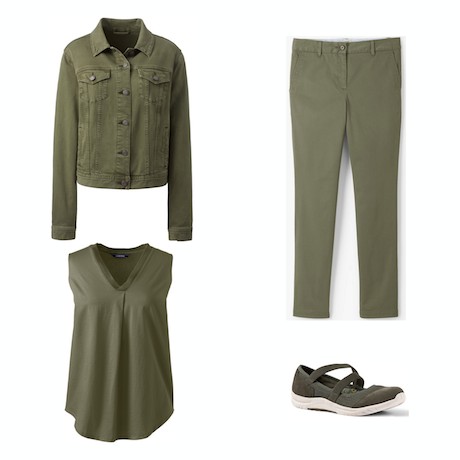
Jeffery grew up in a happy family well rooted in place, with a strong military tradition. At 18, he joined the army right out of high school. He did three tours of duty in Iraq. Several times he got injured in combat, but managed to recover, although he still has scars from the bullet wounds. On his third tour, his unit got cut to pieces in a bombing. Jeffery was one of the few survivors. The attack left him with a concussion, assorted shrapnel wounds, and PTSD. The army released him on a medical discharge. He still dresses mostly in olive and camouflage, along with patchwork mending.
After leaving the army, Jeffery couldn't bear to go home. Instead he scuffled around the West Coast, trying and mostly failing to hold a job. He was intermittently homeless for several years before he gave up trying to pretend that he was normal. It was just easier to stay on the street and do whatever work came his way. He can mend anything. The repairs show, but they hold remarkably well. He has a service dog, a male Mountain Cur named Buddy, who works as a pack dog and emotional support, though he won't let anyone unfamiliar mess with his packs. Buddy is mostly tan brindled with black.
Jeffery belongs to a group of homeless people called Quatrefoile, which is both the name of their band and of their family. They are quite insistent that they are performers, not beggars. They live in Seattle, Rain City, Washington. In the band, Jeffery plays banjo and serves as the lead singer. In the sedoretu, he is the heterosexual partner of March Guerrero, the homosexual partner of Aalap Mahato, and the platonic partner of Dana Crockett.
Qualities: Good (+2) Gentle, Good (+2) Linguistic Intelligence, Good (+2) Musician, Good (+2) Mend Anything, Good (+2) Survival
Poor (-2) PTSD
2016 -- 32
2006 -- 22
Army 18-21 (2004-2007)
The mountain cur is a dog breed suited to living rough.
March Guerrero -- She has fair skin, brown eyes, and long black hair with just a little wave. She is petite but muscular. She is polyamorous bisexual in a sedoretu-type family. Her heritage is Hispanic-American. She speaks English and Spanish. She is 22 years old when the Big One hits in 2016.
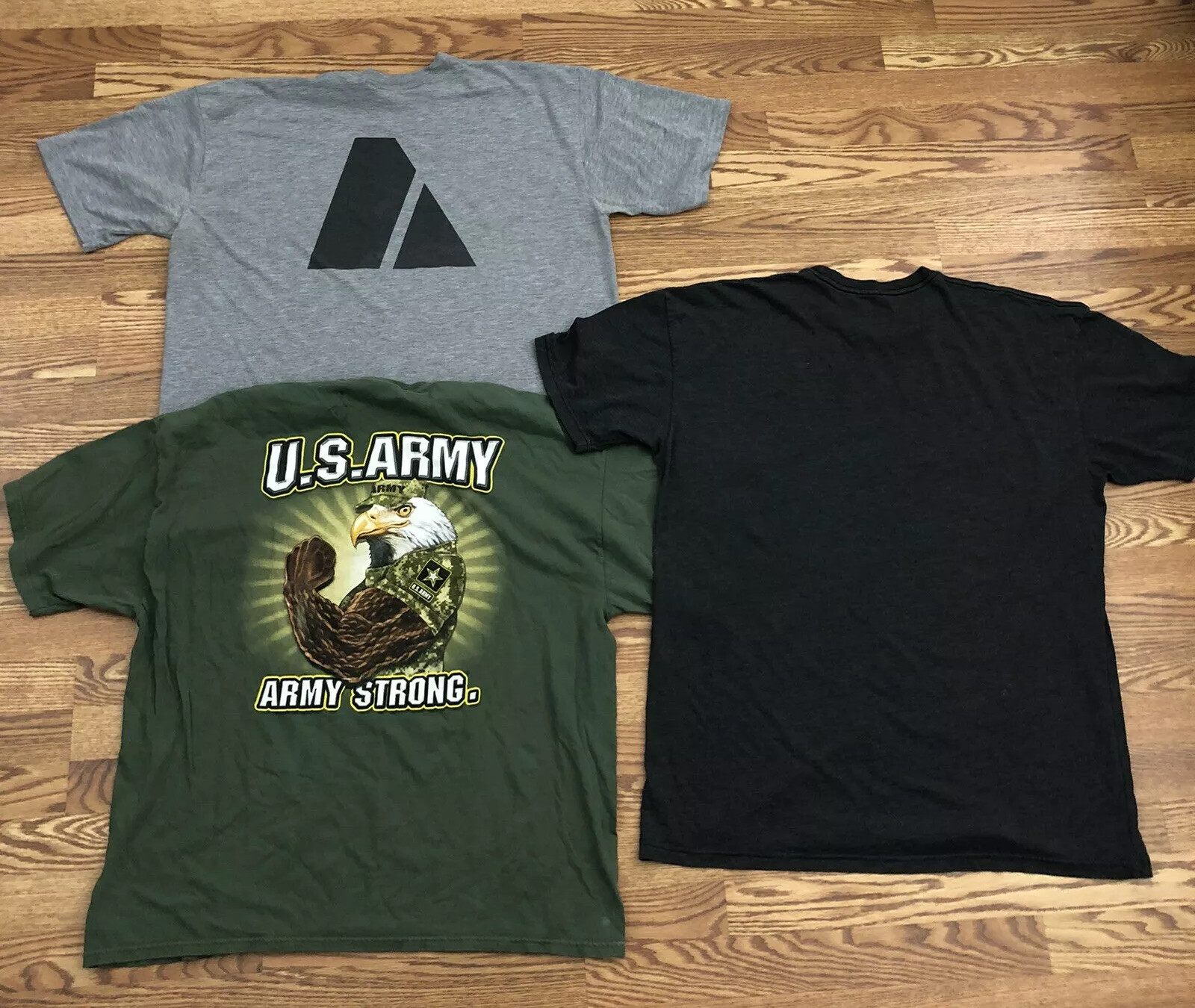
March is an army brat, which has left her tough, strong, and formidable in a fight. However, moving around so much undermined her ability to form lasting connections with people or places. She is more self-reliant than communal. March also has secondary trauma from her father's war-related violence. She still tends to dress in military style in shades of black, brown, and green with earth tone or army-themed T-shirts. March has a service dog, a female Mountain Cur named Blitz, who works as a pack dog and guard dog, sometimes also emotional support. Blitz is mostly dark brown brindled with fawn.
March belongs to a group of homeless people called Quatrefoile, which is both the name of their band and of their family. They are quite insistent that they are performers, not beggars. They live in Seattle, Rain City, Washington. In the band, March plays banjo and recorder. In the sedoretu, she is the heterosexual partner of Jefferey Kemp, the homosexual partner of Dana Crockett, and the platonic partner of Aalap Mahato.
Qualities: Good (+2) Army Brat, Good (+2) Fighter, Good (+2) Kinesthetic Intelligence, Good (+2) Musician, Good (+2) Self-Reliant
Poor (-2) Secondary Trauma
The mountain cur is a dog breed suited to living rough.
Eira Norden -- She has pinkish-fair skin, dark blue eyes, and white-blonde hair cut to shoulder length. She is petite with shallow curves. She wears glasses. Her heritage is American and Norwegian. She speaks English and Spanish. She is 18 when the Big One hits in 2016, in the second semester of college, having completed prerequisites through advanced placement classes in high school. Eira is studying toward an Associate in Nursing at Seattle Central College in Seattle, Rain City, Washington. She covers the tuition by volunteering as a street nurse to provide basic first aid to homeless people, working out of a local library and serving the blocks immediately around it. She typically volunteers for a 2-hour block each weekday and a 5-hour block on each weekend day. This also fulfills the clinical practice hours required for her degree. Eira has already earned a Global Competency Certificate. As a hobby, she loves reading. While she enjoys many genres, she especially likes BiblioThecla: Romance for Worldly Women. Eira typically wears practical girl clothes in black and gray accented with soft shades of pink, peach, blue, and lavender. Her accessories are mostly gray and silver.
Qualities: Good (+2) Bookworm, Good (+2) Cheerful, Good (+2) Dexterity, Good (+2) Extrovert, Good (+2) Street Nurse
Poor (-2) Needs Glasses
Associate in Nursing
at Seattle Central College in Seattle, Rain City, Washington
This full-time degree program is six quarters long and takes two years to complete, plus about one year to complete prerequisites.
Program Prerequisites
Prefix Course Credits
BIOL& 160 General Biology 5
BIOL& 241 Human Anatomy & Physiology 1 5
BIOL& 242 Human Anatomy & Physiology 2 5
BIOL& 260 Microbiology 5
CHEM& 121 Introduction to Chemistry 5
MATH& 146 Q-Introduction to Statistics 5
ENGL& 101 English Composition 5
PSYC& 100 General Psychology 5
PSYC& 200 Lifespan Psychology 5
Total 45
First Quarter
Prefix Course Credits
NURS 101 Fundamentals of Nursing 4
NURS 111 Skills Lab I 2
NURS 121 Nursing Practice 3
NUTR& 101 Nutrition 5
PHIL 131 Ethics and Policy in Healthcare I 1
Second Quarter
Prefix Course Credits
NURS 102 Medical-Surgical Nursing I 3
NURS 112 Nursing Practice I 3
NURS 132 Behavioral Health Nursing 3
NURS 142 Behavioral Health Practice 3
Third Quarter
Prefix Course Credits
NURS 103 Medical-Surgical Nursing II 3
NURS 113 Skills Lab II 1
NURS 123 Nursing Practice II 4
PHIL 132 Ethics and Policy in Healthcare II 2
PSYC 132 Psychosocial Issues in Healthcare I 2
Fourth Quarter
Prefix Course Credits
NURS 204 Medical-Surgical Nursing III 5
NURS 214 Nursing Practice III 3
NURS 224 Pediatric Nursing 3
NURS 234 Pediatric Practice 1
Fifth Quarter
Prefix Course Credits
NURS 205 Medical-Surgical Nursing IV 4
NURS 215 Maternal Nursing 3
NURS 225 Maternal Practice 1
PHIL 230 Ethics and Policy in Healthcare III 2
PSYC 231 Psychosocial Issues in Healthcare II 2
Sixth Quarter
Prefix Course Credits
NURS 206 Health Promotion and Managing Care in Nursing 3
NURS 216 Nursing Practice IV 5
NURS 226 Transitions to Professional Nursing Role 3
PSYC 232 Psychosocial Issues in Healthcare III 1
Associate in Nursing (AN–DTA/MRP) Degree
Total Program Credits = 96
Global Competency Certificate
at Seattle Central College in Seattle, Rain City, Washington
The Global Competency Certificate (GCC) program is a 10-week module offered during Winter and Spring Quarters. Open to students, staff, and faculty, it is designed to provide the structure and space to explore world cultures, examine issues of global significance, and to interact with people from diverse linguistic and cultural backgrounds.
Participants will tap into the rich cultural resources of Seattle and Seattle Central College through 4 or more of the following activities:
• Attend an event about a gender or sexuality issue
Sex, Gender, and Identity roundtable (T-American)
• Attend an event about a global health or sustainability issue
Refugee Health workshop (T-American)
• Attend an event about a social or economic issue
Socioeconomics of Success and Failure lecture (T-American)
• Attend an international film, theater, or book event
Jean-Luc Auel author presentation on Women Who Run with the Saberteeth book reading / discussion of domestic violence (T-American)
• Attend a religious service or a cultural ritual
Coast Salish cultural fair with Lushootseed lessons, Potlatch card game, and potlatch feast/giveaway (T-American)
• Participate in community service
Street Nurse service covers ADN degree costs in a straight trade of one
semester work for one semester tuition. (T-American)
• Try an international cuisine
Filipino Dinner Party (T-American)
• Visit a museum or cultural site
Northwest African American Museum
The 10-week program will begin with an orientation meeting during the first week of Winter Quarter and will be administered through Canvas.
During the quarter, participants will:
1. Join small groups comprised of other students, staff and faculty
2. Choose four or more activities to participate in
3. Meet in a group to share observations and learning from activity
4. Submit a reflection of your development
Participants who successfully complete the program will receive a completion certificate.
For students, the certificate will appear on the official transcript. They can note the certificate on their resume, which may boost employability, and the experiences and insights gained through the program may be helpful in job interviews.
For staff and faculty, the certificate counts toward professional development on the yearly EEPD.
What is global competence?
Global competence is defined as a combination of knowledge, skills, attitudes and values, encompassing 4 capacities, which are strongly interdependent and overlapping:
1. the capacity to examine issues and situations of local, global, and cultural significance (e.g. poverty, economic interdependence, environmental risks, conflicts, cultural differences and stereotypes);
2. the capacity to understand and appreciate different perspectives and the world views of others;
3. The capacity to establish positive interactions with people of different national, ethnic, religious, social or cultural backgrounds, and gender identities;
4. the capacity to formulate responses to promote a more equitable, sustainable, and peaceful world.
Lumia (Alina LaBelle) -- She has pale skin, light blue eyes, and shaggy opalescent hair cut to chin length. Her heritage is American, French, and Swedish. She speaks English and French. She is 20 years old in May of 2016, which is her junior year of college. Lumia grew up in Seattle, Rain City, Washington and still spends many weekends there. She is studying toward a bachelor's degree in Society, Ethics & Human Behavior with a Minor in Visual and Media Arts at the University of Washington in Bothell, Washington. She has already earned a Citizen Responder Certificate. Graceful and responsible, Lumia quickly earns people's trust. However, she's not very good with math or logic.
Origin: During her class on Visual and Media Arts Techniques, she loved the unit on lighting and became fascinated with the tinted lights and especially a new set of daylight lamps using rare earths. Her hair bleached from blonde to white and took on opalescent colors. Later on, she actually began emitting light.
Uniform: Lumia wears comfortable women's wear in white or pale gray, accented with more whimsical garments in pastels like seaglass and seashell, with accessories of abalone or pearl.
Qualities: Good (+2) Artist, Good (+2) Citizen Responder, Good (+2) Ethics, Good (+2) Graceful, Good (+2) Visual-Spatial Intelligence
Poor (-2) Logical-Mathematical Intelligence
Powers: Average (0) Light Powers, Average (0) Opalescent Hair
Her abilities so far include Light Manipulation, Light Empowerment, Light Generation, and Color Manipulation. Lumia will probably develop Light Form, and may develop other abilities. She keeps trying and failing to make Light Constructs. Most often she uses her powers to enlighten, inspire, and uplift people.
Limitation: She can't produce saturated colors, so it is easier for her to bleach things than to recolor them, but she can create faint pastels.
Motivation: To light the way.
Coralife Power Compact Fluorescent Lamps 10,000K
USD 42.99 Price From: USD 24.99 Out of stock SKU 13904-M
This 10,000K purified super daylight lamp simulates the high-intensity lumen output of the midday tropical sun. It contains rare-earth color enhancing phosphors that emit sparkling, blue-white rays.
The Society, Ethics & Human Behavior Major
at the University of Washington in Bothell, Washington
How do social institutions and practices shape human experience?
How do individuals contribute to social stability and change?
Society, Ethics & Human Behavior (SEB) addresses these questions through a critical examination of the perspectives and tools used to understand human behavior, social institutions, and social policies. SEB combines an exploration of the ethical dimensions of individual and social action with analyses across multiple disciplines including sociology, psychology, media and cultural studies, anthropology, ethics, and political philosophy. The SEB faculty is committed to providing students with opportunities to engage in empirical research and project-based learning experiences in and beyond the classroom.
Career Focus
Graduating SEB students are ideally prepared to pursue professional careers or advanced study in a wide variety of fields, such as social work, education, public policy, law, media and cultural studies, and human resources. SEB also educates students to assume more active leadership roles within their communities, families, and workplaces. Here is more information about career possibilities or pursuing graduate school.
Requirements
Prerequisites
While there are no official requirements beyond the requirements for admission into the School of Interdisciplinary Arts & Sciences, students choosing this major will find it helpful to have completed college coursework in psychology, sociology, statistics, and philosophy.
Degree Requirements
• BIS 300 Interdisciplinary Inquiry* - min. 2.0 grade (5 credits)
• SEB Core (5 credits)
• BIS 312 (5 credits)
• SEB Courses (30 credits)
• BIS 499 Portfolio Capstone - min. 2.5 grade (5 credits)
• Additional IAS Coursework (20 credits)
TOTAL= 70 Credits
*Should be taken in the first quarter of IAS enrollment.
School of Interdisciplinary Arts & Sciences (IAS) Requirements & Policies
Interdisciplinary Practice & Reflection (IPR)
The IPR requirement can be completed through elective credits or it can overlap with major coursework.
Areas of Knowledge
25 credits must be completed in each Area of Knowledge. The Areas of Knowledge are: Visual, Literary and Performing Arts (VLPA), Individuals and Societies (I&S), and Natural World (NW).
Multiply-designated courses may not be double-counted as fulfilling two Areas of Knowledge. Courses may apply to both an Area of Knowledge requirement and an SEB major requirement.
Upper Division Credit Policy
Of the credits applying to SEB major requirements, a minimum of 48 must be completed at the Upper Division (300-400) level.
Recommended Preparation
Interested in exploring this major, but not ready to commit? Consider taking one of the below courses! Any of these selections will help familiarize you with the academic program and prepare you for advanced coursework in the major.
• BIS 255 Critical Diversity Studies
A. SEB Core Courses (SEB:CORE)
• BISSTA 304 Institutions and Social Change
• BISSTA 331 The Family in U.S. Society
• BISSTA 333 The Individual and Society
• BISSTA 359 Ethics and Society
B. Methods and Modes of Inquiry (SEB:METHODS)
*An SEB student must take one of the above required courses.
• BIS 312* Approaches to Social Research
C. Individual Behavior (SEB)
• BIS 337 Risk and Resilience
D. Institutions (SEB)
• BIS 436 Comparative Family Systems
E. Social Policy and Social Justice (SEB)
• BIS 353 Human Rights in Theory and Practice
F. Culture and Society (SEB)
• BIS 238 Language, Identity, Culture and Power
G. Ethics, Philosophy and Social Theory (SEB)
• BIS 281 Contemporary Political Ideas and Ideologies
• BIS 345 American Environmental Thought
• BIS 356 Ethics and the Environment
• BIS 357 Native American Religious and Philosophical Thought
• BIS 380 Bioethics
I. Topics (SEB)
Topics courses under the below course numbers may apply to the SEB major depending on the subject and title. Please see the Time Schedule notes to determine how they count toward the major.
• BIS 450 Topics in Sociology: Superpowers and Society (T-American)
Minor in Visual and Media Arts
at the University of Washington in Bothell, Washington
The Minor in Visual & Media Arts enables students to explore and engage diverse visual and media arts practices and to develop artistic, critical and conceptual competence in an interdisciplinary context.
Students who may benefit from the minors include:
• Students who want to develop specializations in a particular artistic medium
• Students who are looking for ways to signal creative written and visual competence
• Students who are interested in experimental, critical and reflexive thinking
• Students who wish to supplement other areas of study with forms of creative practice and engagement.
Students are advised to pursue minor coursework early in their studies to ensure enough time to meet course requirements. Not all courses listed below are offered on a regular basis.
Minor Requirements
IA Core (5 credits)
• BISIA 319 Interdisciplinary Arts
20 credits of BISIA courses in the area of
Visual & Media Arts Coursework
Students are required to take at least 15 credits at the 300 or 400 level
• BISIA 240 Visual and Media Arts Techniques
BISIA 283 Interdisciplinary Art Techniques Drawing Practice & Critical Thinking
BISIA 283 Interdisciplinary Art Techinques Every Picture Tells a Story-Story Telling Through the Visual Image
Courses
BISIA 319 Interdisciplinary Arts (5) VLPA J. HEUVING, J. MILUTIS
Investigates relationships between the study and making of art. Explores connections among written, visual, and performance arts and engages their intellectual, social, and aesthetic dimensions.
(2 credits)
BISIA 240 Visual and Media Arts Techniques (1-5, max. 10) VLPA
Develops intermediate art skills and applications, with an emphasis on visual and media arts.
(2 credits)
BISIA 283 Interdisciplinary Art Techniques: Drawing Practice and Critical Thinking (1-5, max. 10) VLPA J. MILUTIS
Develops intermediate skills and applications in one or more studio arts in order to enhance students' abilities as performers, arts creators, or educators.
(2 credits)
BISIA 283 Interdisciplinary Art Techniques: Every Picture Tells a Story-Story Telling Through the Visual Image (1-5, max. 10) VLPA J. MILUTIS
Develops intermediate skills and applications in one or more studio arts in order to enhance students' abilities as performers, arts creators, or educators.
BISIA 342 Materials and Meanings (5) VLPA B. Noah
Explores the relationship between materials and meanings in art works, focusing on contemporary art practice. Students will create and critique art projects that engage diverse and often hybrid media, including painting, drawing, sculpture, film, written language, as well as non-traditional and found materials.
BISIA 450 Image and Imagination (5) VLPA Hiebert
Explores image-based arts in a contemporary context in an advanced arts workshop. Emphasizes the development of creative and conceptual projects in a practice-oriented setting.
BISIA 484 Arts Learning in the Community (5-10, max. 10) J. HEUVING, J. MILUTIS, L. WATTS
Develops a theoretical and practical understanding of arts-practices in relation to a selected community context. Engages in a specific project at an educational, social service, or arts organization, or in an arts-project that works across communities.
Citizen Responder Certificate
at the University of Washington in Bothell, Washington
In Terramagne-America, the University of Washington offers a Citizen Responder Certificate consisting of six classes:
B BUS 501 Leadership, Team Process and Decision Making: A Workshop (4)
Examines factors associated with leader and team effectiveness using high- and low-element exercises and lecture/discussion. Introduces management analysis and decision-making using the case study method. Three-day off-campus retreat followed by two evening class meetings on campus. Credit/no-credit only. Offered: A.
B HLTH 179 Interpersonal Communication (5) I&S
Provides an overview of the theoretical and practical concerns in the study and practice of communication within interpersonal encounters. Emphasizes how to analyze communicative behavior and practice applied strategies for improving communication skills in the context of interpersonal settings of work, family, friendship, and romance.
B HLTH 196 Preparing to Work in Partnerships with Communities (5) I&S
Provides an introduction to participatory and asset-oriented approaches to forming community partnerships. Students learn concepts and skills necessary for successfully engaging in community building, including: the importance of self-reflection; personal skill assessment; cultural humility; issues regarding power and privilege; reciprocity; and core principles inherent in community-based participatory approaches.
Emergency Response Skills
First Aid and CPR Certification
Duration: 5 hours
This hands-on training course will teach you how to provide CPR and first aid for fractures, respiratory failure, and environmental emergencies such as bites, stings, hypothermia and heat stroke. The course will also instruct you how to respond to shock and heart conditions and inform you of the Good Samaritan law.
Psychological First Aid
Fast Plant (Fosco Cotton) -- He has bronze skin, brown eyes, and nappy black hair in shoulder-length dreadlocks. His heritage is African-American. He is 24 years old when the Big One hits in 2016. Fast Plant grew up in a rough part of Seattle, Rain City, Washington. He did poorly in school even before his superpowers made students and teachers pick on him, so he soon got fed up with that and quit. Currently he works as a gray hat courier, and does not appreciate people trying to pull him to one side or the other. He is absolutely fearless, and his skateboard stunts impress people.
Origin: Growing up, he was always fast and always hungry. His superpowers grew in erratically during his teens as he pushed for more and more speed in skateboarding.
Uniform: He wears street clothes in shades of black, gray, blue, and green. He collects skateboard shirts.
Qualities: Good (+2) Courier, Good (+2) Fearless, Good (+2) Impressing People, Good (+2) Kinesthetic Intelligence, Good (+2) Skateboarding
Poor (-2) High School Dropout
Powers: Good (+2) Super-Speed
He has a high-burn metabolism about four times average when working hard.
Motivation: To get ahead of the game.
Fast plant
A trick initiated with an ollie, the back foot then planting on the ground and pushing off while the board is controlled by the front foot and some kind of grab; the trick is landed with both feet on the board
Raiden (Ray Dangerfield) -- He has copper skin, brown eyes, and straight black hair cut short. His heritage is American, Asian, and Coast Salish. He speaks English fluently and can also swear in Chinese, Filipino, Lushootseed (Salish), Spanish, and Vietnamese. He is 27 years old when the Big One hits in 2016.
Ray was studying toward an Associate of Applied Science Degree Electronics Technology at North Seattle College in Seattle, Rain City, Washington. When an accident caused him to develop electrical powers, which frequently misfired, the school insisted that he "take a leave of absence." He never went back. He didn't go home either, not being very close to his family and definitely not wanting to deal with their disappointment.
Eventually Ray achieved some control over his superpowers, and discovered that he could use them to start cars or disable electronic door locks. He took the name Raiden and became a supervillain, mostly stealing cars and robbing vending machines, sometimes robbing ATMs, and occasionally breaking into buildings. He enjoys life as a black hat and finds Seattle an easy place to steal things.
Origin: Another student's foolishness caused an accident in the electronics shop and shorted out Ray's body. Before paramedics could arrive, though, his superpowers manifested and restarted his heart. However, he had little control over his abilities at first.
Uniform: Raiden wears casual menswear, often in shades of black, gray, blue, and olive.
Qualities: Good (+2) Intimidating People, Good (+2) Mechanical Aptitude, Good (+2) Street Smart, Good (+2) Thief, Good (+2) Tough
Poor (-2) College Dropout
Powers: Good (+2) Lightning Powers
Vulnerability: If he gets wet unexpectedly, that can cause his powers to discharge, draining energy and often damaging objects or people. Less destructive but sometimes still troublesome, when he gets upset, ominous sparks start to crawl over his skin and arc between his fingers.
Motivation: Money.
Electronics Technology Associate of Applied Science Degree (AAS)
at North Seattle College in Seattle, Rain City, Washington
This pathway meets AAS Electronics Technology degree requirements. The program emphasizes a practical, hands-on approach to the field of electronics and prepares students for a career as an electronics technician. Completion of this degree opens doors to a variety of careers in specialties including aerospace, manufacturing, avionics, biomedical, industrial automation and robotics, and telecommunications in the commercial and government sectors.
Students in this pathway learn to analyze and troubleshoot direct current (DC) and alternating current (AC) circuits, solid state and integrated circuit-based analog and digital electronics, programmable logic controllers (PLCs), fluid power systems, robotics, and information technology (IT).
Students have the opportunity to earn FCC licensure and industry certifications in many subjects including A+, fiber optics, robotics, and others.
Estimated Length of Completion
Degree Quarters Credits
Associate of Applied Science Degree (AAS) Full Time: 8
Part Time: 11 108.0 - 111.0
Program lengths are estimates, not guarantees. For the most current program information, please check with the program contact.
For Placement Testing: contact Testing Center, 527-3674 To begin program, students must test into the English and Math courses listed below:
Course Course ID Credits
BUS 169 Using Computers in Business 5.0
ENGL 097 English 097: Integrated Reading and Writing I 10.0
MATH 084 Algebra I 5.0
Technical Specialty Courses
Course Course ID Credits Availability
EET 105 Introduction to Technology 2.0
EET 106 Introduction to Soldering 1.0
EET 108 Introduction to Fiber Optics 5.0
EET 131 IT Essentials I - A+ Certification 5.0
EET 137 Introduction to Robotics 5.0
EET 161 D.C. Principles of Electronics 5.0
Related Instruction - Technical Electives
Any non-required course(s) from the following departments - EEL, EET, HVC, CSC, CHEM, ENGR or course listed below: See Advising Center for assistance.
Course Course ID Credits Availability
BUS 229 Project Management Tools Techniques and Control 5.0
Related Instruction - Human Relations
Choose from one of the following: BUS 236 - Interpersonal Communications is the preferred course
Course Course ID Credits Availability
BUS 236 Interpersonal Communications for the Workplace 5.0
Related Instruction
Course Course ID Credits Availability
BUS 112 Multi-Cultural Issues in the American Workplace 5.0
Fubuko Moto -- She has amber skin, almond-shaped brown eyes, and chin-length straight hair that was black but is now Prussian blue. She is slim and limber. Her heritage is Japanese-American. She speaks English and Japanese. She is 16 years old when the Big One hits in 2016. She grew up in Seattle, Rain City, Washington. When Fubuko was 14, her hair started changing color and her parents became uneasy. By 15, it was entirely blue and wisps of colorful energy began leaking from her fingers. Her parents lost patience with her "unnatural ways" and kicked her out of the house. She's been living on the streets of Seattle ever since. Quiet and observant, Fubuko notices what happens all around her, but she feels lonely and isolated.
Origin: Her mother blames her father, her father blames her mother, and both of them blame her. But nobody really knows why it happened.
Uniform: She wears street clothes, mostly in shades of gray, blue, and green.
Qualities: Good (+2) Limber, Good (+2) Observant, Good (+2) Quiet
Poor (-2) Lonely
Powers: Average (0) Blue Hair, Average (0) Energy Wisps
The energy wisps make pretty colors and have the vague fuzzy feel of static electricity, but they don't actually do anything.
Motivation: Survival.
Her name literally means "bad wind child," or more colloquially, "fart girl." Chinese parents sometimes give their children nasty names to fool demons that might otherwise steal the baby, and the custom occasionally appears in Japanese culture too.
不 (fu) meaning "negative, non-, bad, ugly, clumsy"
風 (bu) meaning "wind, air, style, manner"
子 (Ko) meaning “child”
FUJIO ふじを, 藤生, 藤男, 藤暢, 藤尾 m Japanese
From Japanese 藤 (fuji) meaning "wisteria", 二 (fu) meaning "two", 不 (fu) meaning "negative, non-, bad, ugly, clumsy",
FUBUKI 冬雪, 吹雪, 吹風綺, 芙咲, 風吹 f & m Japanese
From Japanese 冬 (fu) meaning "winter", 吹 (fu) meaning "blow, breathe, puff, emit, smoke", 芙 (fu) meaning "lotus, Mt Fuji" or 風 (fu) meaning "wind, air, style, manner", 風 (bu) meaning "wind, air, style, manner"
FUJIKO 藤子 f Japanese
From Japanese 藤 (Fuji) meaning “wisteria” combined with 子 (Ko) meaning “child”
MOTO 本 Japanese
From Japanese 本 (moto) meaning "base, root, origin". More commonly it is the final character in Japanese surnames.
Carly Marlowe -- She has pinkish-fair skin, gray eyes, and dishwater hair cut at chin length. Her heritage is American. She speaks English and has picked up some French and Spanish. She is 17 years old when the Big One hits in 2016. Carly grew up mostly in Eastbord, but her family moved around a lot so she didn't develop a strong attachment to any one place. She graduated from high school, then took a travel year hitchhiking around North America. She never quite settled down after that, sometimes couch-surfing, sometimes sleeping on the street, and working odd jobs when she can get them. Currently she lives in Seattle, Rain City, Washington. Carly excels at finding useful things or making them out of junk. She likes people gets by well enough, but rarely thinks ahead. Despite her situation, still has a hopeful outlook, which helps her spot opportunities. She wears scrounged clothes in shades of black, gray, and burgundy with T-shirts in hippie or travel themes. She likes Baja tops and other eclectic accessories.
Qualities: Good (+2) Gregarious, Good (+2) Optimist, Good (+2) Scrounge, Good (+2) Traveler
Poor (-2) Planning Ahead
Dana Crockett -- She has pinkish-fair skin that tans well, blue eyes, and wavy hair of pale blonde cut at shoulder length. She is polyamorous bisexual in a sedoretu-type family. She is 24 years old when the Big One hits in 2016. Dana grew up in foster care and wound up on the street after aging out. Despite getting moved around a lot, she kept trying to form relationships because she wanted a real family. She always cared far more about people than places.
Dana has a strong sense of compersion and likes seeing other people enjoying themselves together. Easily amused, she finds entertainment and humor wherever she goes. She spent a significant amount of time living in the wilderness and has plenty of skills there. She wears a signature coonskin cap and typically dresses in warm or cool neutrals with nature T-shirts.
Dana belongs to a group of homeless people called Quatrefoile, which is both the name of their band and of their family. They are quite insistent that they are performers, not beggars. They live in Seattle, Rain City, Washington. In the band, Dana plays mandolin and harmonica. In the sedoretu, she is the heterosexual partner of Aalap Mahato, the homosexual partner of March Guerrero, and the platonic partner of Jeffery Kemp.
Qualities: Good (+2) Compersion, Good (+2) Easily Amused, Good (+2) Emotional Intelligence, Good (+2) Musician, Good (+2) Wilderness Skills
Poor (-2) Staying in One Place
Folk. Folk musicians play mainly acoustic instruments, including guitar, banjo, harmonica, violin, string bass, flute, recorders and drums (possibly hand drums). A two-guitar lineup is popular, combining strumming or plucking with melody or bass line. Synthesized sounds are normally not used - natural sounds suit the genre much better. For a rockier sound electric guitar may be used, and some of the instruments may be amplified.
Aalap Mahato -- He has cinnamon skin, brown eyes, and wavy black hair past his shoulders. His heritage is Bangladeshi. He speaks English and some Bengali. He is polyamorous bisexual in a sedoretu-type family. He is 26 when the Big One hits in 2016.
Aalap's family moved to America when he was a small child. In school, he struggled with academics but quickly picked up music. When he was 16, his family found out about his bisexuality and kicked him out of the house. Aalap has lived on the streets since then, mostly busking to get by. Happy and tolerant, he rarely has serious conflicts with other folks. However, he regrets losing contact with Bangladeshi culture. He often wears soft earth tones with yoga T-shirts and hippie pants.
Aalap belongs to a group of homeless people called Quatrefoile, which is both the name of their band and of their family. They are quite insistent that they are performers, not beggars. They live in Seattle, Rain City, Washington. In the band, Aalap plays bones, spoons, and hand drum. In the sedoretu, he is the heterosexual partner of Dana, the homosexual partner of Jeffery Kemp, and the platonic partner of March Guerrero.
Qualities: Good (+2) Fast, Good (+2) Happy, Good (+2) Musical Intelligence, Good (+2) Percussionist, Good (+2) Tolerant
Poor (-2) Cultural Dislocation
Jeffery Kemp -- He has fair skin, blue eyes, and brown hair that falls to his shoulders in shaggy curls. He is polyamorous bisexual in a sedoretu-type family. His heritage is American. He speaks English. He knows Arabic but refuses to use it. He is 32 years old when the Big One hits in 2016.
Jeffery grew up in a happy family well rooted in place, with a strong military tradition. At 18, he joined the army right out of high school. He did three tours of duty in Iraq. Several times he got injured in combat, but managed to recover, although he still has scars from the bullet wounds. On his third tour, his unit got cut to pieces in a bombing. Jeffery was one of the few survivors. The attack left him with a concussion, assorted shrapnel wounds, and PTSD. The army released him on a medical discharge. He still dresses mostly in olive and camouflage, along with patchwork mending.
After leaving the army, Jeffery couldn't bear to go home. Instead he scuffled around the West Coast, trying and mostly failing to hold a job. He was intermittently homeless for several years before he gave up trying to pretend that he was normal. It was just easier to stay on the street and do whatever work came his way. He can mend anything. The repairs show, but they hold remarkably well. He has a service dog, a male Mountain Cur named Buddy, who works as a pack dog and emotional support, though he won't let anyone unfamiliar mess with his packs. Buddy is mostly tan brindled with black.
Jeffery belongs to a group of homeless people called Quatrefoile, which is both the name of their band and of their family. They are quite insistent that they are performers, not beggars. They live in Seattle, Rain City, Washington. In the band, Jeffery plays banjo and serves as the lead singer. In the sedoretu, he is the heterosexual partner of March Guerrero, the homosexual partner of Aalap Mahato, and the platonic partner of Dana Crockett.
Qualities: Good (+2) Gentle, Good (+2) Linguistic Intelligence, Good (+2) Musician, Good (+2) Mend Anything, Good (+2) Survival
Poor (-2) PTSD
2016 -- 32
2006 -- 22
Army 18-21 (2004-2007)
The mountain cur is a dog breed suited to living rough.
March Guerrero -- She has fair skin, brown eyes, and long black hair with just a little wave. She is petite but muscular. She is polyamorous bisexual in a sedoretu-type family. Her heritage is Hispanic-American. She speaks English and Spanish. She is 22 years old when the Big One hits in 2016.
March is an army brat, which has left her tough, strong, and formidable in a fight. However, moving around so much undermined her ability to form lasting connections with people or places. She is more self-reliant than communal. March also has secondary trauma from her father's war-related violence. She still tends to dress in military style in shades of black, brown, and green with earth tone or army-themed T-shirts. March has a service dog, a female Mountain Cur named Blitz, who works as a pack dog and guard dog, sometimes also emotional support. Blitz is mostly dark brown brindled with fawn.
March belongs to a group of homeless people called Quatrefoile, which is both the name of their band and of their family. They are quite insistent that they are performers, not beggars. They live in Seattle, Rain City, Washington. In the band, March plays banjo and recorder. In the sedoretu, she is the heterosexual partner of Jefferey Kemp, the homosexual partner of Dana Crockett, and the platonic partner of Aalap Mahato.
Qualities: Good (+2) Army Brat, Good (+2) Fighter, Good (+2) Kinesthetic Intelligence, Good (+2) Musician, Good (+2) Self-Reliant
Poor (-2) Secondary Trauma
The mountain cur is a dog breed suited to living rough.